In a political earthquake that has sent shockwaves from Belgrade to Brussels, Aleksandar Vučić—the dominant force in Serbian politics for over a decade—has conceded defeat in the nation’s parliamentary elections. The results, confirmed late yesterday, mark the end of a 14-year reign characterized by consolidated power, controversial maneuvering, and an increasingly illiberal governance model.
The victors, a coalition known as the "Student List," represent an unlikely triumph of grassroots activism over a state apparatus that many observers believed was unassailable. This stunning reversal follows a two-year period of civil unrest, economic frustration, and a deep-seated public outcry against systemic corruption. For Vučić, who had gambled his political future by resigning as president just last month to run for the post of prime minister, the loss is not merely an electoral setback; it is the definitive closure of a chapter in modern Balkan history.
Chronology of a Collapse: From Tragedy to Transformation
The roots of this electoral upheaval can be traced back precisely two years, to a moment of national trauma that served as a catalyst for the Student List.
The Novi Sad Catalyst (October 2024)
The turning point was the tragic collapse of a massive concrete canopy at the central railroad station in Novi Sad, Serbia’s second-largest city. The disaster, which claimed the lives of 16 people, was not viewed by the public as an act of God or an unavoidable structural failure, but as a direct consequence of state-sanctioned corruption. Investigations revealed that the maintenance and recent reconstruction work had been awarded to government-linked contractors at massively inflated costs, using substandard materials.
The Birth of the Movement
The tragedy triggered an immediate wave of protests, led initially by university students in Novi Sad and Belgrade. What began as a mourning process evolved into a sustained protest movement. These students, largely unencumbered by the baggage of traditional opposition parties, utilized social media to organize, document government malfeasance, and articulate a vision for a transparent Serbia.
The Political Gamble (September 2026)
Sensing growing pressure, Vučić attempted a bold, preemptive strike. In September 2026, he resigned from the presidency, calculating that by moving to the role of prime minister, he could consolidate executive power and reset his mandate through a snap parliamentary election. He believed his political machine, built on a loyal patronage network and a firm grip on the media, would carry him to a comfortable victory.
The Election (October 2026)
The October 2026 election became a referendum on the "Vučić Model." Despite the government’s control of institutional levers, the Student List—a diverse coalition of activists, academics, and citizens from all walks of life—managed to mobilize an unprecedented turnout among younger voters and the disenfranchised middle class. The final results, tallied yesterday, confirmed that the Student List had secured a parliamentary majority, ending the era of the Serbian Progressive Party’s dominance.
Supporting Data: The Anatomy of an Illiberal Regime
To understand the scale of the opposition’s achievement, one must analyze the mechanisms Vučić utilized to maintain power—a strategy frequently compared to the "Orbanization" of Serbia.
The Authoritarian Playbook
Vučić’s governance was defined by the systematic weakening of democratic institutions. Much like his close ally, Hungarian Prime Minister Viktor Orbán, Vučić mastered the art of "illiberal democracy." This involved:
- Electoral Manipulation: Utilizing state resources to tilt the playing field, including the mobilization of public sector employees to ensure voter turnout for his party.
- Media Consolidation: The vast majority of television networks and newspapers were either owned by individuals close to the ruling party or were subject to intense government pressure, effectively creating an echo chamber that ignored opposition viewpoints.
- Smear Campaigns: The opposition was frequently painted as "foreign agents," "traitors," or "enemies of the state," rhetoric designed to alienate the socially conservative and religious core of the Serbian electorate.
Economic Entanglements
The corruption that fueled the Novi Sad disaster was symptomatic of a wider economic malaise. While the government touted GDP growth, the reality for the average Serbian was one of wage stagnation, rising costs of living, and an economy heavily reliant on foreign capital that often came with strings attached.
Vučić maintained a delicate balancing act regarding international relations. He fostered deep political and economic ties with Russia, utilizing the Kremlin’s support to provide a nationalist veneer to his rule, while simultaneously maintaining a "European path"—a policy of lip-service to EU accession that kept Brussels at arm’s length while preventing full geopolitical isolation.
Official Responses and International Repercussions
The international community has reacted with a mixture of caution and expectation as the dust settles in Belgrade.
The Kremlin’s Stance
The Russian government, a primary benefactor of the status quo under Vučić, expressed immediate concern. Kremlin spokespeople characterized the result as a "destabilizing event," signaling that the defeat of their closest Balkan ally represents a significant setback for Russian influence in the region. Analysts suggest that the change in government could force a recalibration of Moscow’s Balkan strategy, particularly as the new administration is expected to be more receptive to EU integration.
The European Union and the West
In Brussels, the mood is one of guarded optimism. While the EU has long been critical of the democratic backsliding under Vučić, the victory of a student-led movement—which has explicitly campaigned on transparency, rule of law, and anti-corruption—is viewed as a potential opportunity to reinvigorate the stalled accession process. However, European officials have stressed that the new government will face the daunting task of dismantling the entrenched patronage networks left behind by the previous administration.
The Domestic Power Vacuum
In his concession speech, Vučić signaled that he would step back from frontline politics, though many political analysts remain skeptical of his true intentions. The Student List now faces the immediate challenge of forming a stable cabinet. Their platform is broad—focusing on the "de-party-ization" of state institutions and a full judicial review of the Novi Sad rail disaster—but governing in a system designed for a strongman will test the coalition’s unity.
Implications for the Future of the Balkans
The defeat of Aleksandar Vučić is a watershed moment for the Balkan region. It challenges the assumption that authoritarian consolidation is an inevitable trajectory for post-communist states.
The End of the "Strongman" Trend
The success of the Student List provides a blueprint for opposition movements across Europe and beyond. By focusing on a single, tangible issue—the systemic corruption that led to the Novi Sad tragedy—they were able to build a coalition that transcended traditional ideological divides. It serves as a reminder that even the most sophisticated authoritarian machines can be dismantled when a protest movement successfully bridges the gap between grassroots indignation and electoral organization.
A New Chapter for Serbia
The challenges facing the incoming administration are immense. Beyond the political restructuring, they must address a disillusioned public that has spent two years in the streets. The transition will require:
- Institutional Reform: Dismantling the media and judiciary control mechanisms established over the last 14 years.
- Economic Stabilization: Addressing the inflation and infrastructure crises that were the hallmark of the late Vučić years.
- Geopolitical Alignment: Clarifying Serbia’s stance on the war in Ukraine and its relationship with the EU, a move that will likely test the new government’s political capital.
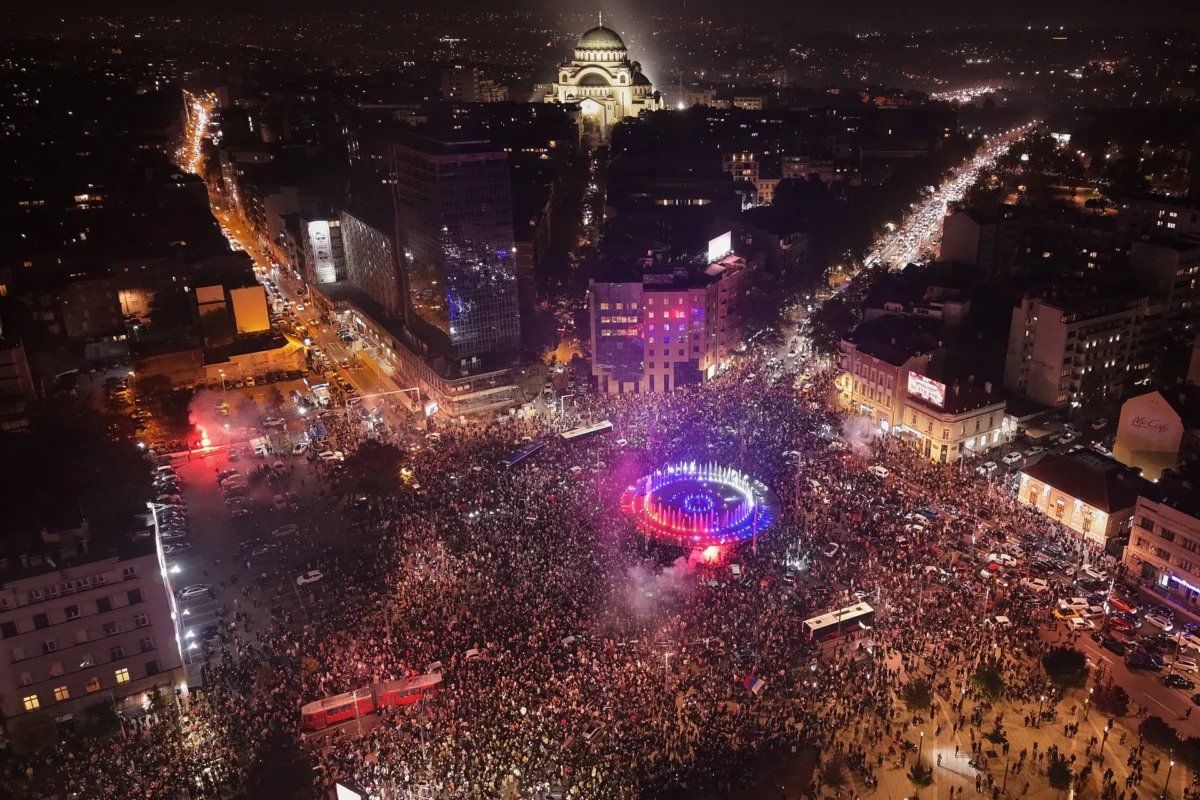
As the streets of Belgrade celebrate what many are calling a "New Spring," the world watches to see if this student-led revolution can successfully transition from the protest square to the halls of parliament. The fall of Aleksandar Vučić is not just the end of a long career; it is the beginning of an uncertain, but potentially democratic, future for a nation that has spent years waiting for change.
Whether the Student List can maintain its cohesion in the face of the inevitable pushback from the remnants of the old regime remains to be seen. However, for now, the message from the Serbian electorate is clear: the era of the strongman has reached its expiration date.