By International News Desk
Updated: September 21, 2026 – 20:05 GMT+2
In a rare and deeply disruptive display of technological vulnerability, global aviation infrastructure faced a dual crisis on Monday, September 21, 2026. Thousands of travelers were left stranded on both sides of the Atlantic as separate, unrelated technical failures crippled air traffic control operations in the northeastern United States and the United Kingdom. The cascading delays, which saw major metropolitan hubs paralyzed, have reignited urgent debates regarding the fragility of aging aviation infrastructure in an era of hyper-connected travel.
The US Crisis: A Severed Link at Philadelphia TRACON
The chaos in the United States began early Monday morning when the Federal Aviation Administration (FAA) issued emergency ground stops for six major airports in the northeast corridor. The affected hubs—Newark Liberty (EWR), Philadelphia International (PHL), John F. Kennedy International (JFK), LaGuardia (LGA), Teterboro (TEB), and Westchester County (HPN)—serve as the backbone of American air travel, handling hundreds of thousands of passengers daily.
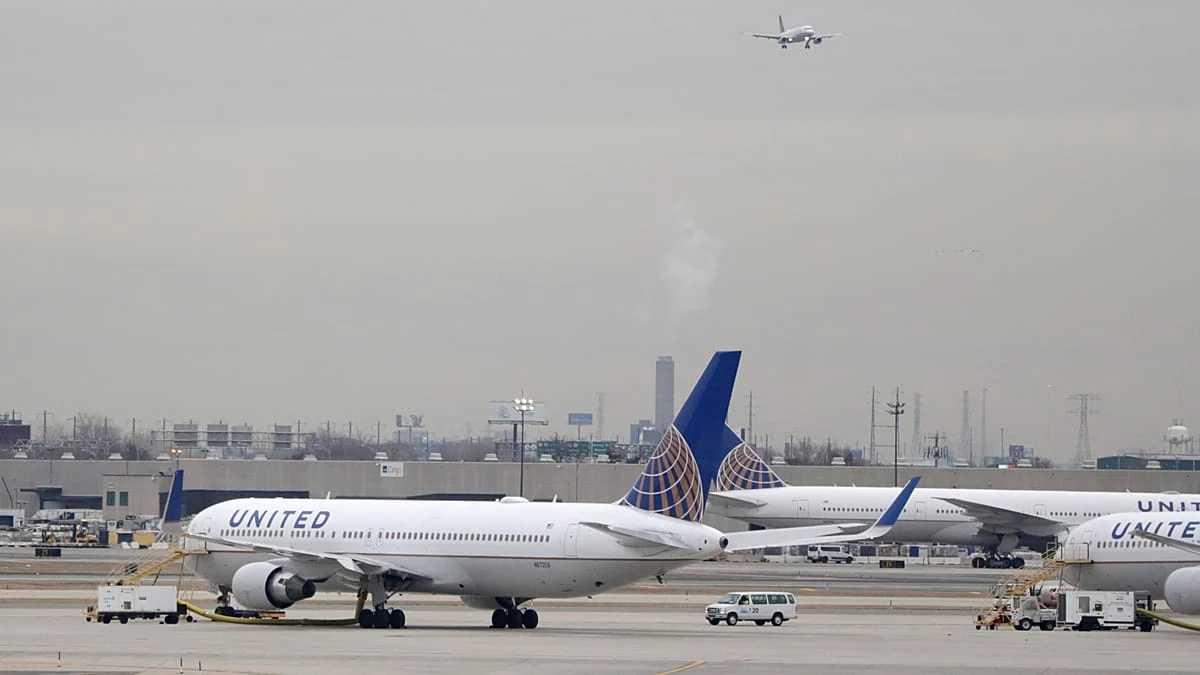
By midday, the situation had deteriorated into a logistical nightmare. Flight-tracking platform Flightradar24 reported systemic instability across the region. Newark Liberty, already operating at high capacity, faced the brunt of the disruption. As of 1:00 PM local time, the airport had logged 92 total flight cancellations and nearly 70 diversions, with average delays ballooning to 170 minutes. Philadelphia International, the epicenter of the technical failure, saw delays averaging 60 minutes as controllers struggled to manage the diminished airspace capacity.
The Root Cause: Human Error Meets Critical Infrastructure
The FAA later clarified the nature of the "equipment outage" that triggered the shutdown. FAA Administrator Bryan Bedford addressed the media, revealing a troubling sequence of events at the Philadelphia Terminal Radio Approach Control (TRACON) facility.
According to Bedford, the failure began when the facility’s "primary circuit" malfunctioned. Under standard operating procedures, this should have triggered an immediate and seamless switch to a secondary, redundant system. However, in an unfortunate case of bad timing, a construction crew working in the vicinity had accidentally severed a backup fiber-optic cable.
"We had a primary system failure coupled with the loss of our designated backup due to physical damage," Bedford explained. "This effectively blinded a portion of our approach control, necessitating the ground stops to ensure the absolute safety of the aircraft already in the air."
Chronology of the Disruption
- 08:30 AM (EDT): Initial reports of communication instability at the Philadelphia TRACON facility are logged by air traffic controllers.
- 09:15 AM (EDT): The primary circuit fails. Maintenance crews attempt to switch to the backup fiber-optic line, only to discover the physical severance caused by third-party construction.
- 09:45 AM (EDT): The FAA officially issues ground stops for six regional airports to prevent the accumulation of airborne traffic that cannot be safely managed.
- 11:00 AM (EDT): Newark and Philadelphia report significant diversions; social media channels for the airports begin advising passengers to contact their respective airlines for real-time updates.
- 12:30 PM (EDT): FAA engineers begin the manual bypass process to restore limited functionality to the affected frequencies.
- 01:30 PM (EDT): Administrator Bedford confirms that a new, temporary circuit is operational, and ground stops begin to be lifted in a staggered, controlled manner.
Simultaneous Failure: The UK Perspective
As the U.S. struggled with its fiber-optic outage, passengers across the United Kingdom were simultaneously grappling with their own aviation headache. NATS, the UK’s air traffic control operator, reported a "connectivity issue" within its systems network at the Prestwick centre in Scotland.
This incident marked the second major technical failure for NATS in the month of September, fueling public frustration and skepticism regarding the reliability of the UK’s modernized, yet clearly temperamental, digital air traffic control systems. While NATS was quick to clarify that the Scottish outage was entirely unrelated to the previous system-wide failure earlier in the month, the timing could not have been worse.
"We identified a specific connectivity issue with a localized part of our systems network," a NATS spokesperson stated in an afternoon briefing. "While it did not result in a total system blackout, it necessitated a reduction in traffic flow to maintain safety margins. We apologize for the disruption and appreciate the patience shown by the flying public."
By late afternoon, NATS announced that the issue had been resolved, with air traffic restrictions being systematically lifted across UK airspace. However, the ripple effect of these delays—missed connections, crew time-out regulations, and aircraft being out of position—ensured that the backlog would persist well into the evening hours.
Supporting Data: The Cost of Connectivity
The scale of Monday’s disruption highlights the precarious nature of modern "just-in-time" aviation.
- Economic Impact: While a formal audit of the economic losses has not been released, industry analysts estimate the cost of such ground stops—accounting for fuel burn, crew overtime, passenger compensation, and rebooking logistics—reaches into the tens of millions of dollars.
- Systemic Vulnerability: The Philadelphia incident serves as a case study in "single points of failure." Despite the industry’s reliance on advanced technology, the physical reliance on fiber-optic cables remains a vulnerable link. Construction-related damage to telecommunications infrastructure is a recurring, albeit usually localized, issue; however, when such damage occurs at a critical infrastructure node like a TRACON, the consequences are amplified exponentially.
- Flight Statistics: Data from Flightradar24 suggests that at the peak of the US disruption, over 400 flights were either canceled, delayed by more than three hours, or diverted.
Official Responses and Industry Implications
The dual failures have prompted immediate calls for a formal investigation into the resilience of air traffic control systems.
In Washington, members of the House Committee on Transportation and Infrastructure have already signaled their intent to hold hearings on the matter. The focus will likely be on why the redundant systems—designed specifically to prevent such occurrences—failed to engage during the Philadelphia incident. Critics are questioning why, in the 21st century, the physical severance of a cable can still ground an entire region’s air traffic.
"We are relying on digital-age technology supported by analog-age infrastructure," said aviation analyst Marcus Thorne. "When you have a primary system go down, the backup should be instantaneous. The fact that a construction accident could take out the redundancy is a major red flag for the FAA and its contractors."
Meanwhile, in the UK, the pressure on NATS is mounting. With two major incidents in less than 30 days, the Civil Aviation Authority (CAA) is expected to launch a comprehensive audit of the company’s software and network architecture.
The Path Forward: Lessons Learned
As the dust settles, the aviation industry faces a period of intense scrutiny. The events of September 21, 2026, serve as a stark reminder that air travel, despite its advancements in automation and satellite-based navigation, remains a highly fragile enterprise.
For the thousands of passengers who spent their Monday sitting on hot tarmacs or huddled around departure boards, the explanations—while technically sound—do little to mitigate the loss of time and the stress of travel. The industry must now grapple with the challenge of building "truly redundant" systems. This involves not only upgrading software but ensuring that the physical pathways—the cables, the power grids, and the hardware—are protected against the most common of threats: human error and physical damage.
The FAA and NATS have both promised transparency as they finalize their incident reports. However, for the average traveler, the goal remains simple: a predictable, safe, and reliable journey. Until aviation infrastructure can withstand the inevitable glitches of the modern world, the fear of "another system failure" will remain a permanent shadow over the skies.
As airports continue to clear the backlog, the industry is left to reflect on a sobering fact: in an interconnected world, the smallest of technical failures can have the largest of impacts.