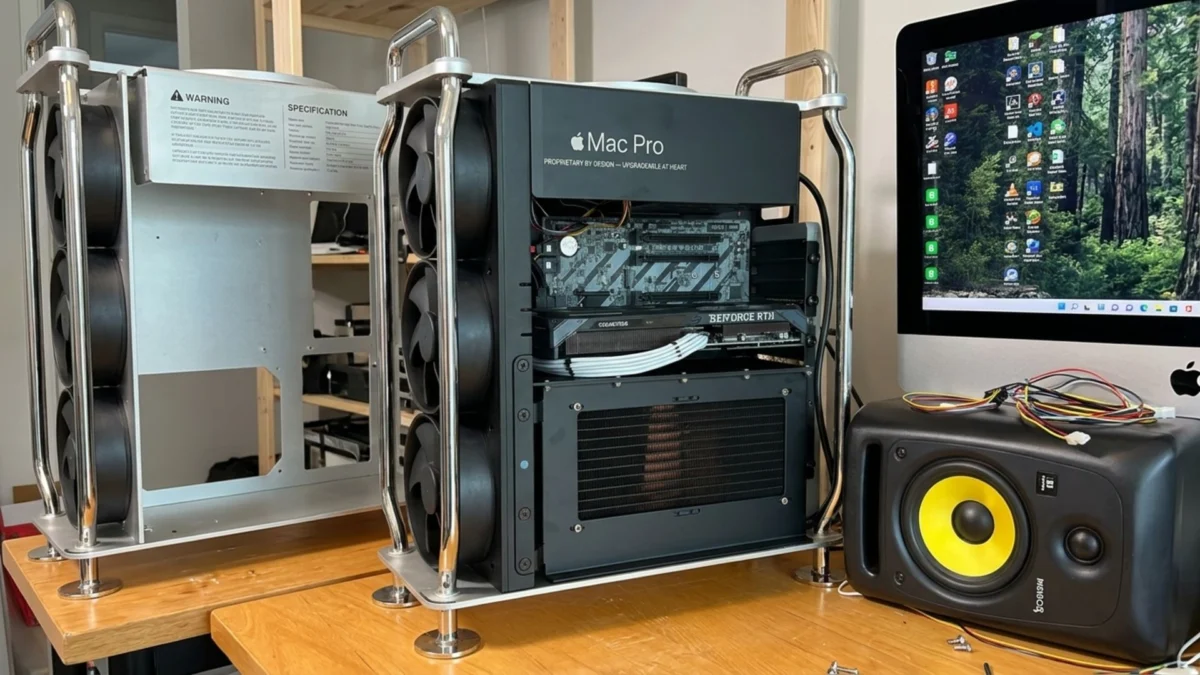
For years, the 2019 Apple Mac Pro—affectionately and infamously dubbed the "Cheesegrater" for its iconic, perforated aluminum lattice—has stood as a pinnacle of industrial design. Its modular architecture and brutalist aesthetic captured the imagination of creative professionals and hardware enthusiasts alike. However, as Apple transitions entirely to its own proprietary silicon, the original 2019 Intel-based tower faces an uncertain future in the secondary market.
A new Kickstarter campaign is attempting to bridge the gap between this legendary chassis and the modern world of custom PC building. The project, which seeks to provide a comprehensive conversion kit for the 2019 Mac Pro enclosure, promises to allow users to house high-end, off-the-shelf desktop components within Apple’s premium housing. But as the campaign struggles to gain traction, it raises fundamental questions about the intersection of proprietary hardware design and the growing "right to repair" and "reuse" movements.
The Proposal: Engineering an ATX-Friendly Mac Pro
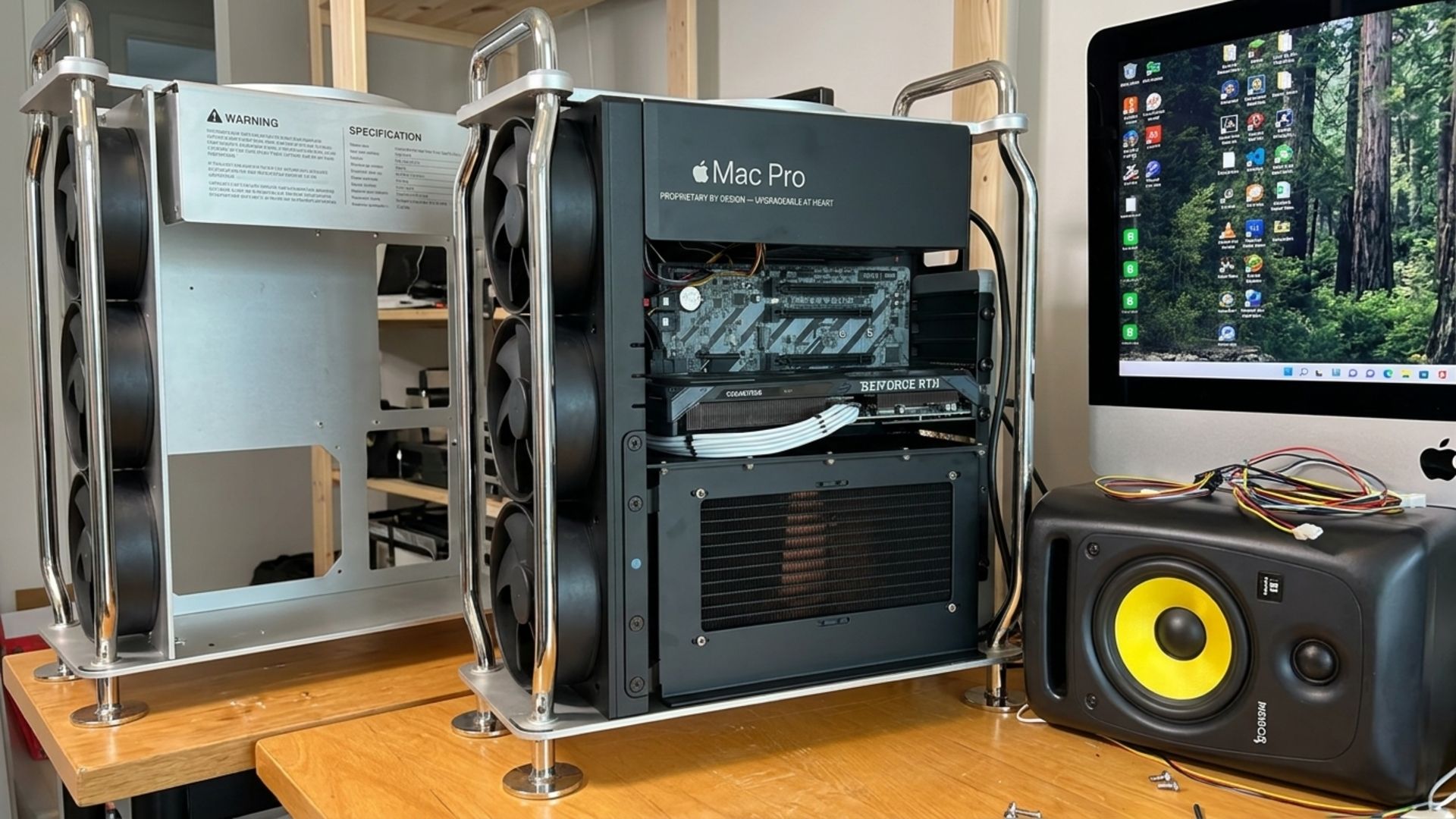
The core of the project is a specialized hardware conversion kit. The goal is to strip the 2019 Mac Pro of its original Intel-based logic board, proprietary power supply, and specific mounting structures, replacing them with a chassis-agnostic framework.
The kit is designed to accommodate standard ATX motherboards, enabling builders to install modern CPUs from Intel or AMD. Furthermore, it provides the necessary mounting points for standard power supply units (PSUs) and high-end graphics cards, specifically those up to 308 mm in length and 140 mm in height. For cooling, the kit supports air coolers up to 140 mm tall, or, for those pushing high-performance silicon, liquid cooling setups featuring radiators up to 240 mm.
Perhaps most impressively, the designers have prioritized retaining the "Apple feel." The kit includes custom adapter circuit boards and wiring looms that allow the user to retain the original front-facing fans, the iconic power button, the indicator light, and the two USB-C ports. This effectively creates a "sleeper" PC—a machine that looks exactly like a high-end Mac Pro on the outside but functions as a cutting-edge Windows or Linux workstation on the inside.
A Slow Start: The Challenges of Crowdfunding
Despite the ingenuity of the design, the Kickstarter campaign has hit a wall. As of this writing, the project has attracted a mere $7 from a single backer, falling significantly short of its $10,686 funding goal with only 28 days remaining.
Several factors may be contributing to this tepid reception. First is the "barrier to entry" cost. The kit itself is priced at roughly $500. When you factor in the cost of a used 2019 Mac Pro chassis—which still commands a significant premium on the used market—and the cost of modern PC components (motherboard, CPU, GPU, RAM, storage, and cooling), the total investment is substantial.
Second, the project is strictly for the "expert builder." Unlike a pre-built desktop, this conversion requires a deep understanding of PC hardware installation, cable management, and potentially troubleshooting custom-engineered electronic adapters. For the average consumer, the risk of damaging a $500 kit or a high-value chassis during installation is a deterrent.
Chronology: The Evolution of the "Cheesegrater" Modding Scene
The desire to "re-case" Apple hardware is not a new phenomenon. It is part of a long, storied history of PC enthusiasts attempting to leverage Apple’s superior industrial design.
- The Early 2000s: The original Power Mac G5 and the first-generation Intel Mac Pro towers became the "holy grail" for DIY PC builders. Because these cases were spacious and built like tanks, thousands of enthusiasts performed "G5 mods," cutting and drilling the aluminum frames to fit standard ATX boards.
- 2019: Apple releases the Mac Pro 7,1. It is a return to form, featuring a stainless-steel frame and a removable aluminum shell that allows for unparalleled access.
- 2020–2023: As Apple shifts its focus toward Apple Silicon (the M-series chips), the Intel-based 2019 Mac Pro becomes a target for the secondary market. However, because the hardware is so specialized, it is difficult to upgrade beyond the original CPU and GPU architectures.
- 2024: The current Kickstarter campaign emerges as one of the first formal attempts to commercialize a conversion kit for the 2019 model, moving away from the "DIY-only" approach of previous years.
Technical Specifications and Design Constraints
For the potential backer or builder, understanding the limitations is as important as understanding the features. The conversion kit provides:
- Drive Storage: Space for two SATA storage drives (2.5 or 3.5 inches).
- Connectivity: A dedicated interface module that maps the original front-panel controls to standard motherboard headers.
- Structural Support: A motherboard tray and power supply bracket specifically machined for the internal dimensions of the 2019 chassis.
However, prospective builders must verify their graphics card dimensions. The Mac Pro’s internal layout is highly efficient but rigid. A modern, triple-fan RTX 4090 or similar oversized card may struggle to fit, even with the conversion kit, necessitating careful planning before the first screw is turned.
Implications: The Future of Hardware Reuse
The existence of this project highlights a broader cultural shift in the technology sector. As consumer electronics become increasingly difficult to upgrade or repair, a vocal segment of the user base is pushing back.
The "Right to Reuse"
While the "Right to Repair" movement focuses on fixing what you own, this project represents the "Right to Reuse." The 2019 Mac Pro is a masterpiece of manufacturing. To let it end up in a recycling facility simply because the internal motherboard is obsolete is, to many, an environmental and design tragedy. By repurposing the chassis, the project extends the lifespan of the most expensive component of the machine: the enclosure itself.
The Professional Perspective
For creative professionals who have invested heavily in their studio setups, this kit offers a way to retain the aesthetics of their workspace while transitioning to the performance requirements of modern software. If a user has a specific workflow that requires an NVIDIA GPU (which is not natively supported in many macOS environments) but loves the Mac Pro’s thermal efficiency and silent operation, this kit provides a viable, albeit expensive, middle ground.
Risk Assessment and Official Stance
It is imperative to state that crowdfunding carries inherent risks. The Kickstarter platform is not a retail store; it is a way to support a project that may or may not reach mass production. Delays in manufacturing, supply chain issues, or even total project failure are possibilities that every backer must accept.
Furthermore, Apple does not endorse these modifications. Modifying a Mac Pro in this manner will undoubtedly void any remaining warranty and may make the machine ineligible for official Apple support. Builders must be prepared to be their own technical support team.
Conclusion: A Niche Future or a Dead End?
The $500 conversion kit for the 2019 Mac Pro is a testament to the enduring appeal of Apple’s design. Whether or not this specific campaign meets its funding goal, the conversation it has started is significant. It asks us to consider whether we are content with the "disposable" nature of modern computing, or if we are willing to put in the time, money, and expertise to keep our hardware relevant for years to come.
For the enthusiast, the Mac Pro 7,1 is more than a computer; it is a canvas. While the current lack of funding suggests that the market for such a high-end, high-effort modification is small, the project serves as a reminder that as long as there is a "Cheesegrater" chassis left in the world, there will be someone trying to find a way to make it run again.