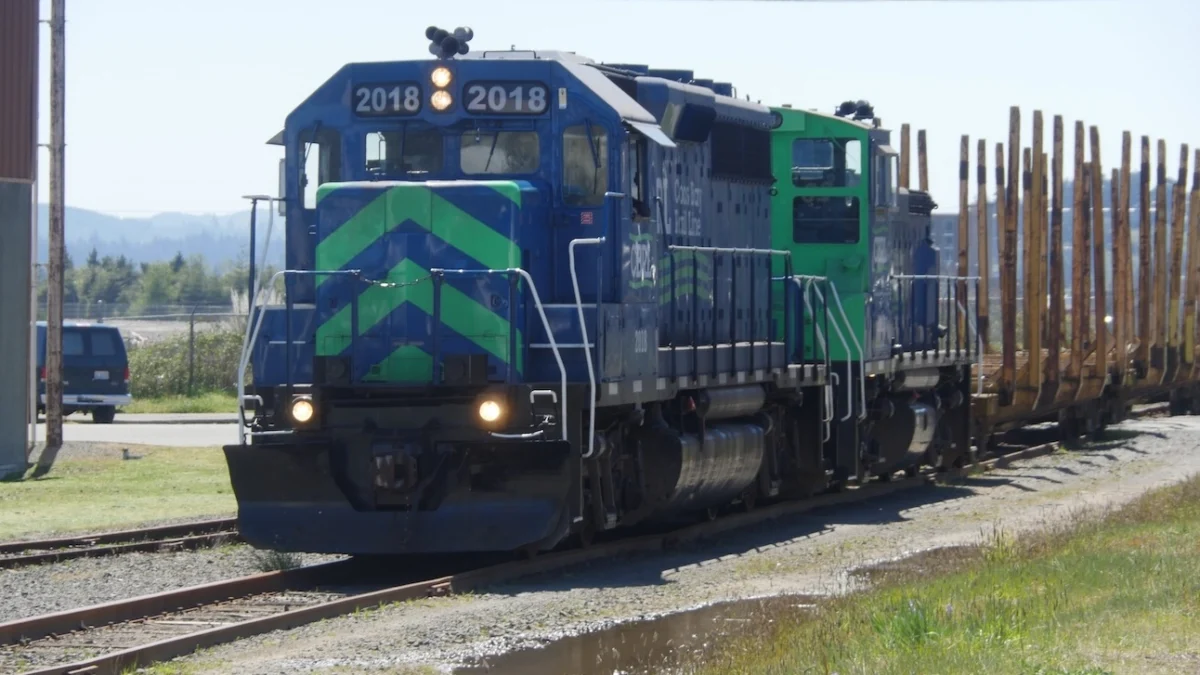
The Port of Coos Bay, Oregon, has reached a monumental milestone in its bid to reshape the North American supply chain. On October 19, a federal funding package totaling $204.8 million was announced by Oregon’s congressional delegation—Sens. Jeff Merkley and Ron Wyden alongside Rep. Val Hoyle—to facilitate the critical rehabilitation of the Coos Bay Rail Line. This massive infusion of capital serves as the foundational bedrock for the proposed Pacific Coast Intermodal Port (PCIP), a project designed to establish a premier deepwater container gateway capable of challenging established hubs in the Pacific Northwest and beyond.
The grant, awarded through the U.S. Department of Transportation’s Consolidated Rail Infrastructure and Safety Improvements (CRISI) program, marks the largest single investment in the project to date. By upgrading the 111-mile rail link between Coos Bay and the Eugene area, the port aims to bridge the gap between maritime shipping and inland rail distribution, potentially offering a more efficient, less congested alternative to the heavily utilized corridors of Seattle, Tacoma, and Vancouver.
The Chronology: A Multi-Year Path to Modernization
The vision for a modernized Coos Bay terminal did not emerge overnight. For years, the Port of Coos Bay has operated under the shadow of a declining regional timber industry, which historically served as the economic heartbeat of the Oregon coast. As that industry waned, local leadership began scouting for ways to leverage the region’s deepwater geography to pivot toward international trade.
Key Milestones in Development:
- Initial Feasibility Studies: Over the last decade, the port commission began assessing the viability of a container-focused terminal, recognizing that the existing rail infrastructure was insufficient for modern, high-volume intermodal operations.
- The Funding Accumulation: Before this latest $205 million grant, the project had successfully secured roughly $70 million in federal funds across four different programs. Furthermore, the state of Oregon demonstrated its commitment by contributing $160 million.
- Private Sector Partnership: NorthPoint Development, the firm selected to operate the proposed terminal, has already invested approximately $25 million in preliminary stages, signaling a strong alignment between private interest and public ambition.
- Recent "Small" Wins: Earlier in 2024, the project received an $11 million boost via the federal Port Infrastructure Development Program, which acted as a vital precursor to the current CRISI award.
- The October 2026 Horizon: With the current funding secured, the port is now soliciting contractors to oversee permitting and rigorous environmental reviews, with proposals due by late October.
Supporting Data: Capacity and Economic Impact
The economic narrative behind the PCIP is centered on growth, diversification, and regional resilience. Supporters of the project point to a robust set of figures that highlight why this investment is viewed as a "game changer" for the state of Oregon.
Job Creation Projections
The development of the container terminal is expected to generate an estimated 2,500 permanent, high-quality jobs once fully operational. This is supplemented by an additional 2,500 temporary roles created during the multi-year construction phase. In a region where the timber industry has struggled to provide the same level of employment stability it once did, these figures represent a lifeline for the local labor market.
Infrastructure Scope
The CRISI grant is specifically earmarked for "hard" infrastructure. This includes:
- Track Rehabilitation: Replacing aging rails and ties to meet modern weight-bearing requirements for heavy, fully loaded container trains.
- Bridge and Tunnel Upgrades: Strengthening structural components to ensure the safety and reliability of the 111-mile line, which is currently the bottleneck preventing high-frequency cargo throughput.
- Ship-to-Rail Integration: Developing the intermodal yard interfaces that allow for the seamless transfer of containers from deep-draft vessels directly onto rail cars.
Official Responses and Strategic Vision
The announcement of the $204.8 million grant has been met with enthusiasm from regional leaders, who view the project not just as a local development, but as a strategic asset for the United States’ national trade policy.
Kyle Stevens, president of the Oregon International Port of Coos Bay Board of Commissioners, emphasized the significance of the federal support. "This money puts the project on a path toward constructing the critical rail infrastructure needed to bring a new West Coast container gateway to life," Stevens stated.
Congressional advocates have framed the project as a necessary expansion of U.S. port capacity. By providing an alternative route for Asian imports, the PCIP could help alleviate the "logistical gridlock" often seen at larger, more saturated ports. Furthermore, as trade policy and tariffs shift global supply chains, there is a clear strategic advantage in having a modernized, flexible terminal that can adapt to changing headhaul traffic patterns—specifically the movement of goods from Asia toward the U.S. Midwest.
Implications: A New Competitor in a Global Market
The implications of a fully operational PCIP extend far beyond the borders of Oregon. The proposed terminal is positioning itself to compete directly with some of the most established maritime gateways in the world, including Portland, Seattle, Tacoma, and the British Columbia gateways of Vancouver and Prince Rupert.
Shifting Trade Flows
Currently, a significant portion of container traffic bound for the U.S. Midwest is routed through Canadian ports due to intermodal rail efficiency. By establishing a world-class terminal in Coos Bay with a direct, dedicated rail link to the interior, the project aims to "re-shore" some of that traffic, potentially reducing the reliance on foreign transshipment points and keeping more logistical value within the U.S. economy.
Environmental and Community Challenges
Despite the economic optimism, the project is not without its detractors. Environmental advocacy groups have raised significant concerns regarding the environmental impact of the necessary dredging operations. Dredging is essential to accommodate modern, large-capacity container ships, but critics argue that such activities could disrupt local ecosystems, particularly those surrounding wildlife habitats in the Coos Bay estuary.
Community groups have also voiced a preference for economic development that emphasizes sustainable tourism and healthcare, rather than heavy industrialization. Proponents of the port, however, argue that the project will be built with modern environmental standards that prioritize mitigation and long-term sustainability, attempting to balance the need for growth with the preservation of the Oregon coast’s natural beauty.
The Long Road Ahead
While the $205 million grant is a massive success, the total price tag for the PCIP is estimated to exceed $2 billion. This means the project remains years away from full operational capacity. The immediate future will be defined by:
- Contractor Selection: Moving forward with the procurement process by the end of October.
- Environmental Review: Navigating the complex federal and state permitting processes that are standard for projects of this magnitude.
- Public Engagement: Addressing the concerns of local residents through public comment periods, which will be a critical part of the upcoming regulatory phase.
Conclusion: A New Chapter for Oregon Logistics
The Port of Coos Bay stands at a pivotal juncture. With substantial federal backing and a clear vision for an intermodal future, the project is moving from the conceptual phase to the construction phase. Whether it will successfully transform the region into a premier West Coast logistics hub depends on the efficient execution of the rail upgrades and the ability to navigate the complex environmental and economic hurdles ahead.
As the global supply chain continues to evolve, the PCIP represents a bold attempt to increase the capacity and resilience of the American rail network. If successful, it could redefine the economic geography of the Pacific Northwest, providing a vital artery for commerce that sustains the region for decades to come. For now, all eyes remain on the Coos Bay Rail Line—the backbone upon which this $2 billion vision rests.