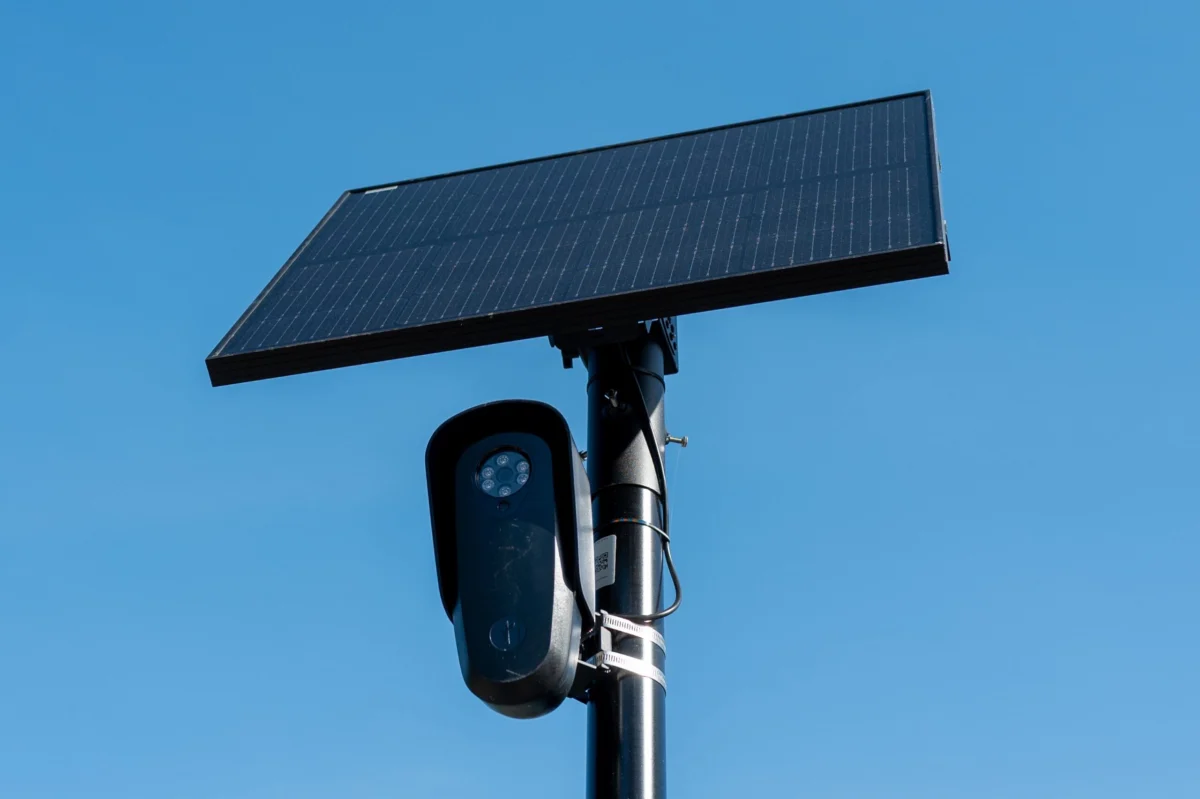
In a landmark decision that could fundamentally reshape the landscape of digital privacy in the United States, a federal judge has ruled that law enforcement’s warrantless use of the Flock Safety automated license plate reader (ALPR) network constitutes an unconstitutional form of "indiscriminate mass surveillance."
The ruling, issued this week by U.S. District Judge Sara Hill in Oklahoma, centers on a Tulsa sheriff’s deputy who utilized the expansive Flock database to track a motorist without judicial oversight. While the decision does not currently create binding national precedent, it marks the first time a federal jurist has formally declared that the unchecked power of the Flock network violates the Fourth Amendment, which protects citizens against unreasonable searches and seizures.
The Case: A License Plate and a "Poisonous Tree"
The incident began when a Tulsa County Sheriff’s deputy initiated a search for a specific vehicle within the Flock database. According to court documents, the deputy lacked a warrant, a suspect profile, or any articulable suspicion of criminal activity. Instead, the deputy’s justification for the search was arguably flimsy: the vehicle bore a California license plate.
"The deputy had no apparent reason for the search other than the fact that the vehicle had a California license plate," Judge Hill wrote in her opinion.
Following this digital "ping," the deputy proceeded to use the retrieved travel history to justify a traffic stop and a subsequent search of the vehicle. During that search, law enforcement discovered 91 pounds of methamphetamine. However, Judge Hill’s ruling effectively neutralized the prosecution’s case. Citing the legal doctrine of the "fruit of the poisonous tree," she ordered that all evidence derived from the initial, unconstitutional Flock search must be suppressed. Because the search itself was predicated on a violation of the defendant’s Fourth Amendment rights, any evidence flowing from that violation is inadmissible in court.
Chronology of a Privacy Crisis
The rise of Flock Safety has been meteoric, yet its descent into controversy has been equally rapid. To understand the current legal friction, one must look at the timeline of the technology’s deployment and the subsequent pushback.
- The Proliferation Phase (2020–2024): Flock Safety rapidly expanded across thousands of municipalities, pitching its "neighborhood-level" camera systems as a revolutionary tool for solving crimes ranging from package theft to violent felonies. Law enforcement agencies embraced the technology for its ability to catalog vehicle movements in real-time.
- The Privacy Backlash (2025–Present): As the network grew, privacy advocates, including the ACLU and the Electronic Frontier Foundation, raised alarms about the creation of a permanent, searchable archive of public movement.
- Legislative Intervention: By mid-2026, the political tide began to turn. Florida and Texas, states once bullish on surveillance technology, initiated moves to block or heavily regulate the use of Flock cameras due to mounting public outcry over privacy concerns.
- The Federal Pivot: In October 2026, U.S. Senator Bernie Sanders (D-VT) introduced the "Block Flock Act," a piece of legislation aimed at prohibiting federal agencies from utilizing private, automated license plate reader databases.
- The Judicial Hammer: The current ruling by Judge Hill serves as the culmination of these tensions, translating abstract privacy concerns into a concrete legal reality for the first time in federal court.
Indiscriminate Surveillance: A Constitutional Analysis
Judge Hill’s opinion is particularly notable for its rejection of the "public view" argument often used by law enforcement to justify tracking. Traditionally, police have argued that because a license plate is visible in public, there is no "reasonable expectation of privacy" regarding its movement.
Hill dismissed this outdated logic in the age of digital aggregation. "It is not targeted on a single individual," she wrote, distinguishing the case from the Supreme Court’s landmark Carpenter v. United States decision, which limited how the government can access historical cell site location information.
"This is a type of indiscriminate mass surveillance," Hill stated. "It is a tool that collects information about all vehicles that pass by any network-connected camera at all times, and it serves up the information to law enforcement on demand."
The core of her argument is the concept of "aggregation." While a single photo of a car at an intersection might be innocuous, the ability of a centralized database to stitch together months of location data transforms fragmented pieces of public information into a comprehensive, intimate profile of a citizen’s life. When law enforcement can query this database for any reason—or no reason at all—the Fourth Amendment’s protection against arbitrary government intrusion is effectively nullified.
Official Responses and Corporate Strategy
The ruling has sent shockwaves through the law enforcement technology sector. Flock Safety, once the darling of the "smart city" movement, finds itself in a precarious position.
Flock CEO Garretty Langley has publicly called for a "compromise" between privacy and public safety. In recent months, the company has faced a PR nightmare, including reports of law enforcement officers using the system to stalk women. Langley has issued formal apologies regarding these incidents, acknowledging that the technology’s power carries risks that require stricter guardrails.
Internally, the company is feeling the financial and operational strain. With major jurisdictions canceling contracts and the legislative climate turning hostile, Flock has reportedly moved to shrink its workforce, offering voluntary employee buyouts as a mechanism to stabilize its bottom line amidst the cooling demand for its surveillance infrastructure.
Law enforcement agencies, meanwhile, are left in a state of uncertainty. Departments that invested millions into Flock’s subscription-based model now face the possibility that evidence gathered through these systems could be systematically thrown out of court. Legal analysts suggest that if other federal courts follow Judge Hill’s lead, the "warrantless query" model of policing will become a liability rather than an asset.
The Implications for Future Policing
The legal and social implications of this ruling are profound.
1. The Death of Warrantless Queries
The most immediate impact will be felt in the courtroom. Defense attorneys across the country are expected to cite Judge Hill’s ruling in motions to suppress evidence in any case where Flock data served as the primary justification for a stop or search. This could force a national shift toward a "warrant-first" policy, where law enforcement must demonstrate probable cause to a judge before querying the database.
2. The Constitutional Re-evaluation of "Public Space"
For decades, the law has struggled to define the boundary between public observation and government surveillance. The Hill ruling suggests that the judiciary is beginning to recognize that technology has created a "new normal." If the government can track you everywhere, you are effectively being tracked nowhere—the concept of anonymity in public is being eroded to the point of extinction.
3. Regulatory Uncertainty for Tech Providers
Companies like Flock Safety are now facing a fragmented regulatory landscape. As states like Florida and Texas set their own restrictions, and federal legislation like the Block Flock Act gains traction, the business model of selling "surveillance as a service" to local governments may become untenable. The era of unchecked growth for private, government-integrated surveillance firms is likely coming to an end.
Conclusion
Judge Sara Hill’s ruling is a watershed moment in the battle for digital civil liberties. By characterizing the Flock network as a tool of "indiscriminate mass surveillance," she has articulated what many citizens have feared: that the convenience of modern safety tools has come at the cost of the fundamental right to be left alone.
Whether this ruling is upheld by higher courts remains to be seen, but the message is clear. The judiciary is no longer willing to treat the digital tracking of the American public as a benign extension of traditional police work. As the debate moves from the streets to the halls of Congress and the appellate courts, the core question remains: at what point does the pursuit of safety become an infringement on the very freedom the government is tasked to protect? For now, at least, the courts have signaled that there is a limit to how much of our lives can be fed into the machine.