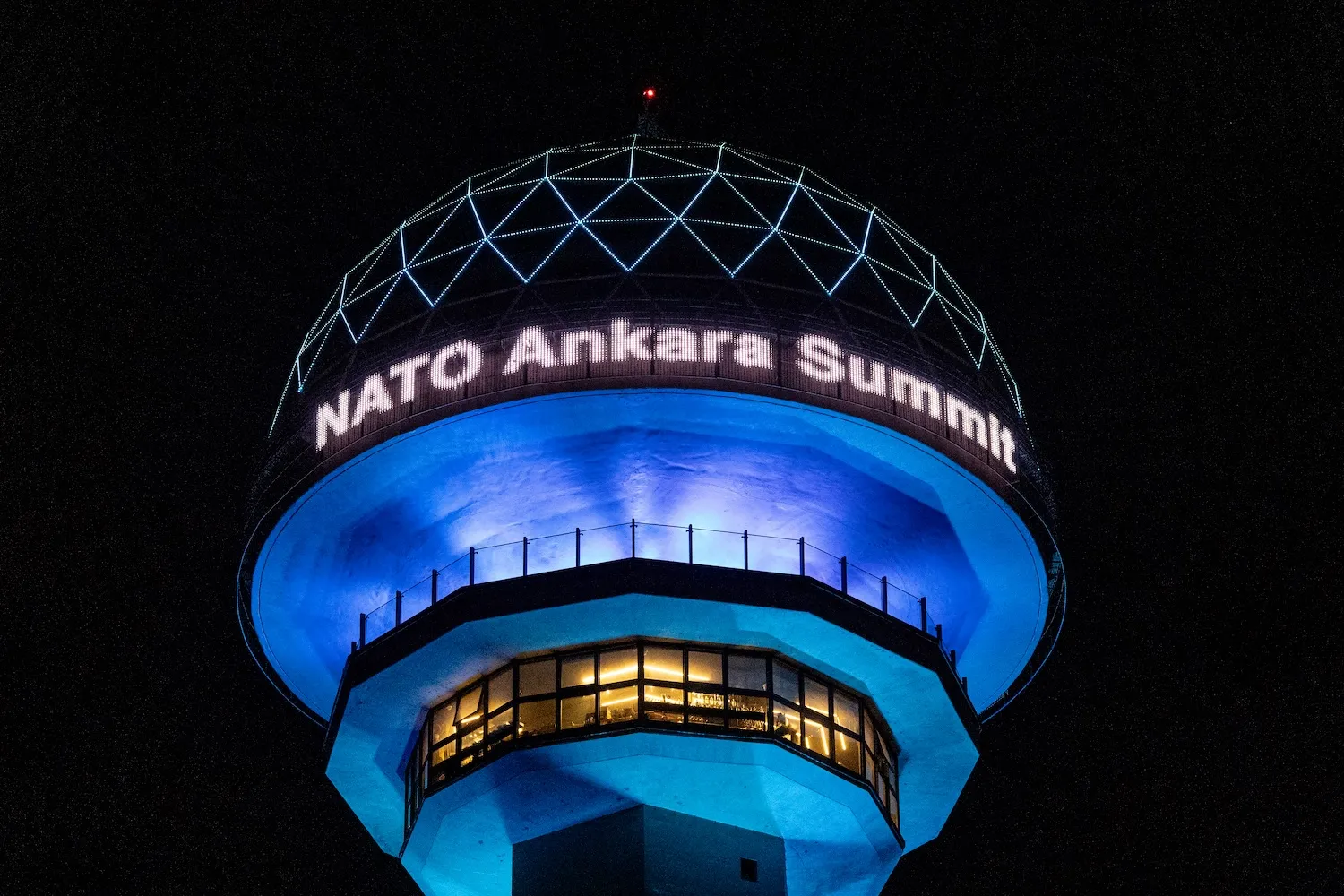
ANKARA, Turkey – As the iconic Atakule tower bathed the Ankara skyline in a deliberate, calming blue on July 5, 2026, the heads of state and government of the North Atlantic Treaty Organization gathered for a summit that will likely define the security architecture of the late 2020s. The resulting declaration, finalized on July 8, marks a significant departure from the reactive policies of the early decade, signaling a move toward a "modernized Alliance" characterized by European strategic autonomy, rapid industrial mobilization, and a hardened stance against both long-term Russian aggression and global instability.

The Core Mandate: Reaffirming Article 5
The summit opened with an unequivocal message of unity. In an era marked by shifting political winds in Washington and the resurgence of great-power competition, the Ankara Declaration serves as a foundational "ironclad" pledge. By reiterating that "an attack on one is an attack on all," the Alliance sought to quell whispers of transatlantic drift.

The declaration emphasizes a "360-degree approach" to security. While the focus on Russia remains paramount, the language used in Ankara signals that NATO is no longer purely a land-based deterrent force. The Alliance is pivoting toward a hybrid model—integrating cyber, space, and artificial intelligence into its traditional combat power.

Chronology of the Ankara Summit
The path to the Ankara Declaration was paved by months of quiet, high-stakes diplomacy.

- January–March 2026: Preparations for the summit began in earnest following the implementation of "The Hague defence commitment," a series of pledges designed to harmonize European defense spending.
- July 5, 2026: Leaders arrive in Ankara. The city is placed under high security as bilateral meetings take place to resolve lingering disagreements over burden-sharing and procurement priorities.
- July 6, 2026: Technical committees finalize the draft of the "New Procurement Initiative," focusing on the $50 billion expansion of collective manufacturing capacity.
- July 7, 2026: Intense negotiations occur regarding the multi-year funding mechanism for Ukraine. European and North American officials reach an agreement on the €70 billion package for 2026.
- July 8, 2026: The formal declaration is signed and released, outlining the roadmap for 2027 and beyond.
Supporting Data: The Economics of Defense
The most striking aspect of the Ankara summit is the sheer scale of the financial commitment. NATO is no longer just a political security pact; it has effectively transformed into a coordinated industrial powerhouse.

In 2025, European Allies and Canada increased their core defense investments by over $139 billion. The Ankara summit capitalized on this momentum with the announcement of an additional $50 billion in new, high-tech procurements. This investment is not merely about replenishing stockpiles; it is about infrastructure.

The Alliance has pledged to:

- Eliminate Trade Barriers: Creating a streamlined defense industrial base to allow for the seamless movement of parts and technology across borders.
- Digital Integration: The development of an "interoperable transatlantic warfighting cloud." This is a significant technological leap, aimed at ensuring that data from AI-driven battlefield models can be shared in real-time between Allied forces.
- Manufacturing Resilience: By focusing on collective manufacturing, NATO aims to reduce dependency on external supply chains, particularly for critical ammunition and precision-guided munitions.
A New Era of Burden-Sharing
For years, the perennial complaint within NATO halls was the disparity in spending. The Ankara Declaration represents a victory for the "stronger Europe in a stronger NATO" philosophy. While the United States remains the linchpin of the Alliance, European Allies and Canada have explicitly accepted greater responsibility for the defense of the continent.

This shift is evidenced by the European Union’s commitment to the Ukraine Support Loan. By institutionalizing multi-year funding, the Alliance is attempting to insulate its support for Kyiv from the volatility of individual domestic election cycles. The pledge of €70 billion for 2026, with an agreement to sustain equivalent levels into 2027, provides a level of strategic predictability that was previously absent.

Official Responses and Strategic Implications
The declaration is not without its geopolitical thorns. The document explicitly calls out Iran, warning that the nation "must never have a nuclear weapon." This stance comes at a delicate time, as the international community navigates the fallout of U.S. policy shifts in the Middle East, including the recent, highly scrutinized diplomatic engagements between the Trump administration and Tehran.

Implications for Russia
The message to Moscow is one of long-term exhaustion. By committing to deep precision strike capabilities, integrated missile defense, and the adoption of cutting-edge AI, NATO is signaling to the Kremlin that it intends to maintain a qualitative combat advantage that cannot be overcome by sheer volume of personnel. The "360-degree approach" implies that Russia can no longer count on NATO being distracted by peripheral issues; the Alliance is now structurally designed to manage multiple theaters simultaneously.

The Technological Edge
Perhaps the most forward-looking component of the summit is the focus on "uncrewed systems" and AI. The Alliance is clearly moving toward a model where intelligence, surveillance, and reconnaissance (ISR) capabilities are fully autonomous. The goal is a seamless, tech-enabled battlefield where the speed of decision-making is accelerated by the very AI models the Allies are now committed to adopting.

Conclusion: Challenges Ahead
Despite the unity displayed in Ankara, significant hurdles remain. The transition from national defense industries to a truly "interoperable transatlantic" system will face pushback from protectionist domestic lobbies. Furthermore, the commitment to sustain high levels of funding for Ukraine in 2027 will be tested by the economic realities of a Europe still grappling with inflation and energy transition costs.

However, the 2026 Ankara summit has undeniably established a new benchmark. The "Ankara Consensus" is one of active, expensive, and technologically advanced deterrence. As the delegates departed the blue-lit skyline of Ankara, the consensus among observers was clear: NATO has evolved. It is no longer just a reactive alliance focused on the memory of the Cold War; it is a modern, digitized, and industrially integrated force designed to survive and win in the complex, multipolar environment of the late 2020s.

The coming months will determine if these ambitious financial and industrial promises can be translated into hard power on the ground. For now, the Alliance has successfully bought itself time, stability, and a unified roadmap for the future.