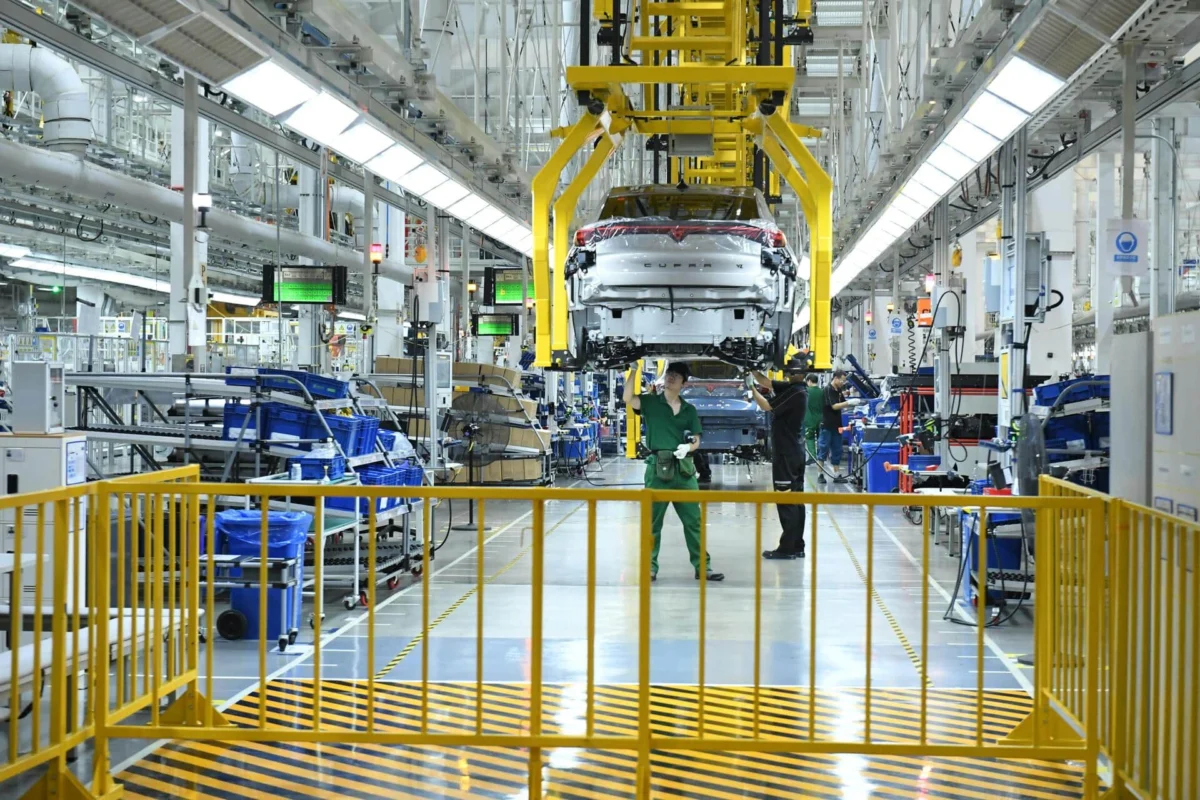
Brussels is currently navigating a precarious geopolitical and economic tightrope. Facing a staggering trade deficit with China that has ballooned to over 1 billion euros per day, the European Union is reportedly preparing to impose fresh restrictions on imports of Chinese-made hybrid vehicles. The move signals a potential escalation in the ongoing trade friction between the world’s largest trading bloc and the East Asian economic powerhouse, marking a pivotal moment for the future of the global automotive sector.
The Core Conflict: A Widening Economic Chasm
The European Commission, led by its trade department, is under mounting pressure to rectify an imbalance that many policymakers now view as structurally unsustainable. While the EU has long championed the principles of free trade, the influx of heavily subsidized Chinese electric and hybrid vehicles has ignited fears of "deindustrialization" within Europe’s historic manufacturing heartlands.
The proposed import caps are not merely a regulatory tweak; they are a defensive mechanism designed to shield domestic manufacturers—such as Volkswagen, Stellantis, and Renault—from what Brussels characterizes as unfair competition. By capping the volume of hybrid vehicles entering the Single Market, the EU aims to provide European firms with the breathing room necessary to scale their own electric vehicle (EV) production lines and secure supply chains that are currently overly dependent on Chinese battery technology.
Chronology: From Cooperation to Confrontation
The path to these proposed restrictions has been paved with years of shifting sentiment regarding China’s role in the European economy.
- 2020–2022: The "Strategic Autonomy" Pivot: Following the disruptions of the COVID-19 pandemic, EU leaders began emphasizing the need for "strategic autonomy." This concept, initially focused on medical supplies, soon expanded to encompass semiconductors and energy, eventually landing squarely on the automotive industry.
- Early 2023: The Anti-Subsidy Investigation: The European Commission launched a formal anti-subsidy probe into Chinese EVs, citing evidence that state support allowed Chinese firms to artificially suppress prices.
- August 2024: The Strategic Realignment: Analysts Kevin Zhang and Earl A. Carr Jr. highlighted in a World Politics Review briefing that the European auto industry was at a crossroads. They argued that European manufacturers could no longer rely solely on legacy prestige; they needed to pivot toward Chinese technological integration while leveraging their traditional engineering prowess.
- October 2026: The Impasse: As the trade deficit breached the 1-billion-euro-per-day mark, reports emerged that the EU was moving from mere investigations to actionable volume restrictions on hybrid imports.
Supporting Data: By the Numbers
The economic reality driving this policy shift is stark. The EU’s trade deficit with China is not a minor fluctuation but a systemic trend.
- The Daily Deficit: The 1-billion-euro-per-day figure reflects a broader inability for European exports to match the sheer scale and speed of Chinese manufacturing output.
- Market Penetration: Chinese-made hybrids and EVs have seen their market share in Europe grow exponentially. In some segments, Chinese brands are now offering high-tech features at price points 20% to 30% lower than comparable European models.
- Subsidy Impact: EU regulators estimate that state-backed financing, land grants, and raw material subsidies in China provide an effective price advantage that European firms—operating under strict EU state-aid rules—simply cannot match.
- Employment Stakes: With millions of Europeans employed directly or indirectly by the automotive sector, the potential for mass layoffs due to a loss of competitiveness has made this a top-tier political priority for the governments of Germany, France, and Italy.
Official Responses and Diplomatic Manoeuvering
The diplomatic fallout of these potential caps is already in motion. The EU’s trade chief is scheduled to travel to Beijing this week for high-stakes talks with China’s commerce minister. These discussions are viewed as a "last-ditch" effort to find a negotiated settlement—perhaps in the form of voluntary export restraints or price floors—that would avoid the need for unilateral, hard-capped import restrictions.
Beijing has historically responded to such threats with warnings of "appropriate measures," which, in the past, have included retaliatory tariffs on European agricultural products, luxury goods, or chemicals. China maintains that its success is a result of innovation and efficiency, not subsidies, and that the EU’s actions represent a retreat into protectionism that violates World Trade Organization (WTO) principles.
In Brussels, the mood is cautious. While officials are keen to project strength, there is an acute awareness of the "Volkswagen dilemma." Many European carmakers operate massive, lucrative joint ventures in China. A full-blown trade war would not only hurt Chinese exports to Europe but could result in the expulsion of European brands from the Chinese market, which remains the world’s largest automotive theater.
Implications: A New Era for European Manufacturing
The implications of this policy shift extend far beyond the showroom floor.
H3: The Innovation Gap
As noted by Zhang and Carr, the challenge is not just about protection; it is about innovation. European automakers are currently locked in a race to master software-defined vehicles and next-generation battery chemistries. If the EU chooses to use trade barriers to buy time, that time must be used effectively. If the industry uses the protection to avoid modernization, the long-term outlook for European automotive dominance remains grim.
H3: Geopolitical Realignments
This policy shift suggests a fundamental change in the EU’s foreign policy posture. The era of "naive engagement" is over. Brussels is signaling that it is willing to sacrifice some consumer choice and potentially risk diplomatic friction to preserve the foundational industrial pillars of the European project.
H3: Impact on the Green Transition
One of the most complex aspects of this debate is the impact on the EU’s "Green Deal." The bloc has committed to aggressive carbon-neutrality goals, which necessitate a rapid transition to electric and hybrid vehicles. By restricting imports of cheaper Chinese hybrids, the EU risks slowing down the adoption of cleaner vehicles among European consumers, as domestic alternatives remain relatively expensive. This creates a direct policy contradiction: the need to protect industry vs. the need to decarbonize the transport sector.
Conclusion: The Path Forward
The coming weeks will be defined by the outcome of the Brussels-Beijing talks. If an agreement is reached, the EU may hold off on formal import caps, opting instead for a "managed trade" approach that allows Chinese growth while ensuring a level playing field. However, if the talks collapse, the imposition of quotas will mark a significant escalation in global trade tensions.
For the European consumer, this may mean fewer choices and higher prices in the short term. For the European automotive industry, it represents a "sink or swim" moment. Whether through government protection or a radical internal transformation, the sector must find a way to reconcile its storied history with the fast-paced, high-tech reality of the 21st-century automotive landscape. The 1-billion-euro-a-day trade deficit is not just a number on a balance sheet; it is the sound of a ticking clock for Europe’s industrial future.