As the 2026 midterm elections loom less than three weeks away, the political landscape in Washington is undergoing a period of intense turbulence. From the halls of the Pentagon to the courtrooms of California, the Trump administration finds itself navigating a series of high-stakes controversies, ranging from the execution protocols of high-profile inmates to the geopolitical fallout of satellite communications restrictions in Ukraine.
The Reversal on the Nidal Hasan Execution
The most immediate focus of the current political discourse centers on the administration’s handling of the death sentence for Nidal Hasan, the U.S. Army doctor convicted for the 2009 Fort Hood massacre that claimed the lives of 13 people.
Earlier this week, Defense Secretary Pete Hegseth sparked a firestorm of bipartisan condemnation when he announced that Hasan’s execution by firing squad would be livestreamed. The proposal was met with immediate backlash from lawmakers across the aisle, with many characterizing the move as an inappropriate spectacle that risked turning a state-sanctioned execution into a form of public entertainment.
The White House Pivot
Following the intense pushback, President Donald Trump intervened, announcing via Truth Social on Thursday that the livestream had been canceled. Trump justified the decision by noting that "many very good and well-meaning people would rather not watch him die, through streaming, or through any other visual device."
The Pentagon has since confirmed that the decision was a collaborative one, emphasizing that the administration is fully aligned on the matter. Chief Pentagon spokesperson Sean Parnell stated, "President Trump and Secretary Hegseth spoke about the decision to not livestream Hasan’s execution ahead of the Truth Social announcement. The Secretary supports the President’s decision, and they are completely aligned."
Religious and Ideological Divisions
Despite the cancellation, the incident has highlighted a deep ideological divide within the administration’s support base. While mainstream figures welcomed the decision, some right-wing religious allies have expressed disappointment. Douglas Wilson, a pastor and leader within the Communion of Reformed Evangelical Churches (CREC)—a group with which Secretary Hegseth has ties—had publicly advocated for public executions, arguing that they are biblically authorized and that the "medicalization" of modern executions is flawed.
The Starlink Controversy and Geopolitical Strain
Parallel to the domestic execution debate, the administration is facing mounting international pressure regarding the role of American technology in the ongoing war in Ukraine.

Reports from Reuters, citing both U.S. and Western officials, suggest that an order to restrict the use of SpaceX’s "Starshield" service—the military-grade version of Starlink—came directly from the White House. The restriction has hampered the Ukrainian military’s ability to utilize drones for tactical operations, as the receptors reportedly stopped functioning when mounted on fast-moving objects.
Official Denials and Strategic Questions
The White House has officially denied that President Trump issued a direct request to limit Starshield’s functionality. A spokesperson for the administration stated, "No such request was ever made by the president," though the statement notably left room for ambiguity regarding whether other administration officials might have implemented the policy.
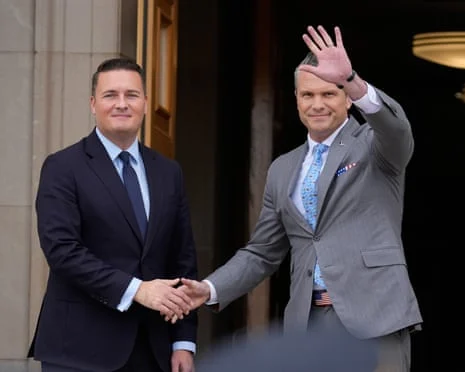
The potential curbing of these communications systems has drawn sharp criticism from international allies. British Defence Secretary Wes Streeting, currently on his first official visit to Washington, emphasized the critical nature of the partnership between the U.S. and the UK in supporting Kyiv. Streeting warned that if Russian aggression is rewarded, the "consequences will not remain confined to Ukraine or to my continent."
Election Integrity and Legal Battles in California
As the midterm elections approach, the Department of Justice has initiated a legal challenge against the state of California, seeking to block the counting of mail-in ballots from 20,000 registered voters. The administration alleges that these individuals may not be U.S. citizens.
The State’s Defense
California officials, led by Governor Gavin Newsom, have dismissed the lawsuit as a "sad, desperate attempt" by the Trump administration to suppress voter turnout less than three weeks before Election Day. California Secretary of State Shirley Weber further noted that the federal government failed to provide a clear methodology for how the list of 20,000 "suspected non-citizens" was compiled.
The controversy is reminiscent of a recent incident in Nevada, where the Department of Homeland Security (DHS) alleged that 16,000 potential non-citizens were on the voter rolls, only to later concede that their evidence was entirely unfounded. The registrar of Los Angeles County, Dean Logan, highlighted the technical absurdity of the current situation, noting that his office received a thumb drive from the federal government containing the list, secured only by a password written on a sticky note.
The Midterm Climate: A Political Snapshot
The broader political environment appears increasingly precarious for the Republican Party. Recent polling data, including an exclusive Harris poll conducted for the Guardian, reveals that a significant portion of the electorate is dissatisfied with the current state of the economy.

Economic Pessimism
Three-quarters of Americans surveyed expressed concern about a potential recession, and 61% hold the erroneous belief that the U.S. is already in one. Even within the Republican base, optimism has waned; only 28% of Republicans now believe the economy is improving, a sharp drop from earlier in the year.
This climate has led to public friction within the party. President Trump, despite not being on the ballot, has aggressively sought to shift blame for potential losses. In a recent social media outburst, he targeted Senator John Cornyn and veteran strategist Karl Rove, blaming them for the struggles of Texas Senate candidate Ken Paxton. Trump accused these figures of "doing everything possible to make it hard" for his endorsed candidates to succeed, further highlighting the internal divisions that could impact Republican turnout.
Administrative Scrutiny: The Press Secretary’s Role
Amid these cascading crises, the administration’s new White House press secretary, Katie Zacharia, is facing intense scrutiny regarding her professional background. Questions have emerged about her legal credentials and her career history, specifically a decade-long gap in her professional profile that reports indicate was spent as an affiliate marketer for a multi-level marketing company.
While the President has championed her as a "loyal and brilliant supporter," her limited engagement with the press and the ambiguity surrounding her experience have added another layer of complexity to the administration’s communications strategy.
Chronology of Key Events (October 15, 2026)
- 06:26 EDT: President Trump claims the war in Iran "will end very soon," despite ongoing economic concerns and global conflict.
- 07:30 EDT: New polling indicates widespread voter desire for change in Washington, with the economy and cost of living cited as top priorities.
- 08:45 EDT: Reports emerge of a proposed $335,000 ad campaign to encourage South African Afrikaners to apply for U.S. refugee status.
- 10:15 EDT: President Trump officially confirms the cancellation of the Nidal Hasan execution livestream via Truth Social.
- 12:50 EDT: British Defence Secretary Wes Streeting emphasizes the necessity of standing with Ukraine during a speech in Washington.
- 16:00 EDT: The Trump administration sues California over the verification of 20,000 voter ballots.
- 19:00 EDT: FBI and U.S. Postal Inspection Service confirm an investigation into suspicious letters containing "unknown substances" sent to election officials nationwide.
Implications for the Future
As the nation moves toward the November midterms, the intersection of these events presents a formidable challenge to the administration. The combination of active litigation against state election authorities, concerns over military and intelligence cooperation with allies, and the persistent strain of the cost-of-living crisis suggests that the final weeks of the campaign will be defined by a battle for voter trust.
Whether the administration’s strategy of aggressive rhetoric and focus on executive action will mobilize its base or alienate the crucial independent voting bloc remains the central question of the 2026 cycle. With federal investigations into suspicious mailings adding a layer of security concern to an already volatile election, the coming weeks are set to be among the most consequential in recent American political history.