TIRANA – The streets of the Albanian capital, once a symbol of the country’s post-communist transition and modernization, have been transformed into a volatile theater of civil unrest. What began as a localized movement led by university students—initially focused on the austerity of higher education—has metastasized into a systemic challenge to the administration of Prime Minister Edi Rama. As plumes of acrid smoke drift over the city center, the intersection of economic grievances, environmental activism, and deep-seated political alienation has brought Tirana to a standstill.
Main Facts: A City Under Siege
The escalation of hostilities between demonstrators and state security forces reached a breaking point this week. The city center has become a landscape of destruction: storefronts shattered, financial institutions looted, and public infrastructure systematically dismantled.
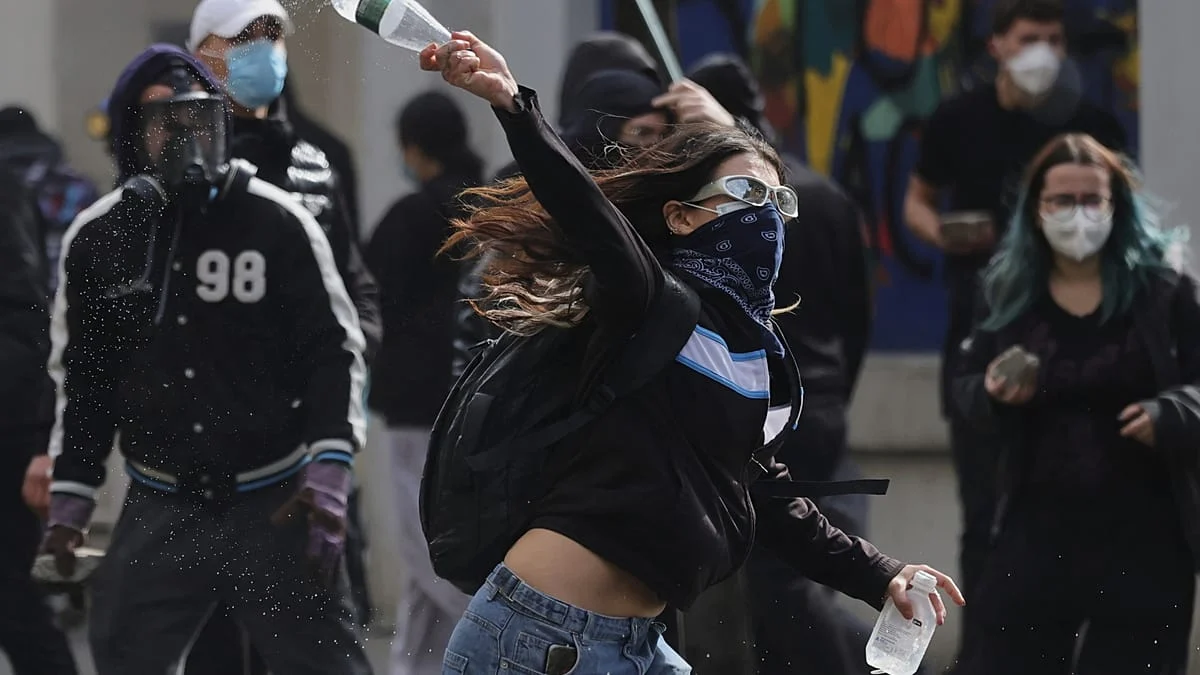
Riot police, mobilized in heavy formations, have struggled to maintain a perimeter against waves of protesters who have demonstrated an increasing willingness to engage in direct confrontation. Footage from the scene captures a visceral reality: protesters racing through thick, chemical-heavy fog, tearing down steel police barriers, and, in a symbolic act of defiance, hurling spent tear-gas canisters back at the lines of officers.
The physical toll on the city is significant. Beyond the targeted destruction of ATMs, surveillance cameras, and government vehicles, fires have broken out across the urban core. Firefighters, working under the protection of police cordons, have labored to extinguish blazes that engulfed century-old trees and roadside structures. By morning, the streets were littered with the debris of the night’s violence—burnt-out chassis, jagged glass, and the remnants of a city struggling to regain its footing.
Chronology: The Escalation of Dissent
The current crisis did not emerge in a vacuum; it is the culmination of three distinct, converging streams of discontent.
Phase 1: The Academic Spark
The unrest was ignited three days ago by student groups protesting the crumbling infrastructure of Albania’s public universities. The initial demands were bureaucratic and financial: students called for a reduction in tuition fees, increased transparency in university funding, and an improvement in the quality of student housing. These peaceful demonstrations were dismissed by many in the political establishment as localized grievances, yet they provided the organizational blueprint for the larger protests that followed.
Phase 2: The Coalition of the Discontented
As the student movement gained momentum, it found common cause with the "Flamingo movement." This environmental and social advocacy group had already been mobilizing against a controversial luxury resort project—an initiative linked to Jared Kushner, son-in-law of former U.S. President Donald Trump. The overlap between the students’ economic despair and the Flamingo movement’s opposition to what they characterize as "crony capitalism" allowed the protest to broaden its scope.
Phase 3: The Call for Resignation
By the third day, the narrative shifted from reform to regime change. Allegations of systemic corruption within the Rama administration became the focal point. Protesters began explicitly calling for the resignation of Prime Minister Edi Rama, accusing his government of prioritizing international real estate interests over the survival of the Albanian middle class. The protest transformed from a request for better schools into a demand for a total overhaul of the political leadership.
Supporting Data: The Economic and Social Drivers
To understand the intensity of the riots, one must look at the underlying socioeconomic data characterizing modern Albania.
- Youth Unemployment: Albania continues to struggle with high rates of youth unemployment, which has historically fueled waves of mass emigration. For those remaining, the promise of a "European future" has been dampened by stagnant wages and a high cost of living.
- Corruption Indices: Albania’s standing in international corruption perception rankings remains a point of contention. The government has faced repeated criticism from the European Union regarding the rule of law and the independence of the judiciary.
- The Kushner Factor: The involvement of high-profile international investors in domestic land-use projects has become a lightning rod for anti-government sentiment. For the protesters, these deals represent a "sale of the country" to foreign interests, bypassing local democratic oversight.
The disparity between the glossy renderings of the proposed luxury developments and the reality of underfunded dormitories has created a psychological rupture. The demonstrators argue that if there is money for luxury resorts, there is money to ensure that the next generation of Albanian professionals can afford to stay in their own country.
Official Responses: The Government’s Dilemma
The response from the Rama government has been bifurcated between a rigid commitment to law and order and an attempt to characterize the protesters as "hooligans" rather than legitimate political actors.
In official statements, the Ministry of Interior has emphasized the need to protect public and private property, justifying the use of water cannons and tear gas as "proportionate measures" to clear the streets of violent agitators. Prime Minister Rama, known for his combative communication style, has largely refrained from engaging with the specific demands of the protesters, instead focusing on the "unacceptable" nature of the violence.
Security analysts observe that the government is caught in a trap. Excessive force risks martyr-making and further radicalization of the youth, while concessions could be perceived as a sign of weakness that might embolden opposition political parties to seize the moment and capitalize on the chaos.
Implications: The Road Ahead
The situation in Tirana carries profound implications for the stability of the Balkans.
1. The Stability of the Rama Administration
While the Prime Minister retains a majority in parliament, the psychological grip of his government has been severely weakened. The sight of the capital’s center in flames serves as a powerful symbol of waning legitimacy. If the demonstrations continue to draw from a diverse cross-section of society—not just students, but also labor unions and civil society groups—the government may find it increasingly difficult to govern effectively.
2. International Relations and Investment
The involvement of Jared Kushner’s investment firm in Albanian projects has placed the country in the crosshairs of global scrutiny. Foreign investors are historically skittish regarding civil unrest. The riots may deter future investment, potentially deepening the economic crisis that triggered the protests in the first place—a vicious cycle of instability.
3. The Future of the "European Dream"
Albania’s aspirations for European Union integration are predicated on stability and the rule of law. Continued images of burning cities, state violence, and deep-seated corruption allegations complicate the country’s accession trajectory. EU observers are likely to view the current unrest as a signal that the promised structural reforms have failed to reach the average citizen.
4. Societal Polarization
Perhaps the most worrying implication is the growing chasm between the political elite and the youth. A generation that feels they have no stake in the current system is a generation prone to radical action. As residents and workers begin the arduous task of clearing the debris from the city center, the question remains: will the cleaning of the streets lead to a "cleaning" of the political process, or is this merely the prologue to a longer, more painful period of civil confrontation?
As the sun sets on the Albanian capital, the silence is heavy. The barriers have been moved, the fires extinguished, and the streets swept, but the underlying tensions—the lack of opportunity, the accusations of corruption, and the profound lack of trust in state institutions—remain largely unaddressed. For the people of Tirana, the coming days will be a test of resilience, while for the government, it will be a test of survival in an increasingly volatile political climate.