In the landscape of modern democracy, the health of a nation is often measured not by its GDP or its military might, but by the safety of its journalists. When the ink of the investigative reporter dries, the shadows of corruption, malfeasance, and state-sponsored violence begin to lengthen. The recent acquittal of a Maltese business tycoon in the 2017 murder of anti-corruption journalist Daphne Caruana Galizia serves as a grim, high-profile indictment of a global system increasingly defined by the normalization of impunity.
Nine years after Caruana Galizia was killed by a car bomb—an act that shattered the veneer of European stability—her killers remain largely beyond the reach of justice. This failure is not an isolated incident; it is a symptom of a systemic decline. As highlighted in the 2026 Atlas of Impunity, published by the Eurasia Group in partnership with the Thomson Reuters Foundation, the degradation of press freedom has emerged as the most significant accelerant of global impunity in the last half-decade.

The Architecture of Impunity: Defining the Crisis
Impunity is defined as the exercise of power without accountability. It is the social and political vacuum created when the rule of law is subverted by those with the influence to escape the consequences of their actions. While the world often focuses on the immediate, visceral impact of violence, the Atlas of Impunity reveals that the erosion of the information ecosystem is the foundational layer upon which this injustice is built.
When journalists are silenced—whether through physical assassination, legal harassment, or the financial strangulation of media outlets—the public’s ability to demand accountability vanishes. The Maltese verdict, which cleared a prominent tycoon of complicity in Caruana Galizia’s death, has sent a chilling message: the pursuit of truth carries a price, and the powerful are increasingly shielded from paying it. As Caruana Galizia’s sister poignantly noted following the verdict, "Everybody is much more at risk now because this signals you can kill journalists with impunity."

Chronology of a Declining Landscape
The trajectory of press freedom over the last decade has been marked by a transition from democratic backsliding to overt authoritarian suppression.
- 2017: The assassination of Daphne Caruana Galizia sends shockwaves through the European Union, exposing the vulnerabilities of investigative journalism in the face of deep-seated, offshore-linked corruption.
- 2021: The withdrawal of international forces from Afghanistan and the subsequent Taliban takeover initiate one of the most rapid declines in press freedom in modern history. More than two-thirds of the nation’s journalists are forced to flee or abandon their profession within five years.
- 2023–2024: Global patterns of "misinformation" legislation emerge, particularly in Central Asian republics and parts of Eastern Europe, where governments weaponize laws against independent media to protect entrenched interests.
- 2026: The release of the Atlas of Impunity confirms a statistical correlation: in nine out of ten cases, nations experiencing the sharpest decline in press freedom also report a commensurate, dramatic rise in systemic impunity.
Supporting Data: The Correlation Between Silence and Power
The data presented in the 2026 Atlas is stark. While overall global impunity levels have remained stagnant, the regional disparities are widening. Conflict zones—specifically Syria, Afghanistan, Myanmar, and Sudan—serve as the extreme end of the spectrum, where nonstate actors and fractured governments operate in a landscape entirely devoid of oversight.

However, the report warns against the assumption that conflict is the only catalyst for impunity. In fact, highly centralized and authoritarian states, such as China and various Central Asian republics, demonstrate that "stability" can be just as lethal to accountability as war. In these regimes, the control of information is total, and the legal system is often used as an instrument of state policy rather than a neutral arbiter of justice.
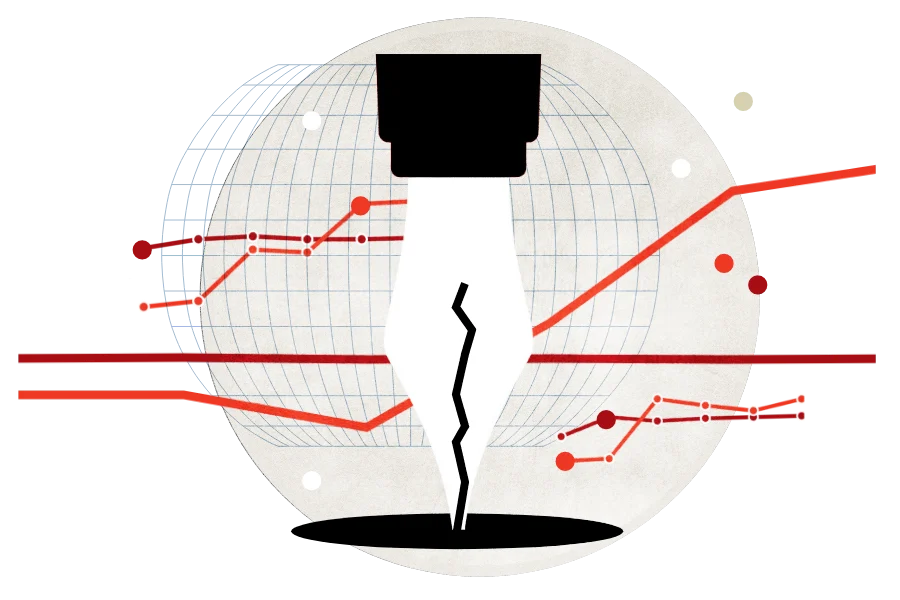
The report identifies a clear metric: for every downward tick in press freedom, there is a corresponding upward trend in the "Impunity Score." This is not coincidental. A free press acts as the nervous system of society; when it is severed, the body politic cannot feel the pain of corruption until the damage is irreversible.

Official Responses and Global Stakeholders
The international community’s response to these findings has been a mixture of alarm and institutional paralysis. Human rights organizations, such as Reporters Without Borders (RSF) and the Thomson Reuters Foundation, have pointed to the drastic reduction in foreign aid for media and civil society as a major contributor to the current crisis.
"Foreign aid programs for media were the bulwark against the encroachment of disinformation and the silencing of dissent," says Antonio Zappulla, CEO of the Thomson Reuters Foundation. "When we divest from the capacity of journalists to source, verify, and share information, we are effectively subsidizing the growth of impunity. We are creating a global information vacuum that is being filled by those who thrive in the dark."

The criticism from international bodies has been directed not just at authoritarian regimes, but at democratic nations that have failed to protect their own media infrastructures. The rise of "transnational repression"—where governments use surveillance and legal threats to target journalists even when they are abroad—has turned impunity into a borderless issue.
Implications: A Borderless Crisis
The implications of this decline are profound. In an era of interconnected economies and globalized organized crime, impunity is no longer a localized problem. When a journalist is killed in Valletta, or a media house is shuttered in Bishkek, the ripples are felt in the global markets and political institutions that depend on the free flow of accurate information.

- The Death of Transparency: Without a free press, financial corruption goes unchecked. This leads to the erosion of foreign investment trust and the entrenchment of kleptocratic networks that bypass international sanctions.
- The Normalization of Violence: The failure to prosecute those who harm journalists emboldens further attacks. It creates a "permission structure" for violence, where the cost-benefit analysis for attacking a reporter shifts heavily toward the perpetrator.
- The Threat to Global Security: As the Atlas of Impunity suggests, the lack of accountability in governance fuels instability. Insecure, poorly governed states are more likely to harbor extremists, trigger refugee crises, and facilitate regional conflicts.
The Path Forward: Can the Tide Be Turned?
If the decline of media freedom is the primary driver of rising impunity, the solution lies in the radical reinvestment in journalistic independence and institutional resilience. The path to reversing these trends requires more than just rhetoric; it requires a structural commitment to the following:
- Financial Sustainability: Governments and private foundations must prioritize the funding of investigative journalism as a global public good. This includes legal defense funds for journalists and subsidies for independent media in fragile states.
- Legislative Reform: International standards must be established to combat the abuse of "misinformation" laws. Journalists must be protected by international law under a framework that recognizes their role as essential human rights defenders.
- Accountability Mechanisms: The international community must move beyond public condemnations. Establishing special rapporteurs for the safety of journalists and creating international courts or oversight mechanisms for crimes against media personnel are necessary steps to impose a tangible cost on those who silence the press.
The death of Daphne Caruana Galizia should have been a turning point—a moment where the world collectively decided that the silencing of truth was unacceptable. Instead, it has become a case study in the slow, grinding erosion of justice. The Atlas of Impunity 2026 is a clarion call to recognize that press freedom is not a luxury or a secondary policy concern; it is the fundamental barrier between a functioning society and the chaos of unchecked power.

As the report concludes, the world possesses the resources and the capacity to reverse this trend. What remains to be seen is whether the international community possesses the political courage to treat the protection of truth as the prerequisite for global survival that it truly is. In the absence of such courage, the pen will remain a dangerous instrument, and those who wield it will continue to walk a path of increasing peril.