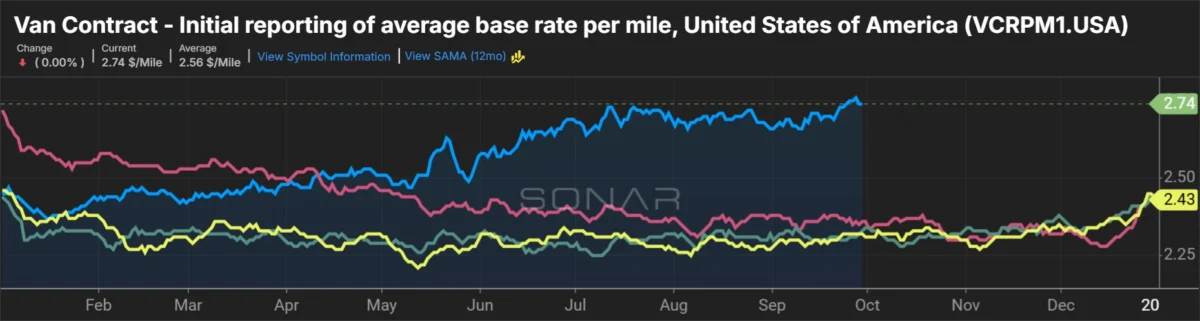
The American freight landscape is undergoing a period of profound recalibration. According to the latest monthly report from Cass Information Systems, truckload (TL) linehaul rates experienced another significant surge in September, continuing a trend of robust year-over-year growth. As the industry moves deeper into the fourth quarter of 2026, the data paints a picture of a sector defined by persistent rate inflation, a shrinking pool of compliant capacity, and a fragile but recovering demand environment.
Main Facts: A Resilient Market
The headline figure from the Cass report is the 10.1% year-over-year increase in the TL linehaul index. This index, which is widely considered a bellwether for the industry, tracks base rates while stripping out the volatility of fuel surcharges and various accessorial fees.
The data, released this past Tuesday, confirms that the industry has reached its highest absolute reading in four years. This marks the 21st consecutive month of year-over-year growth—a sustained streak that underscores the structural changes currently reshaping the trucking sector. While the monthly growth rate of 0.6% was marginally softer than the year-to-date average, the momentum remains firmly in the corner of the carrier.
The contrast between the spot and contract markets remains the primary narrative. While spot market activity has shown a modest, seasonal cooling, the much larger contract market—which serves as the backbone of national supply chains—continues to adjust upward, reflecting the reality of higher operating costs and the increasing scarcity of reliable capacity.
Chronology: The Road to September 2026
The current pricing environment is the result of a long-term evolution in market dynamics. For years, the industry grappled with excess capacity, but 2026 has served as a pivot point.

- Early 2026: Carriers began signaling that the post-pandemic "freight recession" was losing its grip. Executives at investor conferences noted a pivot in strategy, focusing on yield management over sheer volume.
- Mid-Summer 2026: Despite a typical seasonal slowdown in the spot market, major carriers—including Werner Enterprises—remained unfazed. Their confidence was rooted in the belief that the "capacity exodus" was accelerating rather than plateauing.
- August 2026: Cass reported a notable jump in rates, setting the stage for the September data. Shipment counts, which had suffered through 42 months of decline, finally broke into positive territory, signaling that the volume bottom had been established.
- September 2026: The market saw a 1.9% year-over-year increase in shipments, marking the second consecutive month of growth. This performance, coupled with the 10.1% surge in linehaul rates, confirmed that the industry is firmly in a recovery phase, albeit one burdened by significant inflationary pressure.
Supporting Data: By the Numbers
The depth of the Cass dataset provides a granular look at the forces driving these trends.
Key Performance Indicators (September 2026)
| Metric | y/y Change | 2-year Change | m/m Change |
|---|---|---|---|
| Shipments | 1.9% | -3.6% | 2.3% |
| Expenditures | 20.4% | 23.1% | 6.7% |
| TL Linehaul Index | 10.1% | 12.9% | 0.6% |
The expenditures index is particularly striking, jumping 20.4% year-over-year. This figure is not merely a reflection of rate hikes; it is heavily influenced by the cost of diesel, which surged 68% over the same period. For shippers, this represents a "double-whammy" of higher base rates and volatile, elevated fuel surcharges.
Furthermore, the manufacturing sector—a key driver of freight demand—has maintained a positive outlook. The Institute for Supply Management (ISM) reported a Manufacturing PMI of 54.5 in September, with new orders showing a healthy 55.3. When the manufacturing engine is running, freight demand follows.
Official Responses and Industry Sentiment
The prevailing sentiment among carrier executives is one of calculated optimism. During recent investor calls, leadership teams emphasized that they are in a position of strength as they head into the annual bid season.
"The capacity exodus is growing, not slowing," noted one executive. The industry is currently witnessing the cumulative effect of a regulatory crackdown that is systematically removing thousands of unsafe or non-compliant operators from the road. As these operators exit, the remaining, highly compliant fleets gain leverage in rate negotiations.
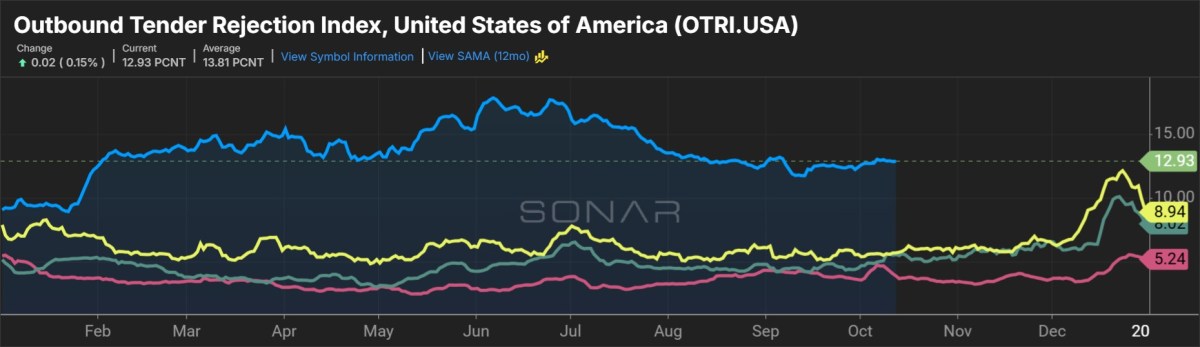
Werner Enterprises has been a vocal participant in this trend, with third-quarter guidance projecting a 10% to 13% year-over-year increase in rate per total mile. This guidance is not an outlier but a reflection of the broader industry strategy: prioritizing high-quality, long-term contracts over the volatility of the spot market.
The market now turns its attention to the upcoming earnings season. With J.B. Hunt Transport Services reporting this week, analysts will be looking for confirmation that the pricing power observed by Cass is translating into improved bottom-line margins for the nation’s largest fleets.
Implications: A New Era for Logistics
The implications of this report are far-reaching for both shippers and carriers.
For Shippers: The End of "Cheap" Capacity
The era of easily accessible, low-cost capacity is over for the time being. Shippers must contend with a market where carriers are no longer desperate for volume. With the "Shipper of Choice" programs becoming a standard differentiator, those who do not provide efficient facilities, reasonable detention times, and consistent, predictable freight will find themselves paying a significant premium—if they can secure capacity at all.
For Carriers: Yield Over Volume
For carriers, the focus is squarely on yield management. The data suggests that the successful firms are those that have optimized their networks and are utilizing tools like the SONAR platform to identify lanes with the highest tender rejection rates. By focusing on capacity-constrained corridors, carriers are effectively weaponizing the supply-demand imbalance to push for better contract terms.
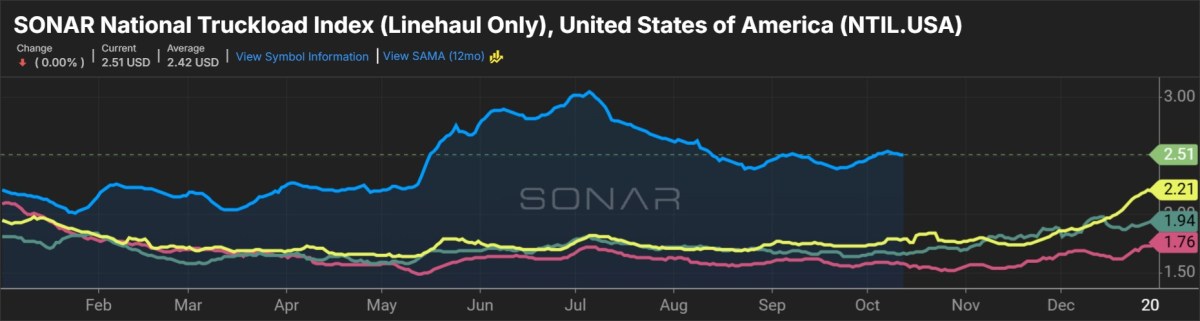
The Macro View: Regulatory and Economic Constraints
The "road-to-rail" conversion, which was a major trend in previous years, is being challenged by high fuel prices and the need for greater agility. As supply chains remain sensitive to disruption, the reliability of trucking—despite the cost—remains a necessity.
Furthermore, the role of government regulation cannot be overstated. As the FMCSA and other bodies continue to tighten safety standards, the barrier to entry for new carriers has risen significantly. This structural tightening acts as a permanent floor for rates, as the cost of compliance is now a non-negotiable line item for every operator.
Conclusion: Looking Ahead to October and Beyond
Cass forecasts a 4% year-over-year increase in shipments for October, assuming standard seasonal patterns hold. However, the true story of the final quarter will be the extent to which the contract market can continue to absorb these rate increases without stifling the nascent demand recovery.
As the industry prepares for the upcoming Future of Freight Festival (F3) in Chattanooga, the conversation will undoubtedly center on technology, compliance, and the future of the American supply chain. With rates hitting four-year highs and the regulatory environment remaining unforgiving, the freight industry is not merely recovering; it is being fundamentally restructured for a more expensive, more compliant, and more rigorous future.
For the logistics professional, the message from the September data is clear: the market has shifted, and the strategies that governed the previous decade are no longer sufficient to navigate the current landscape. As we look toward 2027, the emphasis on data-driven decision-making, operational compliance, and strategic carrier-shipper partnerships will define the winners and losers in this newly hardened market.