By Janis A. Emmanouilidis
October 22, 2026
BRUSSELS — For years, the European Union has defined its security posture through the lens of external volatility. Policymakers in Brussels have spent sleepless nights strategizing against Russian revisionism, managing the economic friction of Chinese trade practices, and navigating the unpredictable oscillations of Washington’s transatlantic commitment under President Donald Trump. Yet, as the calendar turns to late 2026, a growing consensus among institutional observers suggests that the most profound threat to the European project is not located on the periphery, but rather within the very legislative chambers of the Union itself.
The EU’s supranational foundations are currently facing a sophisticated, multi-front assault from actors who seek to dismantle the post-war architecture of integration. This is no longer a fringe movement; it is an organized, well-funded, and increasingly institutionalized push to reclaim national sovereignty at the expense of collective European action.
The Main Facts: A Shift in Political Strategy
The fundamental challenge to the EU today lies in the transition from "soft" Euroscepticism—which historically focused on minor treaty reforms or opt-outs—to a "radical restructuring" agenda.
At the heart of this shift is the emergence of comprehensive legislative frameworks proposed by right-wing populist factions. A primary example is the recent "New Deal for Europe" presented by Germany’s Alternative für Deutschland (AfD) within the European Parliament. This proposal is not merely a call for austerity or border control; it is a blueprint for the wholesale dismantling of the EU’s supranational mechanisms, advocating for a return to a loose confederation of sovereign states where the European Court of Justice and the Commission’s regulatory powers are effectively neutered.
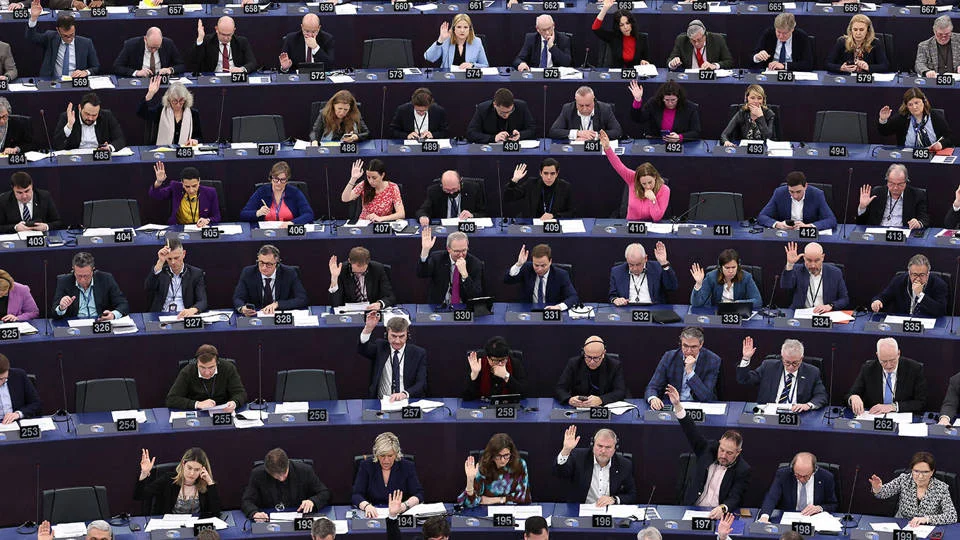
The danger, as analysts note, is that these actors are no longer content with obstructing the EU from the outside. They are actively utilizing the Union’s own democratic processes to hollow it out from within, turning the European Parliament into a stage for the systematic delegitimization of the European project.
A Chronology of Erosion
To understand the current crisis, one must look at the incremental steps that led to this moment:
- 2023–2024: The Normalization of Populism. As economic stagnation and migration pressures mounted across the bloc, major political parties in key member states began adopting the rhetoric of the far-right to secure electoral victories. This lowered the barrier for entry for more radical ideas.
- Early 2025: The Institutional Pivot. Eurosceptic factions began coordinating their efforts across national borders. The formation of a cohesive "sovereigntist" bloc in the European Parliament signaled a transition from reactive protest to proactive policy formation.
- Mid-2026: The "New Deal" Proposal. The AfD’s submission of its "New Deal for Europe" marked a turning point. By formalizing their vision into a legislative proposal, they effectively shifted the Overton window, forcing mainstream parties to debate the necessity of the EU’s core institutions—a conversation that was previously considered "settled law."
- October 2026: The Current Standoff. The EU currently faces a legislative paralysis. With internal factions demanding treaty changes that would strip the Commission of its enforcement powers, the Union’s ability to act on climate, digital regulation, and defense has effectively stalled.
Supporting Data: The Anatomy of Decline
The threat is supported by a confluence of data points that indicate a weakening of the European consensus:
- Electoral Gains: Over the last three election cycles, "sovereigntist" parties have increased their combined seat count in the European Parliament by 22%. In three core member states, these parties now poll as either the first or second-largest political force.
- Public Sentiment: Eurobarometer surveys from Q3 2026 show a sharp decline in "institutional trust." While citizens still favor the benefits of the single market, trust in the processes of Brussels—specifically in the ability of the Commission to represent national interests—has plummeted to an all-time low of 38%.
- Fiscal Fragmentation: The breakdown of the unified fiscal response to the post-2024 energy crisis has left the Union financially fragmented. Member states are increasingly prioritizing national subsidies over a coordinated EU-wide recovery fund, a trend that directly serves the goals of those wishing to weaken central oversight.
Official Responses and Institutional Paralysis
The reaction from the European Commission and the European Council has been characterized by a mix of defensive caution and alarm.
In a recent closed-door briefing, the Commission President underscored the urgency of the situation, stating: "We are witnessing a coordinated effort to dismantle the rules-based order that has defined European prosperity for seventy years." However, the official response has been hampered by a lack of consensus on how to engage with these factions.
Some member states advocate for "cordon sanitaire" policies—the formal exclusion of these parties from committee leadership and legislative negotiations. Others, however, warn that such exclusionary tactics only serve to validate the populist narrative that Brussels is an "undemocratic, elitist cabal."
Meanwhile, the European Parliament’s leadership has been forced to dedicate unprecedented resources to safeguarding administrative procedures against procedural sabotage. The current mood in Brussels is one of defensive survival rather than forward-looking expansion.
Implications: The High Cost of Stagnation
The implications of this internal assault are far-reaching and potentially irreversible.
H3: The Death of Strategic Autonomy
If the European project is paralyzed by internal debates over its very existence, the concept of "Strategic Autonomy"—the EU’s ability to act independently on the world stage—becomes an empty promise. A divided Europe cannot bargain effectively with Washington, nor can it provide a unified front against the geopolitical ambitions of Beijing or Moscow.
H3: The Erosion of the Rule of Law
The most critical implication is the potential collapse of the legal framework that binds the Union. If member states successfully assert that national law takes precedence over EU law in all instances—a key tenet of the "New Deal for Europe"—the Single Market will inevitably fracture. Without a supreme arbiter, trade barriers, regulatory inconsistencies, and legal chaos would replace the current, albeit imperfect, harmonization.
H3: A Geopolitical Power Vacuum
A weakened, inward-looking EU leaves a massive power vacuum in the heart of Europe. This vacuum will inevitably be filled by external actors who have a vested interest in a fragmented Europe. We are already seeing increased influence operations aimed at exacerbating these internal divisions, turning the EU’s domestic political disputes into a theater for proxy influence.
Conclusion: A Call to Reframe the Struggle
The pro-EU camp must accept that the status quo is no longer a viable defense. To survive, the European project requires more than a reaffirmation of past achievements; it requires a radical reinvention.
New political strategies are needed. This includes a more direct engagement with the public, shifting the narrative from "institutional integration" to "tangible, local impact." Furthermore, institutional arrangements must be revisited. Perhaps the time has come for a "multi-speed" Europe, where those committed to a deeper, more integrated union can move forward without being permanently held hostage by those seeking to return to a 19th-century model of nation-state competition.
The threat from within is not a passing storm; it is a fundamental test of the EU’s ability to evolve. If the bloc fails to articulate a compelling vision for its own future—one that addresses the anxieties of its citizens while maintaining the structural integrity of its supranational foundations—the "New Deal" proposed by its detractors may eventually become the only deal on the table.
History will judge the current leadership not by how well they managed the external pressures of the day, but by whether they successfully navigated the internal firestorm that threatened to consume the very project they were sworn to protect. The time for defensive, procedural politics has ended; the time for a bold, proactive defense of European unity has begun.