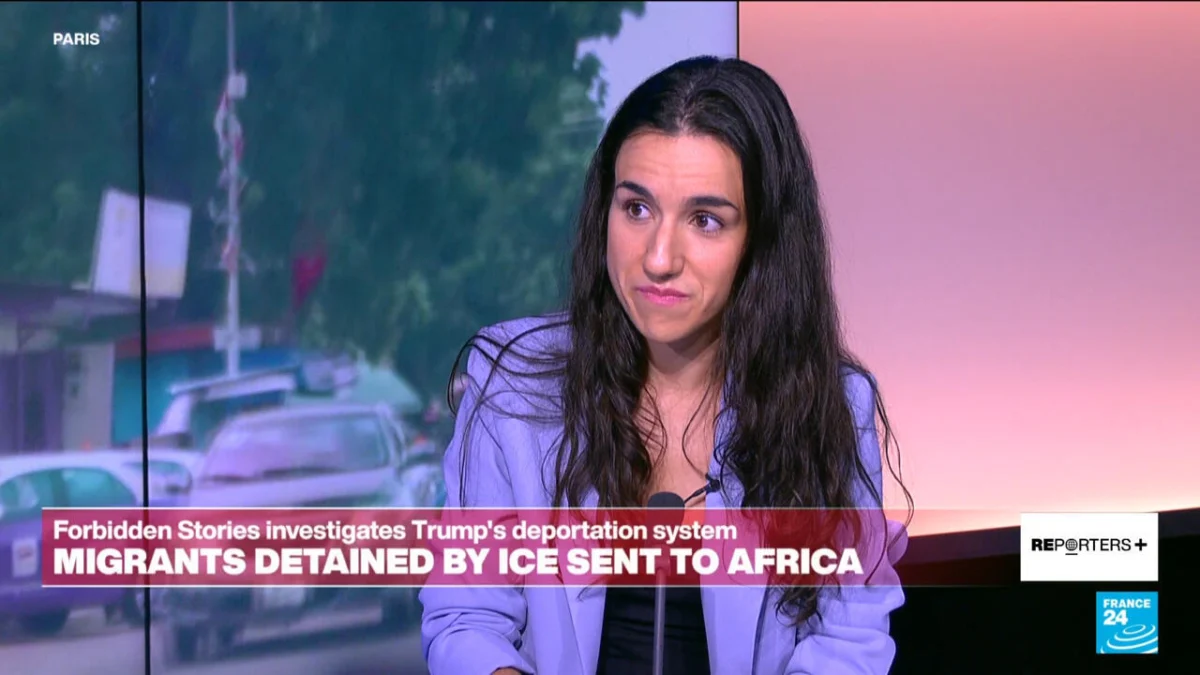
PARIS – The global media landscape was jolted on September 21, 2026, as Sofia Alvarez Jurado, a key figure within the investigative collective Forbidden Stories, stepped into the spotlight in Paris. Her appearance, broadcast globally, has reignited critical conversations regarding the protection of journalists, the ethics of collaborative reporting, and the escalating risks faced by those who seek to illuminate the world’s darkest corners.
While the specific details of the revelations brought forward by Alvarez Jurado remain at the center of ongoing analysis, her presence signifies a pivotal moment for the consortium, which has dedicated itself to continuing the work of silenced reporters.
Main Facts: A Stand for Transparency
The press conference in Paris served as a platform for Alvarez Jurado to outline the latest initiatives from Forbidden Stories. The organization, known for its "Project" methodology—whereby the work of murdered, jailed, or threatened journalists is completed and published by an international team—has become a beacon for press freedom.
Alvarez Jurado emphasized that the current climate of hostility toward investigative journalism is not merely a regional issue but a transnational crisis. By leveraging secure, decentralized networks, Forbidden Stories ensures that sensitive information—often involving systemic corruption, environmental degradation, or human rights abuses—cannot be erased by those who aim to suppress it. The core message of the Paris address was clear: the suppression of one voice will only serve to amplify the collective chorus of the global press.
Chronology: The Evolution of a Crisis
To understand the weight of the events of September 21, one must look back at the trajectory of media safety over the last decade.
- 2017-2020: The Rise of Collaborative Defense. The early years of Forbidden Stories saw the successful completion of investigations such as the Daphne Project, which honored the work of Daphne Caruana Galizia. This period established the framework for modern collaborative journalism.
- 2023: The Digital Escalation. As surveillance technology became more accessible to authoritarian regimes, the risk profile for investigative journalists shifted from physical threats to sophisticated digital espionage.
- 2025: A Year of Unprecedented Pressure. Reports from international media watchdogs indicated a record high in the detention of investigative journalists, particularly in regions experiencing political instability.
- September 2026: The Paris Address. Alvarez Jurado’s appearance marks a culmination of months of behind-the-scenes work, aiming to bridge the gap between investigative findings and legislative accountability.
Supporting Data: The Cost of the Truth
The urgency behind Alvarez Jurado’s mission is backed by sobering statistics. According to data provided by non-governmental organizations tracking press freedom:
- The "Kill Chain" Analysis: Investigations that target high-level political or criminal corruption see a 40% higher probability of retaliation against the reporter within 18 months of publication.
- Digital Vulnerability: Over 75% of journalists involved in high-stakes investigations have reported at least one attempt at digital intrusion, including the use of commercial spyware.
- The Consortium Effect: Data indicates that when investigations are handled by a collective like Forbidden Stories, the "chilling effect" on the public is significantly mitigated. By distributing the risk across multiple newsrooms globally, the original source becomes impossible to silence completely.
These figures underscore a grim reality: the traditional "lone wolf" investigative model is increasingly untenable in the face of modern adversaries. The shift toward collaborative, cross-border journalism is not just an organizational preference—it is a defensive necessity.
Official Responses: A Divided International Community
The implications of the work highlighted by Alvarez Jurado have drawn varied responses from the global political establishment.
The Stance of International NGOs
Groups such as Reporters Without Borders (RSF) and the Committee to Protect Journalists (CPJ) have lauded the efforts of Forbidden Stories. Their official statements emphasized that the protection of journalists is not merely a professional issue but a cornerstone of democratic stability. "The work showcased by Sofia Alvarez Jurado is the only effective answer to the global shrinking of civic space," said a spokesperson for an international press freedom coalition.

The Diplomatic Silence
Conversely, several nations frequently cited in Forbidden Stories investigations have remained conspicuously silent or have issued generic rebukes, characterizing the reports as "politically motivated interference" or "foreign destabilization efforts." This response highlights the diplomatic friction that arises when investigative journalism crosses national borders, often exposing the uncomfortable links between local corruption and global economic interests.
Implications: The Future of Investigative Journalism
The events of September 21, 2026, carry profound implications for the future of the fourth estate.
The Shift to Decentralized Security
As journalists operate in increasingly hostile environments, the move toward decentralized, encrypted, and distributed data storage will become the industry standard. Alvarez Jurado’s work suggests that the future of journalism lies in "Dead Man’s Switch" protocols—technologies that ensure that if a journalist is silenced, their findings are automatically released to the public.
The Legal Framework
There is a growing call for the creation of an international legal status for investigative journalists. Currently, the lack of a universal convention on the protection of the press leaves many vulnerable to domestic laws that are weaponized to criminalize investigative activities. The Paris event has reinvigorated the debate at the United Nations and other international bodies regarding the necessity of a binding treaty on the safety of journalists.
Ethical Considerations of "Stolen" Truths
The reliance on leaked documents and the work of whistleblowers raises perpetual questions about the ethics of acquisition. Alvarez Jurado has consistently argued that when the state or large corporations operate in total opacity, the public interest supersedes the traditional boundaries of information gathering. This paradigm shift—where transparency is forced rather than requested—will likely define the next decade of media history.
Conclusion: Beyond the Headlines
Sofia Alvarez Jurado’s appearance in Paris was more than a press conference; it was a manifesto for a new era of journalism. By framing investigative work as a collective responsibility, she has shifted the narrative from the individual peril of the reporter to the collective imperative of the public.
As the findings from Forbidden Stories continue to ripple through the political and economic landscape, the focus will inevitably turn toward the durability of these truths. Can the international community create a structure that protects the messenger without compromising the message? Will legislative bodies finally recognize the role of journalism as an essential, non-negotiable component of a free society?
The answers to these questions remain uncertain. However, what is clear is that the model pioneered by Alvarez Jurado and her colleagues has fundamentally altered the power dynamic. The era of the "lone, silenced voice" is ending; in its place, a resilient, interconnected, and globalized network of truth-seekers is emerging. The Paris event on September 21 serves as a stark reminder: in an age of information, the truth is no longer a commodity to be hidden, but a force to be reckoned with.
As the international community digests the information presented, one thing remains clear: the reach of investigative journalism has never been greater, and the determination of those who practice it has never been more resolute. The story, as they say, is far from over—it is merely being written by more hands than ever before.