Welcome back to World Brief. As the autumn of 2026 unfolds, the international order faces a convergence of crises that challenge the stability of major economies and the security of vital transit corridors. This week, we examine the deepening political friction in New Delhi, the intensifying maritime dangers in the Black Sea, and the strategic vulnerability of Saudi Arabia’s infrastructure against persistent Houthi drone warfare.
I. India’s "Cockroach" Uprising: A Crisis of Democracy
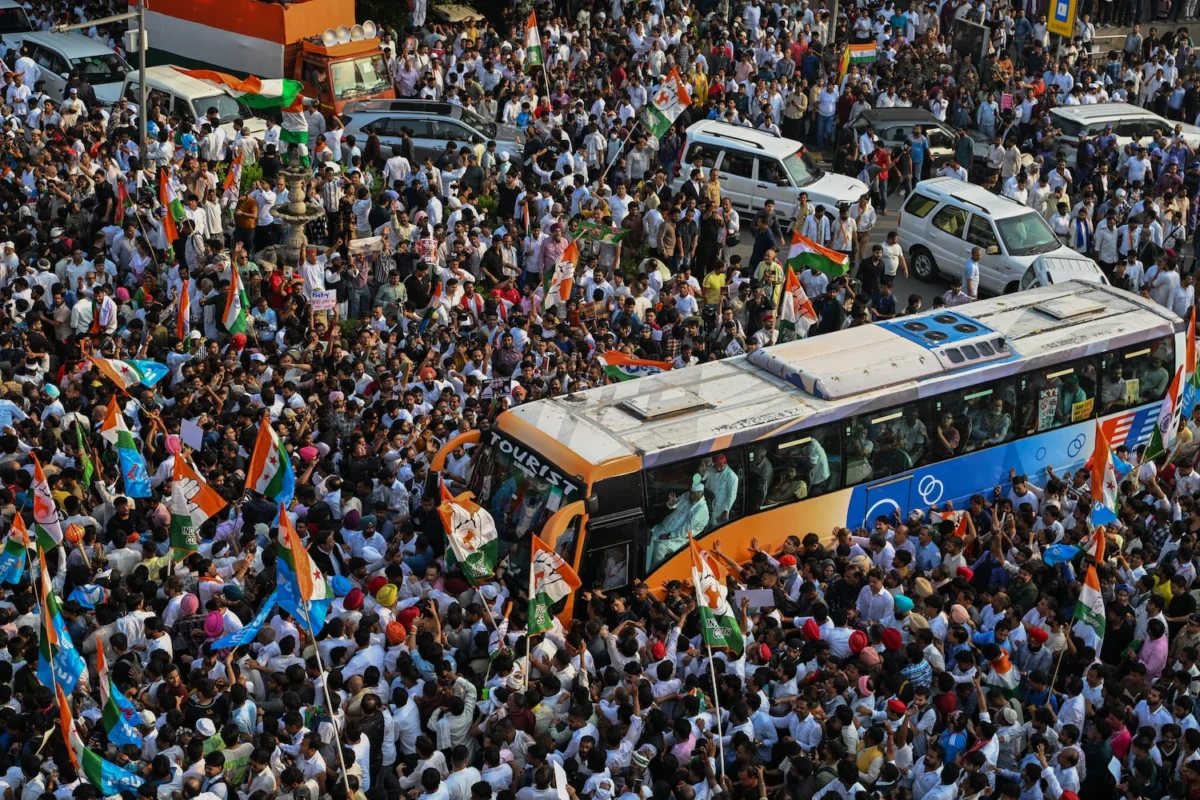
The Indian political landscape is currently dominated by the "Cockroach movement," a youth-led grassroots uprising that has evolved from digital satire into a full-scale confrontation with Prime Minister Narendra Modi’s government.
The Spark of Dissent
The movement, organized under the banner of the Cockroach Janta Party (CJP), takes its name from a controversial remark made by Chief Justice Surya Kant. Earlier this year, the Justice characterized India’s unemployed youth as "cockroaches" and "parasites of society." This dehumanizing rhetoric acted as a catalyst for a generation already frustrated by stagnant job growth, systemic failures in education, and the recent scandal involving compromised medical examination results.
Escalation and Arrests
On Tuesday, Indian authorities conducted a series of mass detentions targeting CJP leadership. The arrests occurred as these activists attempted to reclaim the Jantar Mantar observatory—a historic site of protest in New Delhi—after the government issued an order prohibiting assembly at the location. Ironically, the crackdown occurred hours after Prime Minister Modi addressed a Bloomberg summit, positioning India as the "mother of democracy."
The movement has gained significant traction, with thousands of protesters, supported by opposition figures like Rahul Gandhi, staging demonstrations across the capital. CJP founder Abhijeet Dipke took to social media to signal that the movement is not deterred by the state’s efforts to suppress them. "If Modi thinks taking away Jantar Mantar will put an end to protests, he is mistaken," Dipke stated on X. "Jantar Mantar is not just a location but a spirit of resistance."
II. The Electoral Integrity Controversy
The urgency of the current protests is rooted in a recent Indian Express investigation that revealed deep fissures within the nation’s Election Commission.
The Voter Roll Purge
Last year, ahead of pivotal state elections, the Election Commission initiated a massive cleanup of electoral rolls, removing over 130 million names. While the BJP maintains that this effort was a necessary correction—removing 30 million untraceable individuals and 28 million deceased persons—critics argue the process was politically weaponized. Data suggests that the deletions disproportionately targeted minority communities and political opponents.
International Scrutiny
The United Nations human rights office has officially called upon New Delhi to respect the right to peaceful assembly following the recent police crackdowns. The Indian Ministry of External Affairs dismissed the statement as "unwarranted" and "unacceptable interference," framing the internal protests as a matter of national sovereignty. Despite this pushback, the CJP continues to demand the resignation of Chief Election Commissioner Gyanesh Kumar, signaling that the battle over India’s democratic credentials is far from resolved.
III. Black Sea Maritime Security: A Critical Chokepoint
The Russia-Ukraine war has entered a dangerous new phase in the Black Sea, where merchant vessels are increasingly becoming targets.
Chronology of the Strikes
On Tuesday, drone strikes hit two cargo vessels off the coast of Bulgaria, marking a significant escalation in regional hostilities.
- The Dignity: A Guinea-Bissau-flagged ship that suffered severe damage; 11 of its 16 crew members remain missing.
- The Chelsea-3: A Ukrainian-owned vessel where all 15 crew members were successfully rescued.
Official Responses and Allegations
While Bulgarian Prime Minister Rumen Radev stopped short of a formal declaration of war against Russia, he noted that the destruction of these ships "benefits the Russian Federation" and immediately summoned the Russian ambassador, Eleonora Mitrofanova. Moscow has denied involvement, with Mitrofanova claiming a "third party" may be responsible.
Ukraine’s Foreign Minister, Andrii Sybiha, rejected this, accusing Moscow of "weaponizing hunger." The Black Sea remains a global lifeline for grain and food security, and the persistent targeting of civilian shipping is viewed by Kyiv and its allies as a deliberate attempt to hold the global economy hostage. Bulgaria has since convened its Security Council and is seeking enhanced support from NATO to secure these maritime corridors.
IV. Saudi Arabia Under Fire: The Vulnerability of Riyadh
In the Middle East, the conflict with Yemen’s Houthi rebels has taken a lethal turn, exposing gaps in Saudi Arabia’s defensive posture.
The Airport Attacks
Over the weekend, a coordinated strike on King Khalid International Airport in Riyadh resulted in 13 deaths and over 300 injuries. Despite the scale of the attack, the Saudi government failed to issue public warnings, leading to widespread public alarm and the suspension of all flights until the end of the week.
Strategic Implications
An initial investigation suggests the Houthis utilized a "swarm" tactic: launching several drones to overwhelm defensive sensors before deploying ballistic and cruise missiles. This tactical success has prompted concerns about the kingdom’s vulnerability. On Tuesday, further attacks targeting the city of Khamis Mushait were intercepted, but the inability to prevent the airport strike has severely damaged confidence in the regional security architecture.
V. Global Economic Outlook: The IMF’s Warning
The International Monetary Fund (IMF) issued a sobering forecast this week, highlighting how regional conflicts are widening the wealth gap between developed and emerging economies.
Debt, Inflation, and AI
The global bond market is currently experiencing significant turbulence. With U.S. 30-year Treasury yields climbing to 5.73 percent—the highest since 2002—investors are retreating into safer assets. The IMF has specifically warned of "circular" financial deals within the artificial intelligence sector, involving $1.4 trillion in future revenue commitments that may be unsustainable in a high-interest-rate environment.
Economists argue that the combination of high fuel prices, driven by the Iran war, and volatile debt markets has created a precarious situation. As borrowing costs rise, the fiscal space for low-income nations to invest in their own development is shrinking, threatening to undo years of economic progress.
VI. Intellectual Recognition: Economics in a Changing World
Amidst these global crises, the academic community paused to recognize excellence in the field of economic theory. The 2026 Nobel Prize in Economic Sciences was awarded to Robert E. Hall and Michael Woodford.
Their work, which restructures classical Keynesian formulas, provides a framework for understanding economic cycles by focusing on the aggregate behavior of households and businesses. Their models, originally designed to analyze the 1970s oil crisis, are once again becoming relevant as policymakers struggle to "smooth out" the volatility caused by today’s geopolitical shocks.
Summary of Future Risks
As we look toward the remainder of the month, three primary themes emerge:
- The Persistence of Protest: The Cockroach movement in India serves as a barometer for youth dissatisfaction globally.
- Maritime Chokepoints: The security of the Black Sea is no longer a localized issue; it is a global food security emergency.
- Fiscal Fragility: The intersection of AI-driven market bubbles and rising government debt suggests that the next economic crisis may be triggered by a failure in financial transparency.
World Brief will continue to monitor these developments as they unfold. For real-time updates on the situation in New Delhi and the Black Sea, follow our digital alerts.