By Frederick Kempe, Atlantic Council
May 13, 2026
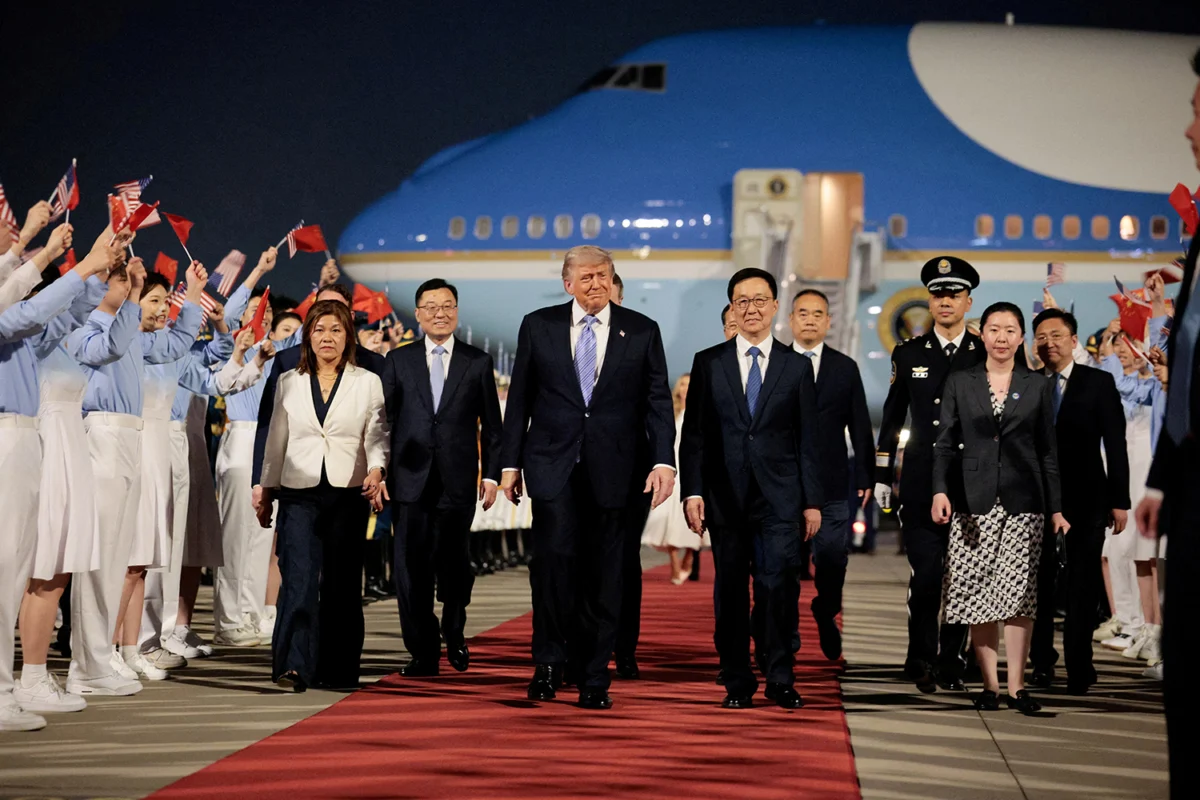
As President Donald Trump arrives in Beijing for a high-stakes summit with President Xi Jinping, the geopolitical atmosphere is thick with a singular, deceptive word: "stability." While both leaders have invoked the term as the cornerstone of their diplomatic engagement, they are operating from entirely different strategic playbooks. For Washington, stability is a defensive mechanism—a way to manage decline and buy time for domestic renewal. For Beijing, stability is a tactical maneuver—a bridge to a new era of Chinese hegemony.
The misalignment of these definitions is not merely a diplomatic nuance; it is a fundamental collision of worldviews that could determine the trajectory of the 21st century.
Main Facts: The Clash of Intentions
The central irony of the upcoming talks is that both sides view the summit as a necessity for "stability," yet they hold diametrically opposed visions for what that stability entails.
For the Trump administration, the objective is to establish a "durable floor" under the bilateral relationship. Senior officials have characterized this as a means of avoiding unintended escalation. It is a pragmatic, transactional approach designed to create a window of time for the United States to rebuild its industrial base, diversify its rare-earth supply chains—which were severely disrupted by recent Chinese export controls—and push through a massive $1.5 trillion defense budget.
Conversely, Beijing views the current global environment through the lens of "great changes unseen in a century." President Xi has frequently signaled his belief that the United States is in an irreversible state of domestic fragmentation and financial exhaustion. To the Chinese leadership, stability is not a goal in itself, but a means to consolidate their geopolitical gains while preventing a united front from Western powers. By offering a veneer of stability, Xi aims to keep the U.S. from forming a cohesive coalition with European and Asian allies, effectively playing a "long game" to displace American influence.
A Chronology of Escalation and Alignment
The road to the 2026 summit has been paved with shifting power dynamics that have altered the leverage held by both nations.
- The Early Trump Years: During Trump’s first term, the relationship was defined by volatile trade disputes and the initiation of "Liberation Day" tariffs. At the time, the U.S. believed it could force China into concessions through sheer economic pressure.
- The Response to Tariffs: Beijing’s counter-response—specifically the weaponization of critical mineral supply chains—demonstrated a "scalpel-like precision" that caught Washington off guard. This effectively exposed American manufacturing vulnerabilities and served to weaken the Trump administration’s hand.
- The Current Landscape (2026): As Trump begins his second term, the power dynamic has shifted. Xi enters the summit on "firmer footing" than in 2020. Having weathered the economic storms of the last five years, Beijing is now more confident in its technological capability and diplomatic reach.
- The Lead-up to the Summit: Throughout early 2026, the diplomatic channels have been active, focusing on "de-risking" rhetoric, even as both nations continue to expand their military and technological footprints.
Supporting Data: The Strategic Calculus
The structural challenges facing both nations provide the context for their divergent strategies.
The U.S. Perspective: Managing Vulnerability
Washington’s primary concern is the restoration of its competitive edge. The reliance on Chinese supply chains for rare-earth minerals and high-end semiconductors has become a critical national security vulnerability. The proposed $1.5 trillion defense budget is a reflection of a government that recognizes the need to rearm, but requires a stable international environment to prevent the costs of the transition from spiraling out of control.
The Chinese Perspective: The "Long Game"
Xi Jinping’s strategy is predicated on the internal decline of the U.S. system. Beijing’s assessment of the U.S. debt-to-GDP ratio, which has climbed past 100%, fuels the belief that the U.S. cannot sustain its global military commitments. Xi’s "long game" involves:
- Technological Sovereignty: Investing heavily in AI, quantum computing, and domestic chip production to render U.S. export controls ineffective.
- Diplomatic Encirclement: Leveraging the Global South and BRICS+ expansion to provide an alternative economic ecosystem that is immune to U.S.-led sanctions.
- The Taiwan Lever: Seeking to force the U.S. into a formal position of "opposing" Taiwanese independence, rather than the current status quo of "not supporting" it.
Official Responses and Diplomatic Posturing
In public, both sides have been carefully scripted. We expect the standard rhetoric regarding mutual prosperity and the necessity of managing competition responsibly. There will likely be announcements regarding "guardrails" for AI development or potential prisoner exchanges to demonstrate progress.
However, behind closed doors, the tension is palpable. The U.S. delegation, led by the President and his top advisors, is under immense pressure from both parties in Congress to avoid any concessions that could be perceived as weakness. Meanwhile, Chinese diplomats have signaled that they expect "respect" for their core interests—a euphemism for the cessation of U.S. arms sales to Taiwan and the lifting of technology restrictions.
Expert analysis, such as that provided by the Atlantic Council’s Melanie Hart, suggests that the "deliverables" of this summit will be the true test. If the administration prioritizes a symbolic agreement over substantive policy outcomes on critical minerals and export controls, it may find itself trapped in the very "Venus fly trap" the Wall Street Journal editorial board warned of regarding Taiwan.
Implications: The Risks of Miscalculation
History offers sobering lessons for major powers navigating a transition. The transition between the British Empire and the United States in the early 20th century, while not without friction, was ultimately peaceful because both powers shared a core set of values and an interest in maintaining the existing order. The transition between Britain and Germany, conversely, ended in catastrophe.
During the Cold War, the U.S. and the Soviet Union constructed guardrails—the Helsinki Accords, crisis hotlines, and arms control treaties—not because of trust, but because of a shared, existential fear of nuclear annihilation. Today, there is no such "fear-based" stability. The lack of trust between Trump and Xi is profound, yet the necessity of avoiding unmanaged competition remains as high as it was in 1962.
The greatest danger of the current summit is that Trump, in his quest for a quick win or a personal diplomatic success, might inadvertently weaken the status quo on Taiwan. If the U.S. were to signal a shift in its "One China" policy—even rhetorically—it could embolden Beijing in a way that makes a future conflict not just possible, but likely.
Conclusion: A Strategic Crossroads
The upcoming days in Beijing will be defined by whether the U.S. can successfully navigate the gap between its desire for stability and the reality of China’s grand strategy.
As we look at the potential outcomes, it is essential to remember that Xi Jinping is not looking for a reset; he is looking for a shift in the global balance of power. If President Trump sacrifices the long-term structural integrity of U.S. policy for the sake of short-term stability, he may find that the "floor" he has built beneath the relationship is actually a platform for China’s next leap toward global primacy. The world will be watching closely, not for the platitudes of the joint press conferences, but for the substance of the agreements—or the dangerous absences thereof.