Published: May 13, 2026 | 20:30 GMT+2
The geopolitical architecture of the 21st century is undergoing a seismic shift, and nowhere is this more evident than in the evolving footprint of the European Political Community (EPC). Last week’s summit in Armenia marked a historic milestone, serving as the first time the forum convened in the South Caucasus. The gathering was not merely a diplomatic routine; it was a profound reflection of Europe’s stretching contours—geographically, politically, and strategically—at a time when the continent finds itself navigating the choppy waters of global instability.
The Context: A World of Trade Tensions and Transatlantic Uncertainty
The backdrop for the Armenia summit was one of acute anxiety. Global trade stability, a cornerstone of the post-Cold War order, is currently under siege. The primary catalyst for this apprehension is the renewed protectionist rhetoric emanating from Washington. Donald Trump’s administration has cast a long shadow over Brussels with the threat of a 25% tariff on European-manufactured automobiles.
This ultimatum has forced the European Union into a defensive crouch, scrambling to salvage the fragile transatlantic trade agreement negotiated during the previous summer. As the United States adopts an increasingly transactional approach to its traditional alliances, Europe is finding that the "old certainties" of the transatlantic partnership are evaporating. Consequently, the continent is transforming into a gravitational center that others—from the United Kingdom and Iceland to the Balkans and beyond—are increasingly looking toward to align, orbit, or join.
Chronology of the Shift: From Peripheral Dialogue to Strategic Necessity
The evolution of the EPC into a vital geopolitical forum has been rapid:
- Initial Conception (2022): Proposed in the wake of the invasion of Ukraine, the EPC was initially viewed as a loose platform for dialogue among European nations, regardless of their EU membership status.
- Expansion of Mandate (2024): As global polarization deepened, the forum began shifting from a consultative body to a strategic coordinator on energy security and democratic resilience.
- The South Caucasus Pivot (May 2026): By convening in Armenia, the EPC signaled a departure from its Euro-centric comfort zone, directly engaging with the volatile security dynamics of the South Caucasus and the influence of regional powers like Russia and Iran.
- The "Carney Doctrine" (May 2026): Canadian Prime Minister Mark Carney’s attendance at the summit introduced a new dimension to the forum: the integration of non-European democratic powers into the European strategic fold.
Supporting Data: The Economic and Security Imperative
The urgency behind these discussions is rooted in hard data. The EU currently faces a triple challenge: economic stagnation, defense spending gaps, and energy dependency.
- Economic Competitiveness: With the US threatening tariffs that could cost the European auto sector billions in annual revenue, EU leaders are looking toward internal market integration. The goal is to move from 27 fragmented national markets to a unified economic bloc capable of absorbing external shocks.
- Military Strength: In the face of an ambiguous US posture toward Ukraine and wider European security, the EPC nations are discussing a move toward "strategic autonomy." This involves increasing collective defense spending beyond the 2% GDP threshold and harmonizing military procurement across the continent.
- Democratic Resilience: The rise of populist movements and external disinformation campaigns has necessitated a shared intelligence and policy framework. The EPC is now the primary vehicle for coordinating this defense against subversion.
Official Responses and Perspectives: The Debate in the European Parliament
The question of whether Europe is truly becoming an independent global power—and whether the EU should respond to external pressure with deeper integration—remains a subject of intense debate.
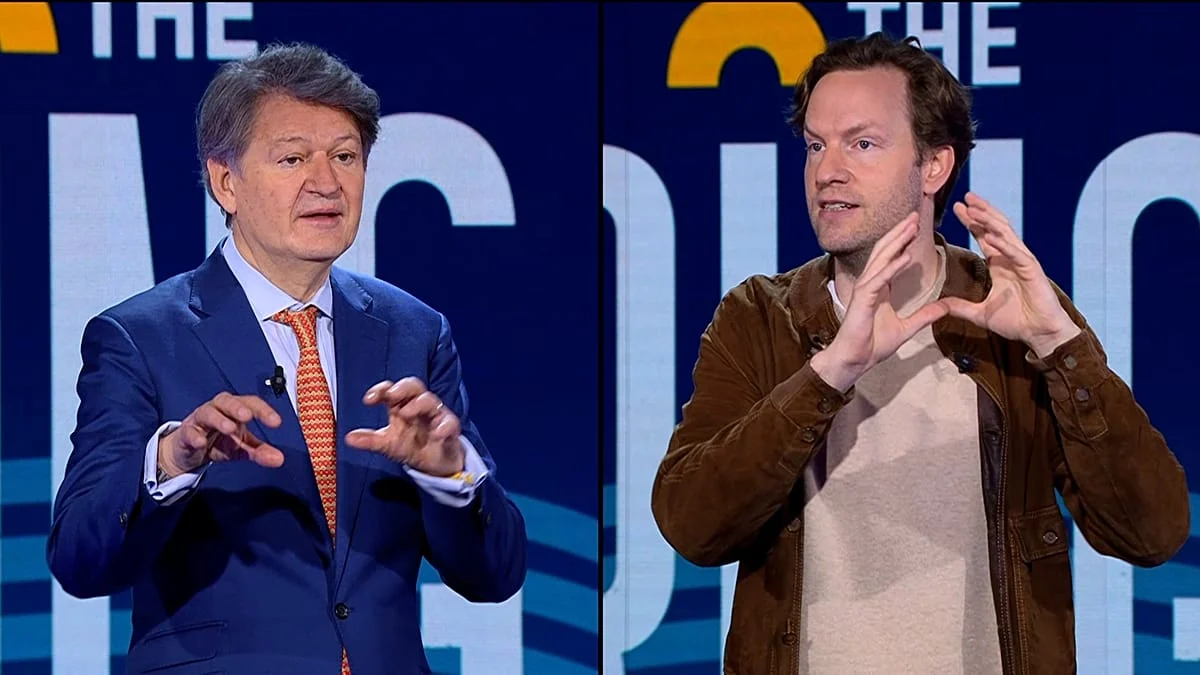
Damian Boeselager (Volt Europe, caucusing with the Greens) and Helmut Brandstätter (Renew Europe) recently engaged in a high-level discussion on these topics. Both MEPs emphasized that the era of "waiting for Washington" is over.
"We are witnessing a fundamental redesign of the global order," Brandstätter noted during a panel discussion. "Europe cannot afford to remain a passive bystander. We must reinforce our economic competitiveness through deep integration, and our military strength through coordinated action."
Boeselager echoed these sentiments, emphasizing that democratic resilience is not just an internal policy but a prerequisite for regional security. "The participation of countries like Canada is a testament to the fact that the ‘European project’ is no longer about geography, but about the defense of a specific set of liberal democratic values," Boeselager stated.
The Canadian Factor: A New Transatlantic Paradigm
Perhaps the most surprising development at the Armenia summit was the active participation of Canada. Prime Minister Mark Carney’s presence was a clear signal of intent: Canada, facing a potential loss of access to US markets under the Trump administration, is aggressively seeking to anchor itself to the European economic and diplomatic sphere.
Carney’s messaging was blunt: he is determined to build a new network of trade and diplomatic alliances to insulate Canada from the volatility of its southern neighbor. For the EU, this presents a unique opportunity. Integrating Canada—a nation that bridges British political traditions, French cultural identity, and North American economic scale—could provide a massive boost to the EU’s global standing.
While Canadian diplomats have officially downplayed suggestions of a formal bid for EU membership, the sentiment in Brussels, championed by figures like Boeselager and Brandstätter, is increasingly favorable. They argue that if the EU is to survive as a sovereign power, it must be willing to expand its institutional boundaries to include like-minded, democratic partners, regardless of their location on the map.
Implications: The Road Ahead
The implications of these developments are far-reaching. If Europe succeeds in deepening its integration, it may emerge as a third pole in the global order, alongside the United States and China. However, the path is fraught with internal challenges.
The Hurdles to Integration
- Sovereignty Concerns: Many member states remain wary of surrendering more power to Brussels, particularly in areas of fiscal policy and defense.
- The "External Pressure" Paradox: While external threats like trade wars tend to unify the bloc, they also highlight the economic disparities between member states, potentially causing friction when it comes to shared debt or burden-sharing.
- The Neighborhood Policy: By expanding the scope of the EPC to include countries like Armenia, the EU is inadvertently drawing itself into local conflicts where it has limited leverage.
Conclusion: A Continent at the Crossroads
The Armenia summit of the European Political Community serves as a microcosm of a continent in search of its identity. Is Europe a collection of sovereign states tethered to a fading transatlantic alliance, or is it a nascent superpower capable of defining its own destiny?
As the "Ring" of European influence continues to expand, the debates currently taking place in the European Parliament reflect a deeper realization: the global order is no longer a given, but a construct that must be defended and rebuilt. Whether through the inclusion of distant partners like Canada or the consolidation of internal military and economic power, Europe is clearly moving toward a more assertive role on the world stage.
The weeks and months ahead will be critical. With trade tensions simmering and the security situation in Eastern Europe remaining precarious, the decisions made in the wake of the Armenia summit will likely define the trajectory of the European project for the next decade.
This report was produced by the Euronews editorial team. For more analysis, watch ‘The Ring’ on Euronews TV or contact our team at [email protected].