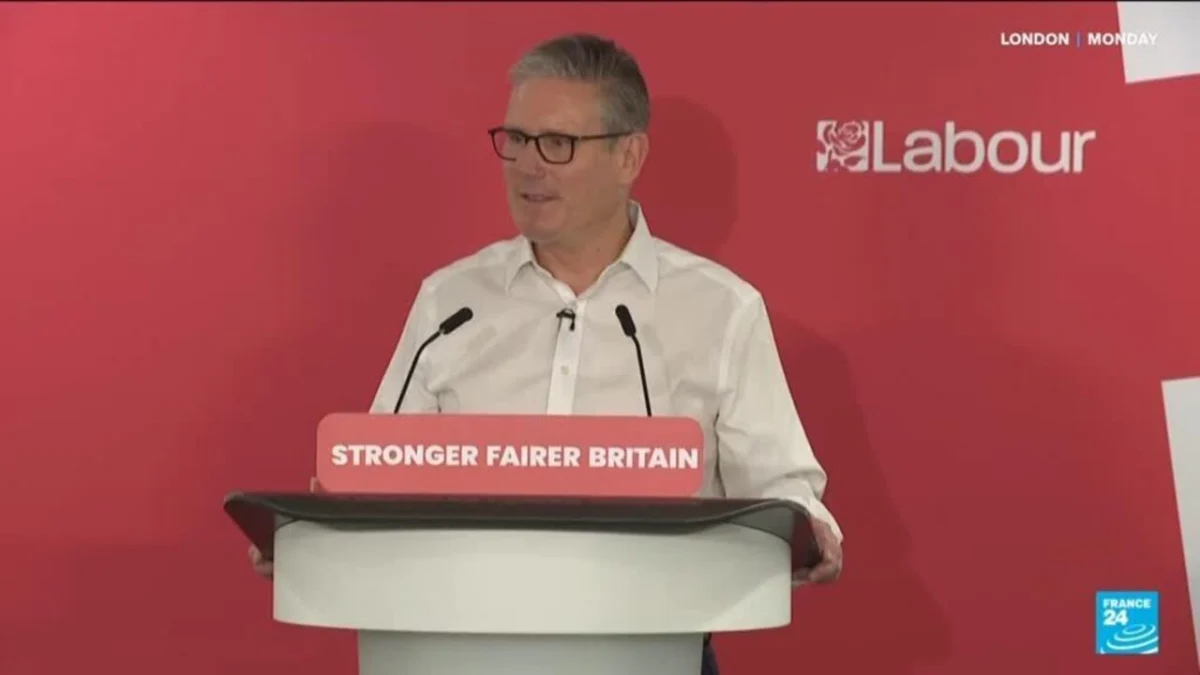
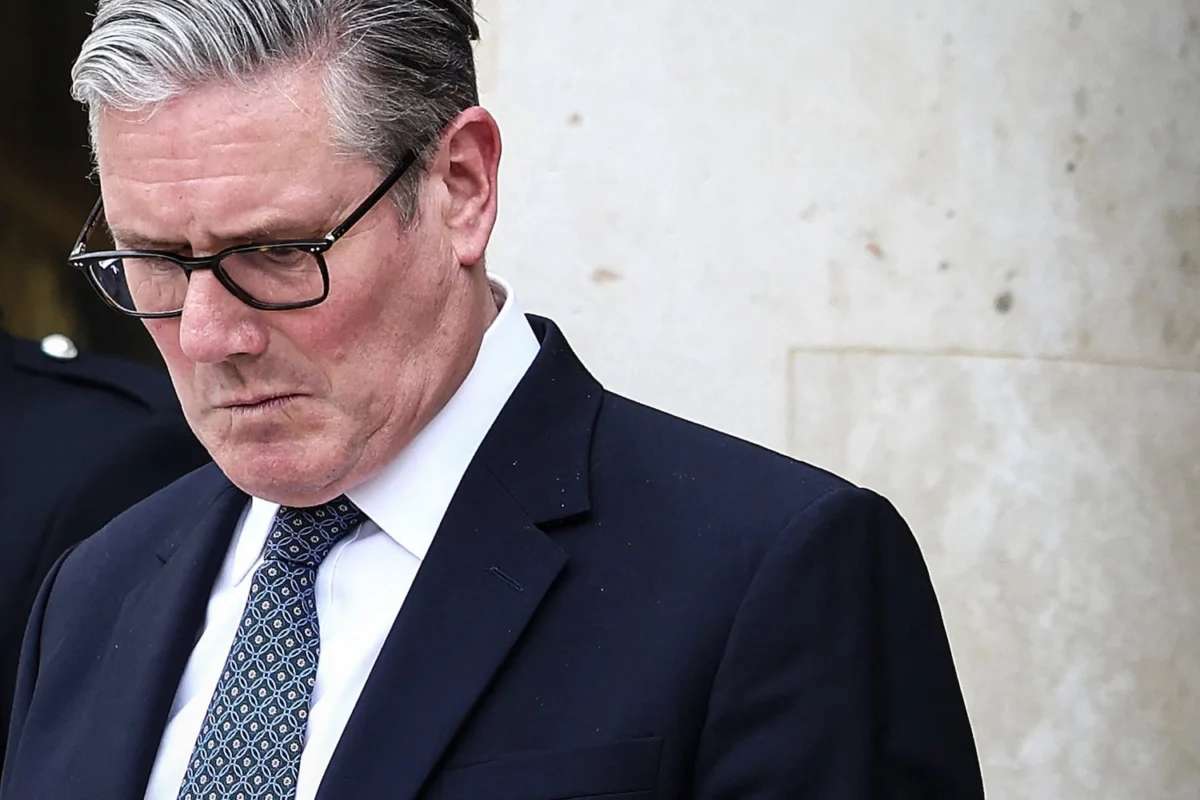
The premiership of Sir Keir Starmer, once hailed as the technocratic restoration Britain desperately craved after the chaotic turbulence of the post-Brexit era, now stands at a precipice. Barely two years into a mandate that began with a historic 174-seat parliamentary majority, the Prime Minister finds himself a figure of profound isolation. Once described by his biographer, Tom Baldwin, as an "unpolitician"—a man whose lack of conventional theatricality was supposed to be his greatest asset—Starmer is now defined by that very quality. In the unforgiving theatre of Westminster, the "unpolitician" has proven unable to command the narrative, leading a government that feels increasingly adrift.
The Ascent: A Mandate for Competence
To understand the current crisis, one must revisit the political climate of 2020. Britain was reeling from the visceral fallout of the European Union referendum. Boris Johnson’s administration, defined by a blustery populism and the singular mantra to "get Brexit done," had left the electorate exhausted. The Labour Party, meanwhile, was emerging from the radical, polarizing experiment of Jeremy Corbyn’s leadership.
In this vacuum, the party turned to Starmer, a former Director of Public Prosecutions. He was a curious choice: a man who seemed to view the performative aspects of politics with a barely concealed disdain. Yet, he promised exactly what the public sought: competence, order, and a return to the center. His victory in July 2024 was nothing short of emphatic—a result that surpassed all but the most legendary Labour triumphs. The Conservatives, fractured and exhausted by over a decade in power, collapsed, leaving Starmer as the undisputed architect of a new, stable order.
Chronology of a Collapse: From Relief to Resentment
The initial months of Starmer’s tenure were characterized not by the infectious optimism of the 1997 Blair era, but by a sober, grim-faced relief. The nation knew the economy was overleveraged and infrastructure was crumbling; the expectation was simply that the new Prime Minister would "make things work."
However, the honeymoon was remarkably short-lived. The timeline of his decline follows a distinct, downward trajectory:
- Late 2024: Early signs of policy paralysis emerge. The government begins a pattern of proposing reforms—welfare overhauls, heating subsidy cuts, and infrastructure projects—only to retreat under pressure from internal backbenchers and public outcry.
- Early 2025: The "U-turn" becomes the defining feature of the Starmer doctrine. The attempt to introduce digital ID cards, initially seen as a pragmatic security measure, becomes a political liability after a botched rollout.
- Mid-2025: The "Mandelson Affair" erupts. The appointment of Peter Mandelson as Ambassador to the United States serves as a lightning rod for criticism. Despite security vetting concerns, Starmer pushes the appointment through, only for it to backfire as details regarding Mandelson’s past associations with figures like Jeffrey Epstein emerge.
- Late 2025/Early 2026: The electoral humiliation begins. Labour suffers significant losses in local council elections and faces setbacks in the Scottish and Welsh parliaments. Public polling hits record lows, with Starmer consistently ranking among the most unpopular Prime Ministers in modern polling history.
The Architecture of Failure: Policy and Miscalculation
The fundamental critique of Starmer’s premiership is that he has failed to cultivate a governing philosophy. He has allowed himself to be guided by a narrow, inward-looking circle of advisors—most notably chief of staff Morgan McSweeney—whose focus on winning back working-class voters from Reform UK has led to a series of disjointed, right-leaning populist pivots.
The most egregious example of this ideological drifting occurred when Starmer echoed the rhetoric of Enoch Powell, describing immigration as a force turning Britain into an "island of strangers." The resulting backlash forced the Prime Minister into a humiliating explanation that he "did not realize" the historical, racialized toxicity of the language. This incident encapsulated his greatest weakness: a lack of political instinct, coupled with an inability to anticipate how his messaging would be received by a fractured electorate.
Furthermore, the government’s fiscal policy has been crippled by the electoral pledge not to increase income or sales taxes. By boxing himself into this corner, Starmer left the Treasury with zero fiscal headroom. The subsequent attempt to "cobble together" revenues through opaque, stealthy tax hikes only fueled the perception of a government that was both dishonest and ineffective.
Supporting Data: The Erosion of Public Confidence
The statistics behind Starmer’s decline are stark. According to longitudinal data from organizations like Ipsos and Full Fact, the Prime Minister’s approval ratings have been on a relentless downward trend since the start of 2025.
- Economic Stagnation: Despite efforts to stabilize the bond markets, household living standards have failed to recover. Inflationary pressures, combined with the lack of a clear growth strategy, have kept public sentiment at a historic low.
- Institutional Churn: The turnover within Number 10 is unprecedented. Within two years, Starmer has cycled through two chiefs of staff, four communications directors, and three heads of policy. This revolving door has paralyzed the machinery of government, making it impossible to sustain long-term legislative momentum.
- Public Perception: In doorstep interviews during the 2026 local elections, voters frequently cited "the name Starmer" as a primary reason for their disillusionment, suggesting a brand toxicity that is now likely beyond repair.
The International Dimension: A Diminishing Influence
On the global stage, Starmer’s record is nuanced but ultimately disappointing. He has provided a steady hand in supporting Ukraine, earning respect from European counterparts. However, his efforts to "reset" relations with the European Union have remained purely performative. Brussels has grown increasingly frustrated by the Prime Minister’s habit of announcing grand reconciliations while simultaneously dodging the difficult, substantive discussions required to re-integrate into the customs union or single market.
Relations with the United States under a volatile Trump administration have also cratered, partly due to the botched Mandelson appointment and partly due to a broader failure to project a clear British position on global trade and security. The cumulative effect is a nation that, despite its potential, is increasingly viewed as an island adrift, lacking both the influence of a global power and the nimbleness of a smaller, agile state.
Official Responses and Internal Discord
Within the Labour Party, the mood has shifted from loyal support to open rebellion. While Starmer has publicly insisted that he is "learning the lessons" and has attempted to relaunch his leadership through high-profile speeches, these efforts have been met with derision. The speeches, advertised as passionate declarations of vision, have been described by critics as "damp squibs," lacking the oratorical weight required to shift public perception.
As calls for his resignation grow louder, Starmer has adopted a "digging in" strategy. However, the sheer volume of high-ranking departures—including senior civil servants and cabinet ministers—suggests that the government’s internal consensus has fractured. The Prime Minister is no longer merely fighting the opposition; he is fighting a war of attrition against his own party machinery.
Implications: A Cautionary Tale
The implications for Britain are grave. Should Starmer be forced from office, he would be the seventh Prime Minister in a decade—a statistic that highlights the profound institutional instability of the British state.
Historians will likely look back at the Starmer era not as a period of malevolence, but as a period of profound missed opportunity. His term is rapidly becoming a textbook study in the "how-not-to" guide of exercising power. He sought to replace the chaos of his predecessors with a calm, technocratic professionalism, but in doing so, he removed the heart from the body politic.
As the nation looks toward the next election cycle, the question is no longer whether Starmer can save his premiership, but how much damage will be done to the institutions of government before his inevitable departure. The "unpolitician" who promised to restore the country has, in the end, only deepened its sense of malaise, leaving the next leader of Britain with the gargantuan task of rebuilding a state that has forgotten how to function.