By Helmut K. Anheier
October 8, 2026
For decades, the Federal Republic of Germany served as the global gold standard for stability, industrial prowess, and social cohesion. From the "Wirtschaftswunder" (economic miracle) of the postwar era to the reunification boom, Berlin’s political and corporate elites presided over a machine that seemed immune to the erratic cycles of the global economy. Yet, as of October 2026, that narrative has fractured. Germany, once the undisputed engine of Europe, now finds itself in the grip of a profound structural malaise. The country is not merely facing a downturn; it is undergoing a systemic identity crisis characterized by technological stagnation, crumbling infrastructure, and a surging populist tide that threatens the very foundations of its parliamentary democracy.
The Main Facts: A Nation in Stasis
The current German reality is defined by a paradoxical decline. While the nation remains one of the world’s wealthiest, it is increasingly viewed as an "innovation laggard." The traditional pillars of the German economy—automotive engineering, chemical production, and heavy machinery—are struggling to pivot toward a decarbonized, digital future.
The political landscape, once dominated by a predictable duopoly of center-left and center-right parties, has splintered. The "barbarians at the gates"—an increasingly emboldened populist fringe—have capitalized on the growing disconnect between the elite in Berlin and the frustrations of the working and middle classes. The fundamental issue is not a sudden catastrophe, but a long-term failure of governance. For too long, the German establishment coasted on the laurels of past success, opting for incrementalism when the world demanded radical structural reform.
A Chronology of the Slow Decline
To understand how Germany reached this inflection point, one must look back at the trajectory of the last two decades:
- 2005–2015: The Decade of Complacency. Under the long tenure of Angela Merkel, Germany achieved global prestige. However, this period was marked by an obsession with "Schwarze Null" (the black zero, or balanced budget) at the expense of necessary public investment in digitalization and education.
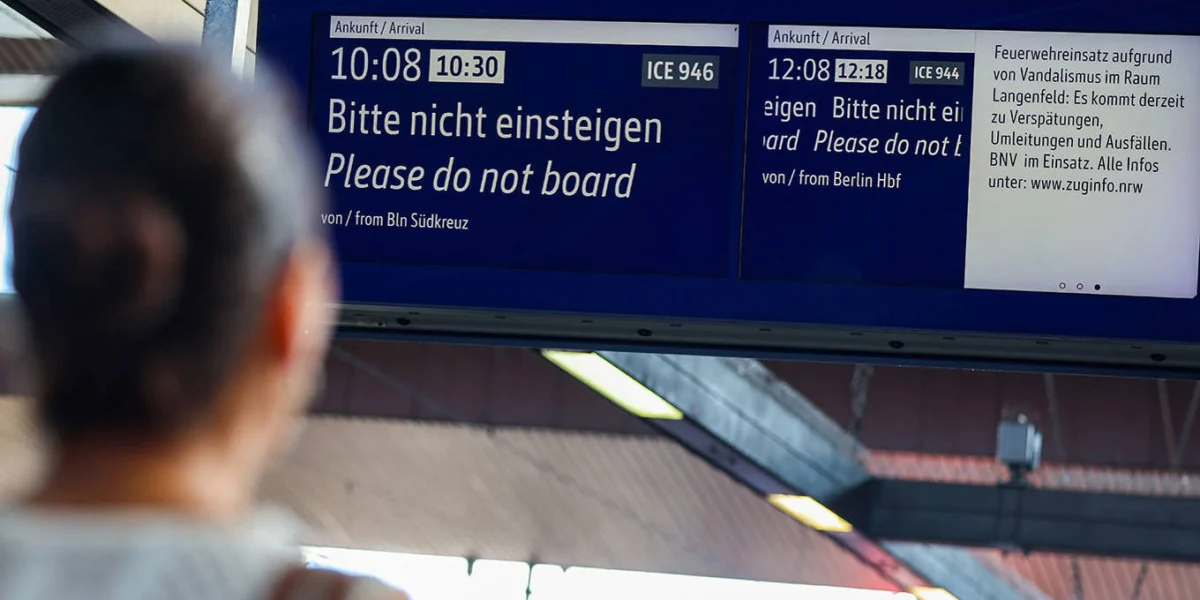
- 2016–2020: The Infrastructure Fraying. The cracks began to show. Deutsche Bahn’s reliability plummeted, and the bureaucratic hurdles for digital transformation became a national joke. The reliance on cheap Russian energy—the bedrock of German industry—began to look like a strategic liability rather than an asset.
- 2021–2023: The Poly-Crisis. The pandemic exposed deep weaknesses in the health system and digital bureaucracy. The invasion of Ukraine shattered the German energy model, forcing an abrupt and painful decoupling from Moscow that exposed the fragility of the nation’s industrial heartland.
- 2024–2026: The Populist Surge. Economic stagnation, combined with inflation and migration anxieties, provided fertile ground for extremist parties. The political center found itself unable to provide a compelling vision for the future, leading to the current gridlock and loss of public trust.
Supporting Data: The Indicators of Erosion
The numbers paint a sobering picture of a nation losing its competitive edge.
1. Productivity and Growth
Germany’s GDP growth has lagged behind its G7 peers for three consecutive years. While the United States and other European nations have seen rebounds in productivity through AI integration and digital services, Germany remains trapped in a manufacturing-heavy model that is increasingly vulnerable to high energy costs and shifting global supply chains.
2. Infrastructure Investment
According to recent OECD data, public investment as a percentage of GDP in Germany has remained consistently below the eurozone average. The maintenance backlog of bridges, rail lines, and roads is estimated to exceed €400 billion. The lack of high-speed fiber-optic coverage remains a major barrier to small and medium-sized enterprise (SME) growth.
3. Demographic Pressures
The aging workforce is no longer a "future challenge"—it is a present reality. The pension system is under unprecedented strain, and the shortage of skilled labor has reached critical levels in sectors ranging from nursing to high-end software engineering.
Official Responses: Denial, Blame, and Inaction
The response from the political elite in Berlin has been, at best, erratic.
Government officials have frequently pivoted between defending the status quo and offering "band-aid" solutions. The current administration has proposed various "Growth Initiatives," yet these are often bogged down by inter-party disputes within the coalition. The opposition, meanwhile, has largely focused on capitalizing on the dissatisfaction of the electorate rather than proposing substantive policy alternatives.
Corporate leadership has been equally divided. While CEOs of major firms warn of "deindustrialization," many have been slow to move capital toward domestic innovation, preferring to hedge their bets by expanding operations in the U.S. or China. There is a palpable lack of a "Grand Bargain" between the state, unions, and industry—a consensus that was once the secret to Germany’s success.
Implications: The High Stakes of Reform
The implications of this stagnation extend far beyond the German borders. A weak Germany means a weak European Union. As the bloc faces existential threats from the East and increased economic competition from the Pacific, a Germany that is preoccupied with its own domestic dysfunction cannot provide the necessary leadership for European integration and security.
The Threat to Democracy
The most urgent implication is the erosion of the democratic center. Extremist parties are not just offering policy alternatives; they are questioning the liberal-democratic values that have anchored Germany since 1949. If the mainstream parties continue to ignore the legitimate grievances regarding the cost of living and the decline of public services, the democratic fabric will continue to fray.
The Need for a "New Contract"
To recover, Germany must rethink everything. This requires:
- A Radical Digital Overhaul: Moving beyond "paper-based" administration to a fully digital, citizen-centric government.
- Energy Sovereignty: Accelerating the transition to a renewable energy grid that is not only sustainable but economically competitive.
- Education Reform: Investing heavily in STEM and vocational training to bridge the skills gap, while fostering a culture that encourages risk-taking and entrepreneurship.
- Political Renewal: The elite must end the culture of "management by committee" and embrace a politics of conviction. The electorate needs to see that their leaders are capable of making difficult, long-term decisions that prioritize national resilience over short-term political expediency.
Conclusion: The Final Warning
Germany is at a crossroads. The country that once looked toward the future with confidence now looks toward it with trepidation. The "barbarians at the gates" are merely a symptom of a deeper rot: the failure of the establishment to adapt to a world that no longer rewards the traditional German model.
If Germany continues to coast on the remnants of its postwar success, it will find itself relegated to the status of a museum piece—a wealthy, aging, and increasingly irrelevant nation. The time for incremental reform has passed. Only a bold, systemic reimagining of the German economic and social contract can prevent the "German Model" from becoming a relic of history. The question is no longer whether Germany can change, but whether its leaders have the courage to dismantle the very system they built to ensure its survival.