By Kai Guo
October 13, 2026
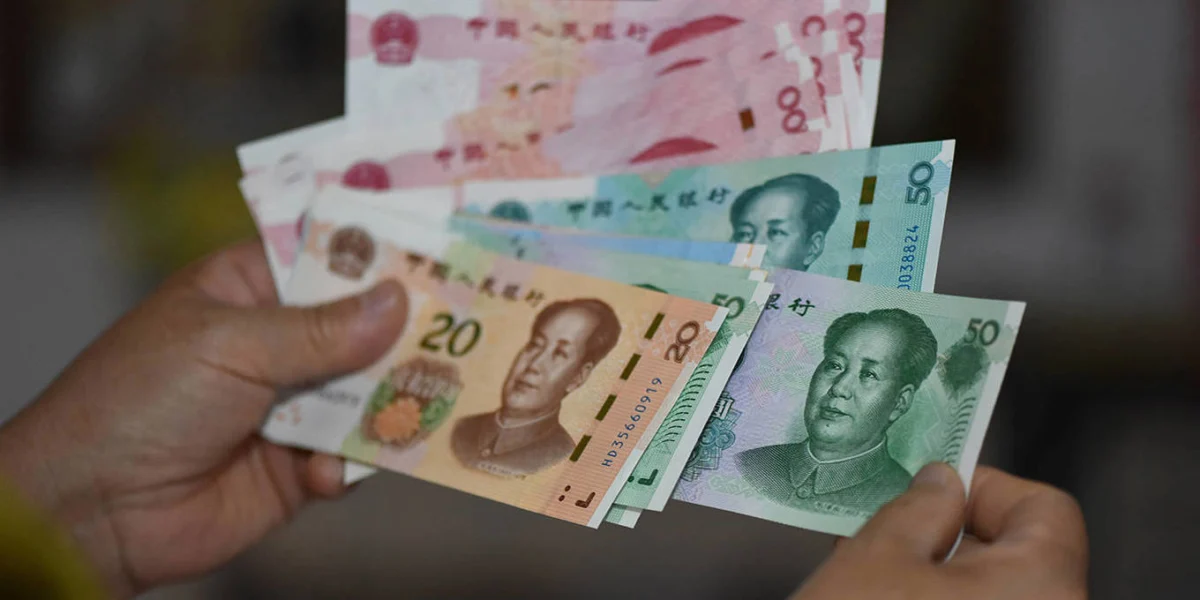
The global financial community has returned to a familiar, albeit increasingly contentious, debate: the valuation of the Chinese renminbi (RMB). As Beijing reports a record-shattering merchandise trade surplus of $1.2 trillion for 2025, the chorus of economists and policymakers calling for a sharp appreciation of the Chinese currency has reached a crescendo. The prevailing logic—that an undervalued renminbi acts as a subsidy for Chinese exports and a structural barrier to global economic equilibrium—has once again become the dominant narrative in Washington, Brussels, and Tokyo.
However, this diagnosis may be fundamentally flawed. While the trade data presents a compelling optical case for intervention, it overlooks the internal dynamics of the Chinese economy. The renminbi’s current weakness is not merely a tool of mercantilist policy; it is a mirror reflecting a domestic economy characterized by anemic demand and structural stagnation. To force an artificial appreciation without first addressing these underlying domestic failures would be a policy error with potentially catastrophic consequences for global trade stability.
The Anatomy of the Surplus: Main Facts
The core of the current tension lies in the stark divergence between China’s manufacturing output and its domestic consumption. In 2025, China solidified its position as the world’s "factory of last resort." While global demand for goods remained tepid, China’s industrial sector, buoyed by massive investment in high-tech manufacturing, surged ahead.
The $1.2 trillion surplus is not just a high-water mark; it is a structural anomaly. It represents a massive transfer of manufacturing capacity from the West to the East, facilitated by a renminbi that, on a real effective exchange rate (REER) basis, has struggled to find significant upward momentum. Proponents of appreciation argue that this valuation gap creates a "beggar-thy-neighbor" dynamic, where China exports its deflationary pressures while shielding its domestic firms from the natural market adjustments that usually accompany such massive capital inflows.
A Chronology of Currency Contention
To understand the current impasse, one must look at the historical arc of the renminbi’s international journey:
- 2005–2010: The Managed Float Era: Following years of international pressure, China moved away from a strict peg to the U.S. dollar, initiating a period of gradual, controlled appreciation. This period was largely viewed as a successful compromise.
- 2015: The "8/11" Devaluation: The People’s Bank of China (PBOC) stunned global markets by devaluing the renminbi by nearly 2% overnight. This marked a shift toward a more market-oriented mechanism, though it sparked fears of a "currency war."
- 2020–2023: The Pandemic Resilience: Despite global lockdowns, China’s exports thrived as the world shifted to digital and remote-work hardware. The renminbi remained relatively stable, but the trade surplus began to balloon.
- 2024–2025: The Surge: As the U.S. Federal Reserve maintained high interest rates to combat inflation, the interest rate differential between the U.S. and China widened. Investors flocked to the dollar, leaving the renminbi to depreciate despite China’s record-breaking trade performance.
- Late 2026: The Current Crisis: With the surplus hitting record highs, the G7 and other multilateral institutions have begun to signal that the status quo is no longer politically sustainable.
Supporting Data: Dissecting the Imbalance
The argument for an undervalued renminbi rests on several key indicators. First, the Purchasing Power Parity (PPP) models suggest that the renminbi is undervalued by as much as 25% to 30%. Second, the persistence of the current account surplus—now accounting for a significant share of China’s GDP—demonstrates that the currency is not acting as an "automatic stabilizer."
In a normal market, a large surplus would lead to increased demand for the local currency, causing it to appreciate, which in turn would make exports more expensive and imports cheaper, eventually closing the gap. In China, however, the capital account remains heavily restricted. The PBOC intervenes to prevent rapid appreciation, effectively "sterilizing" the inflows. This results in the massive accumulation of foreign exchange reserves, which are then reinvested into U.S. Treasuries and other global assets, further distorting global capital markets.
The Domestic Trap: Why Appreciation Might Fail
The primary error in the current global consensus is the assumption that China is choosing to keep its currency weak to boost exports. In reality, the weakness of the renminbi is a symptom of a much deeper malaise: a lack of domestic consumer confidence.
China is currently grappling with a property market crisis, an aging population, and record-high youth unemployment. Faced with these headwinds, Chinese households are saving at unprecedented rates rather than spending. When domestic consumption is suppressed, the only remaining outlet for China’s massive industrial capacity is the export market.
If Beijing were to force a sharp appreciation of the renminbi today, the result would not be a miraculous rebalancing toward domestic consumption. Instead, it would likely lead to:
- Industrial Bankruptcy: Many of China’s manufacturing firms operate on razor-thin margins. A sudden 10%–15% appreciation could trigger a wave of defaults, exacerbating unemployment.
- Deflationary Export: To maintain market share, companies might be forced to slash prices further, exporting deflation to the rest of the world and worsening the global manufacturing slump.
- Capital Flight: Uncertainty regarding currency valuation often triggers domestic capital flight, as businesses seek to move assets offshore, further destabilizing the Chinese financial system.
Official Responses and Geopolitical Posturing
The Ministry of Commerce in Beijing has consistently denied that the renminbi is being manipulated. Their official stance is that the currency’s value is determined by "market supply and demand" and that the trade surplus is a natural result of the "competitiveness of the Chinese industrial chain."
Conversely, officials in Washington have begun to draft legislation that frames the currency valuation as a trade barrier. The U.S. Treasury’s latest report stopped short of labeling China a "currency manipulator," but the rhetoric from the legislative branch suggests that trade sanctions—specifically directed at sectors benefiting from the currency gap—are on the table. In Europe, the European Central Bank has expressed concern that the "asymmetry" of the exchange rate is creating a distorted competitive landscape for European manufacturers, particularly in the automotive and green energy sectors.
Implications: The Path Forward
The path to global economic stability does not lie in the foreign exchange markets, but in the halls of Beijing’s policymaking centers. If the international community wants to see a reduction in China’s trade surplus, it must advocate for structural reforms that boost Chinese household income and social safety nets.
The Needed Policy Pivot
- Fiscal Stimulus for Consumers: Instead of investing in more infrastructure or state-owned manufacturing capacity, Beijing must pivot toward direct cash transfers or service-sector investment that encourages household spending.
- Liberalizing the Capital Account: A more gradual opening of the capital account would allow market forces—rather than government intervention—to dictate the value of the renminbi, reducing the temptation for competitive devaluation.
- Multilateral Trade Dialogues: Rather than unilateral threats of tariffs, the G20 should facilitate a framework where China’s currency policy is linked to measurable benchmarks for domestic consumption growth.
The current preoccupation with the "undervalued renminbi" is a classic case of focusing on the thermometer rather than the fever. The trade surplus is merely the outward symptom of a broader economic sickness: the inability of the Chinese economy to sustain itself through domestic demand.
Forcing a currency correction in a vacuum is akin to treating a deep-seated infection with a topical cream. It may hide the symptoms for a time, but it ignores the underlying pathogen. If the global economy is to achieve a true, sustainable rebalancing, the focus must shift from the exchange rate to the structural transformation of China’s growth model. Anything less is merely rearranging the deck chairs on a global economy that remains precariously tilted.
As we look toward 2027, the challenge for global leaders is to resist the urge to resort to protectionist currency wars. Instead, the goal must be a coordinated effort to encourage China’s transition toward a consumption-led economy. Only then will the renminbi find its true market equilibrium, and only then will the global trade landscape find the stability it so desperately requires.