BRUSSELS — The atmosphere in the European Union’s capital is rarely devoid of tension, but as heads of state and government arrived in Brussels this Thursday for a critical two-day summit, the mood was marked by a distinct, palpable anxiety. The agenda, theoretically focused on the bloc’s long-term economic competitiveness and migration policy, has been unceremoniously hijacked by a singular, destabilizing variable: the rapidly shifting posture of the United States under President Donald Trump.
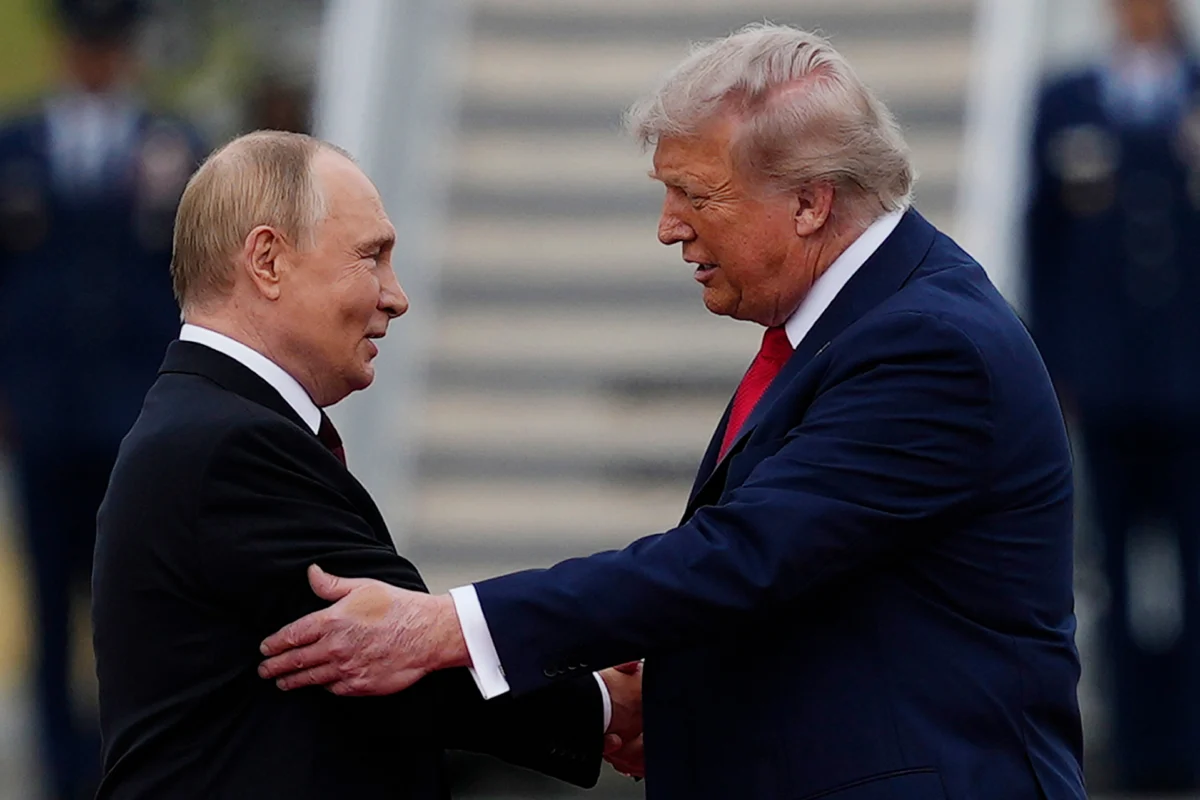
For years, the trans-Atlantic alliance has weathered a series of diplomatic tremors—ranging from aggressive trade tariffs and disputes over NATO defense spending to the surreal, headline-grabbing rhetoric regarding the purchase of Greenland. Yet, the current crisis is of a different magnitude. European capitals are reeling from what they describe as a sudden, overt pivot by the Trump administration toward a pro-Russian stance, one that effectively abandons the long-standing U.S. commitment to Ukrainian sovereignty and threatens to dismantle the unified Western front against Kremlin aggression.
The Chronology of a Diplomatic U-Turn
The recent acceleration of the White House’s pro-Moscow trajectory has been both rapid and, to many observers, legally questionable. The escalation can be traced back to a series of events over the last ten days, which have fundamentally altered the geopolitical landscape of the conflict.
- Early October: Reports surface that the White House has grown increasingly agitated over Ukrainian drone strikes targeting Russian oil refineries. Administration officials, citing the potential for domestic political fallout ahead of the U.S. midterm elections, begin privately signaling to Kyiv that these strikes must cease to prevent a surge in global fuel prices.
- October 7-9: The administration takes the unprecedented step of lifting a tranche of energy sanctions against Russia. Legal experts argue that this move may be in direct violation of existing U.S. statutes, yet the administration frames the policy as a necessary step to "stabilize global energy markets."
- October 10: In a series of inflammatory remarks, President Trump publicly blames the Ukrainian leadership for the prolongation of the war, claiming Kyiv has failed to pursue a "realistic" diplomatic solution.
- October 11: The administration issues an ultimatum to the Zelenskyy government, suggesting that the current leadership in Kyiv is an obstacle to peace and openly calling for a change in government. Simultaneously, the White House threatens to cut off all intelligence sharing with Ukrainian military intelligence (GUR), a move that would leave Kyiv effectively blind on the battlefield.
- October 12: The U.S. threatens to block European allies from utilizing U.S. military supply chains to procure weapons for Ukraine, effectively weaponizing the defense industrial base against the very nations that rely on American arms.
Supporting Data: The Cost of Disengagement
The implications of these shifts are not merely rhetorical; they are quantifiable. According to data provided by the Kiel Institute for the World Economy, U.S. military aid to Ukraine has been the bedrock of the defense coalition. A sudden withdrawal of intelligence sharing would, according to senior NATO military analysts, degrade Ukrainian defensive capabilities by an estimated 30% within the first month.
Furthermore, the lifting of energy sanctions has already had a measurable impact on the market. While the White House claims the move was designed to lower fuel prices, market analysts note that the influx of Russian crude has created a price floor that undermines the effectiveness of the G7’s price-cap coalition.
"The strategic logic of the administration is increasingly incoherent," says Dr. Elena Rossi, a senior fellow at the European Council on Foreign Relations. "They are attempting to manage domestic retail gas prices at the expense of the entire security architecture of the European continent. By empowering the Russian energy sector, they are simultaneously funding the very war machine that they previously claimed to be neutralizing."
Official Responses and Diplomatic Fallout
As the summit commenced, the silence from the U.S. embassy in Brussels was as loud as the voices of dissent echoing through the corridors of the European Council. European leaders, while cautious in their public statements to avoid a full-scale diplomatic rupture, are clearly rattled.
A senior EU official, speaking on condition of anonymity, described the current situation as a "betrayal of trust."
"We are at a crossroads," the official stated. "If the United States pivots to a transactional, pro-Russian posture, Europe must decide whether to continue tethering its security to an unreliable partner or to accelerate its push for ‘strategic autonomy.’ This is no longer a theoretical debate; it is a matter of immediate survival for the eastern flank of the Union."
In Berlin, Chancellor Olaf Scholz urged "cool heads," while simultaneously authorizing a significant increase in domestic defense spending, a signal that Germany is preparing for a reality where the U.S. security umbrella may no longer be guaranteed. Meanwhile, Polish and Baltic leaders have been more vocal, openly questioning whether the Trump administration has entered into a "quid pro quo" arrangement with Moscow that trades Ukrainian territorial integrity for a temporary dip in domestic fuel prices.
Implications: A New Era of Trans-Atlantic Instability
The implications of this shift are profound and far-reaching.
1. The Collapse of the Intelligence Shield
Intelligence sharing is the "nervous system" of the Ukraine-West partnership. Without real-time satellite imagery and intercepted communications from the U.S., Ukraine’s ability to defend its energy infrastructure or track Russian troop movements will be severely compromised. The threat to withhold this data is being viewed in Brussels as a form of "strategic coercion."
2. The Weaponization of Arms Procurement
By threatening to block European purchases of U.S. weapons for Ukraine, the Trump administration is effectively holding the European defense industry hostage. If realized, this policy would force EU nations to either abandon their support for Kyiv or invest in an expensive and time-consuming ramp-up of indigenous defense manufacturing.
3. The End of the "Impartial Arbiter"
The U.S. has long presented itself as the primary guarantor of European security and the impartial arbiter of democratic values. President Trump’s recent rhetoric has shattered this image. By explicitly calling for the removal of President Zelenskyy, the administration has moved from being a participant in the conflict to an active political player, potentially mirroring the Kremlin’s own attempts to destabilize the Ukrainian government.
4. The Domestic U.S. Political Lens
European leaders are acutely aware that these moves are largely driven by the upcoming U.S. midterm elections. The fear in Brussels is that the Biden administration’s legacy—a unified, pro-Western, and resolute stance against Russian aggression—is being dismantled in the heat of a populist political campaign. The short-term desire for lower inflation and lower gas prices is being prioritized over the long-term containment of an expansionist Russia.
Conclusion: A Continent on Edge
As the summit continues, the overarching theme is one of profound uncertainty. European leaders are now tasked with the unenviable job of preparing for a potential future where the United States is no longer the anchor of European security, but rather a wild card in the geopolitical game.
The divide between Washington and Brussels has reached a point of friction not seen since the height of the Iraq War, yet the stakes today are far higher. With the war in Ukraine entering a critical winter phase, any move to weaken the Western coalition will be viewed in Moscow as a green light for further escalation.
For the leaders gathered in Brussels, the next forty-eight hours will be defined by a singular, urgent question: Can the European Union maintain its resolve and sustain its support for Ukraine without the backing of its most powerful ally? The answer to that question will likely define the security landscape of the 21st century.