By Robert Bradley and John T. O’Brien
October 15, 2026
Twenty-five years ago, the United States was still reeling from the traumatic collapse of the Twin Towers and the assault on the Pentagon. On October 15, 2001, the nation’s sense of security was shattered once again, not by hijacked aircraft, but by a quiet, insidious threat delivered through the mundane mechanism of the daily mail.
An intern in the office of then-Senate Majority Leader Tom Daschle, Grant Leslie, opened an envelope expecting a routine message from schoolchildren. Instead, a cloud of fine white powder spilled onto her lap. That moment—the realization that the nation’s postal system had been weaponized—ignited a panic that would claim five lives, sicken seventeen others, and expose deep, structural fractures in American biodefense that remain dangerously unhealed today.
The Anatomy of the 2001 Attacks
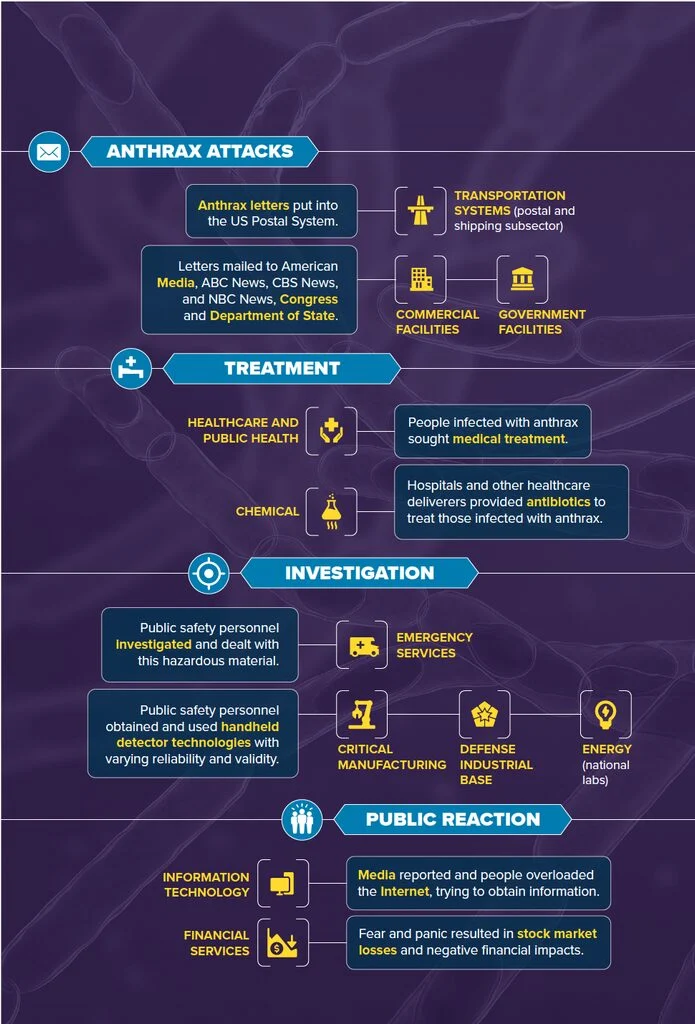
The 2001 anthrax attacks were a masterclass in asymmetric warfare. By utilizing the U.S. Postal Service to distribute Bacillus anthracis—the Ames strain—the perpetrators effectively paralyzed the federal government and media outlets. The psychological impact was profound; the simple act of checking the mailbox became a source of terror for millions of Americans.
According to Insidious Scourge: Critical Infrastructure at Biological Risk, a seminal report by the Bipartisan Commission on Biodefense, the 2001 events impacted eleven critical infrastructure sectors. The attack was not merely a public health crisis; it was an assault on the logistics, communications, and administrative heartbeat of the United States. While the Clinton and George W. Bush administrations had implemented some rudimentary biodefense measures, the reality was that the nation was largely flying blind. Medical countermeasures, such as ciprofloxacin and doxycycline, were distributed in a state of chaotic, panicked demand, and the government lacked a coordinated framework for decontamination, forensic attribution, and public communication.
Chronology of a Crisis
The timeline of the 2001 attacks highlights the slow, often reactive nature of the federal response:
- September 2001: The nation is already in a state of high alert following the 9/11 attacks.
- October 2001: Letters containing weaponized anthrax are discovered at media outlets and the offices of Senators Tom Daschle and Patrick Leahy.
- Late 2001–2002: The public health response is marked by uncertainty. Without established protocols, individuals exposed to the powder were often instructed to return to their workplaces with contaminated clothing, exacerbating the risk of cross-contamination.
- 2001–2010: The FBI, in conjunction with the U.S. Postal Inspection Service and the Department of Justice, conducts an exhaustive eight-year investigation known as "Amerithrax."
- 2008: The FBI identifies Dr. Bruce Ivins, a microbiologist at the U.S. Army Medical Research Institute of Infectious Diseases, as the primary suspect. Ivins dies by suicide before he can be formally charged.
- 2010: The Department of Justice officially closes the investigation, declaring the case resolved, though significant skepticism remains among some experts regarding the sufficiency of the evidence against Ivins.
Scientific and Forensic Evolution
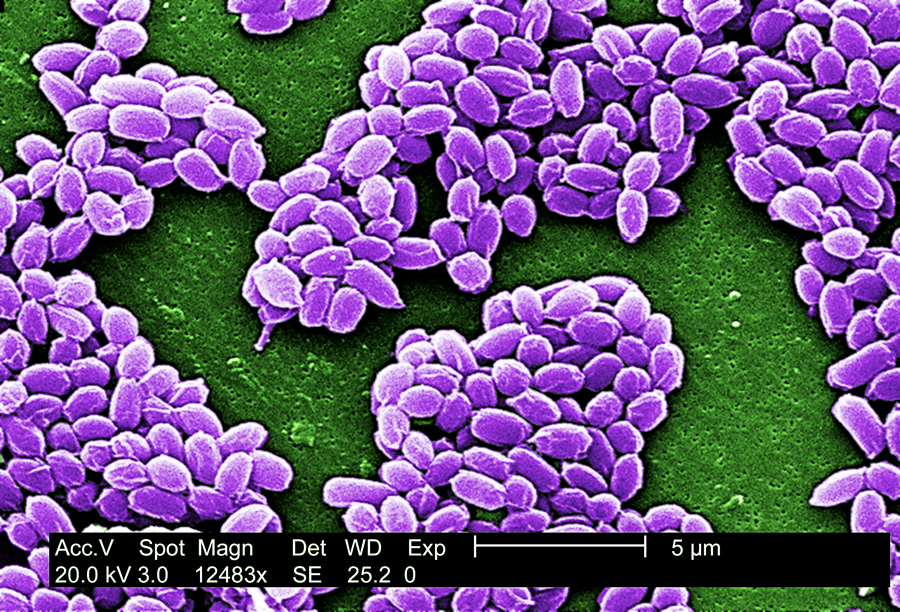
In the early days of the investigation, attribution was nearly impossible. The Ames strain of anthrax, while lethal, was widely distributed across research facilities globally. It was a "common" research strain, making the task of tracing the specific source akin to finding a needle in a haystack of needles.
However, the passage of time allowed forensic science to catch up. By the late 2000s, advancements in genomic sequencing enabled investigators to identify minute, structural variations in the organism. This molecular "fingerprinting" eventually allowed law enforcement to narrow the focus to specific laboratory stocks. While the science proved the source of the biological agent, it could not definitively settle the debate over intent or the possibility of accomplices. The closure of the case in 2010 provided legal finality, but for many in the biodefense community, it left an unsettling realization: the system had been defeated by an "insider threat" using materials readily available in the public trust.
The Official Response and Persistent Gaps
The Bipartisan Commission on Biodefense, co-chaired by Tom Ridge, has spent the last decade meticulously documenting the gaps that persist in our national strategy. Despite the lessons of 2001, the current landscape remains fraught with risk.
"Overall, we are not much better prepared for the next biological attack than we were twenty-five years ago," notes Senator Tom Daschle, a commissioner and direct victim of the 2001 attacks. His sentiment is echoed by the broader commission, which continues to warn that the U.S. remains vulnerable to a diverse array of biological threats.
The threats have evolved far beyond the simple mailing of powder. Today, the risks include:
- State-Sponsored Programs: Nation-states are actively investing in offensive biological capabilities, seeking the strategic advantages of asymmetric warfare.
- Terrorist and Extremist Interests: Domestic extremists and international terrorist organizations, including remnants of al-Qaeda and ISIS, continue to express interest in the acquisition and deployment of biological agents.
- The "Dark Web" Factor: The proliferation of black-market illicit trade routes makes it easier than ever for non-state actors to procure dangerous toxins or pathogens.
- High-Profile Assassinations: The use of chemical and biological toxins in international assassinations—such as the recent death of Alexei Navalny—proves that biological agents remain a preferred tool for state-level actors to bypass traditional defense perimeters.
The Prescription: A Call to Action
The Bipartisan Commission on Biodefense has produced a comprehensive "National Blueprint for Biodefense," updated as recently as 2024. While forty-seven of the commission’s recommendations have been codified into law since 2015, the work is far from complete.
To effectively defend the nation, the following strategic shifts are required:
- Unified Command and Control: The federal government must move away from fragmented responsibilities. A central authority must be tasked with the oversight of biological threats to ensure that communication, attribution, and remediation are handled in real-time, rather than through the sluggish inter-agency processes that hampered the 2001 response.
- Advanced Biosurveillance: We need a modern, integrated, and rapid-response biosurveillance system that moves beyond retrospective data collection. Detection must occur at the environmental level, identifying threats before they manifest in clinical settings.
- Strengthened Forensic Attribution: The ability to trace a biological agent back to its source must be a continuous, well-funded priority. Forensic science should be integrated into national security policy, ensuring that any use of a biological weapon is immediately met with a clear and credible attribution capability.
- Public-Private Resilience: Critical infrastructure, including the postal service and major transportation hubs, must implement mandatory, high-tech screening protocols that do not rely on the manual inspection of mail.
- International Treaty Compliance: The U.S. must lead a more aggressive diplomatic effort to monitor and sanction nation-states that violate existing arms control treaties related to biological weapons.
Conclusion: The Price of Inaction
Twenty-five years ago, the anthrax attacks served as a wake-up call that the United States largely hit the snooze button on. We have made progress—the existence of the Bipartisan Commission and the adoption of various legislative reforms are testaments to that. However, the nature of biological threats is that they are constantly mutating, both in the laboratory and in the minds of those who wish to do us harm.
The five individuals who lost their lives in 2001, and the seventeen who suffered, deserve more than a mere acknowledgement of their sacrifice. They deserve a nation that has truly learned the lessons of their tragedy. We cannot afford another twenty-five years of incremental progress. The next biological event will not wait for our bureaucracy to catch up; it will move at the speed of biology. It is time to treat biodefense with the same gravity, resources, and urgency as any conventional military threat. The survival of our critical infrastructure and the safety of the American public depend on it.