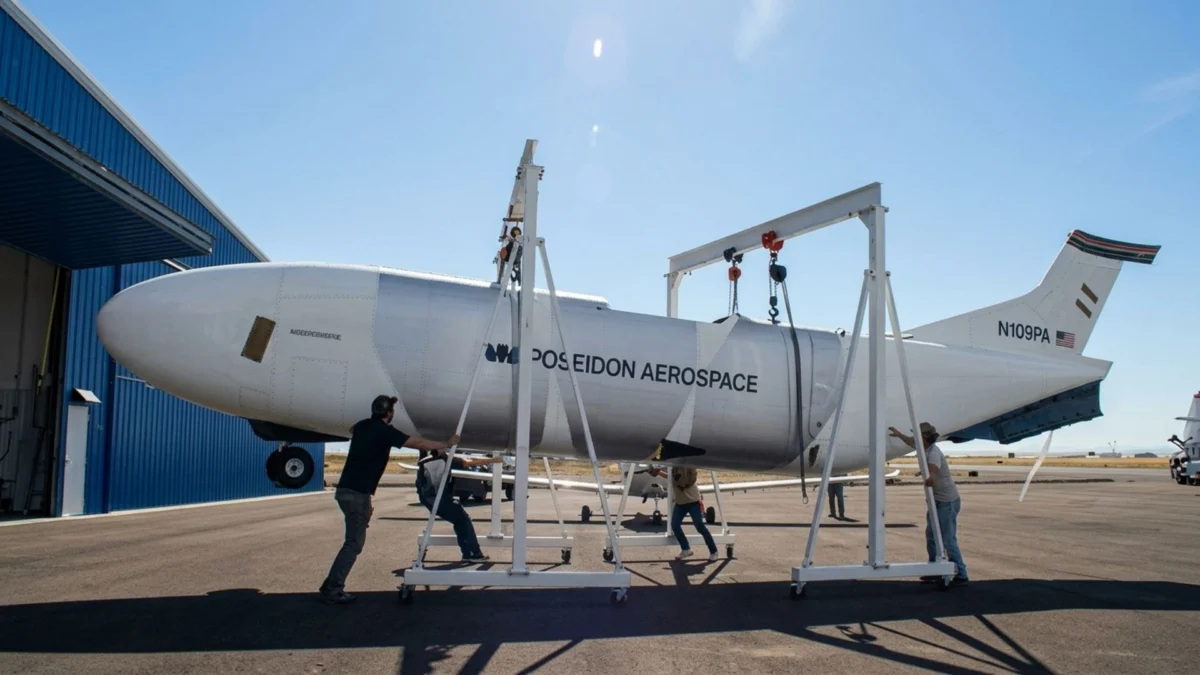
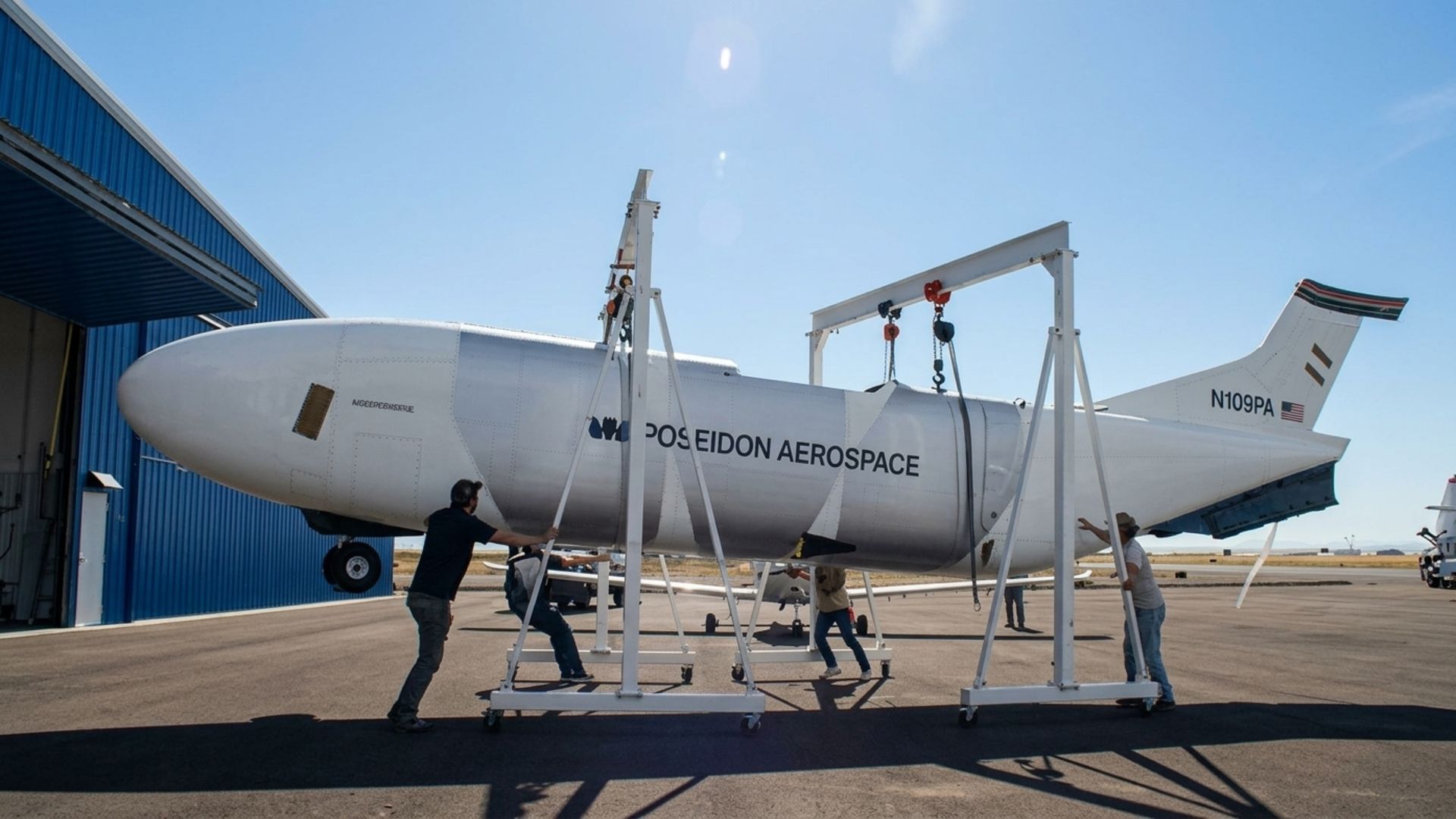
In the rapidly evolving landscape of autonomous logistics, a quiet revolution is taking shape in the skies. Poseidon Aerospace, a venture-backed startup, is currently developing "Egret," a heavy-lift autonomous cargo aircraft that promises to fundamentally alter the economics of air freight. With a 50-foot wingspan and a design philosophy that entirely strips away the conventional cockpit, Egret represents a shift toward a future where "trucking in the sky" becomes a viable, cost-effective reality.
The Core Concept: Redefining the Cargo Aircraft
Unlike traditional freight aircraft—which are almost exclusively modified passenger jets or designs built around the constraints of a human pilot—Egret has been conceived from the ground up as a pure logistics machine. By removing the cockpit, life-support systems, and flight controls required for human safety, Poseidon Aerospace has optimized the aircraft’s internal volume and weight distribution.
The result is a streamlined platform capable of hauling up to 4,000 pounds of freight. The space once reserved for a pilot is now entirely dedicated to cargo capacity, allowing for higher density and more efficient loading. As co-founder David Zagaynov, an alumnus of Amazon’s logistics arm, puts it, the company is building "the autonomous trucks of the sky." The objective is simple but ambitious: to move goods from point A to point B at the lowest possible cost, bypassing the overhead of traditional aviation.
A Chronology of Innovation
The path to Egret was not built overnight. Poseidon Aerospace has utilized a methodical, iterative approach to hardware development, prioritizing real-world testing over theoretical modeling.
The V0 Prototype
The company’s journey began with the V0, an experimental prototype that served as the "proof of concept" for their autonomous flight systems. This early phase was marked by the harsh realities of aerospace engineering; the V0 required multiple significant redesigns before it could reliably execute a successful flight. These early failures proved to be the most valuable data points for the team, helping them refine their control algorithms and structural integrity.
The Seagull and Government Engagement
Following the lessons learned from the V0, the company moved to the "Seagull" project. This quarter-scale prototype of their larger "Heron" aircraft was specifically engineered to operate in maritime environments, utilizing a lightweight, high-durability carbon-fiber frame.
The Seagull served a dual purpose: testing flight stability in challenging weather conditions and attracting high-level stakeholders. Poseidon has leveraged the Seagull in high-stakes demonstrations for critical organizations, including the U.S. Department of Defense, the Navy, and Special Operations Command. This engagement signals that while the commercial logistics market is the primary goal, the defense sector views autonomous, unmanned cargo delivery as a strategic priority.
The Shift to Egret
With the technical foundation laid by the V0 and the operational lessons from the Seagull, the team turned its focus to the Egret. Designed to be the largest cargo drone currently in development in the United States, Egret is the culmination of years of iterative R&D. The upcoming test flights in Oregon represent the most significant milestone in the company’s history, moving the concept from a hangar-bound project to an operational reality.
Supporting Data and Financial Backing
The viability of Poseidon Aerospace is bolstered by strong financial support. The company recently secured $60 million in a Series A funding round led by TQ Ventures. This influx of capital is specifically earmarked for the accelerated development and testing of their autonomous flight stack and full-scale vehicle production.
While specific performance metrics—such as range, cruise speed, and fuel consumption—remain proprietary or currently unverified, the sheer size of the Egret provides a competitive advantage. Operating with a 50-foot wingspan, the aircraft occupies a middle ground in the logistics chain: larger than the small "last-mile" delivery drones currently seen in pilot programs, yet smaller and far more agile than the commercial freighters that currently dominate global logistics.
Remote Oversight: The "Pilot in the Loop"
A common misconception regarding autonomous aircraft is that they are "set and forget" systems. In reality, Egret employs a sophisticated human-in-the-loop control system. Even without a pilot on board, the aircraft is tethered to a state-of-the-art ground control station.
Remote operators utilize live, low-latency camera feeds to monitor the aircraft’s progress. They maintain direct control over critical flight surfaces, including:
- Throttle management for speed and altitude control.
- Flap and rudder actuation for maneuvering and landing.
- Safety overrides that allow for immediate manual intervention in the event of system anomalies.
This "remote pilot" model provides a necessary safety net during the testing phase. It allows Poseidon to accumulate flight hours and gather reliability data while maintaining the ability to mitigate risks that autonomous software might not yet be equipped to handle.
Official Responses and Engineering Philosophy
The leadership team at Poseidon—comprised of David Zagaynov (logistics specialist) and Parker Tenney (mechanical engineer and Lockheed Martin veteran)—offers a clear vision for the company. Their engineering philosophy rejects the "adaptation" model used by legacy aerospace firms.
"We aren’t trying to make an existing plane autonomous," a spokesperson noted during a recent industry roundtable. "We are asking what a plane looks like if it was never designed to hold a human."
This philosophical pivot is where the cost-efficiency gains are found. By removing the cabin pressure systems, emergency oxygen, seat ejection mechanisms, and instrumentation panels, the aircraft is significantly lighter. A lighter aircraft requires less fuel to achieve the same range, creating a compounding economic advantage that is particularly attractive for the high-volume, low-margin world of logistics.
Implications for the Future of Global Logistics
The successful deployment of the Egret would have profound implications for several industries.
1. Cost Disruption
If Egret can successfully demonstrate lower cost-per-pound-per-mile than conventional cargo aircraft, it could force a massive shift in how short-to-medium-haul freight is handled. Industries reliant on time-sensitive components, such as automotive manufacturing or pharmaceutical distribution, would likely be the first to adopt this technology.
2. Supply Chain Resilience
Autonomous aircraft are not bound by the same labor constraints as manned aviation. With a shortage of qualified pilots impacting the aviation industry globally, the ability to operate autonomous fleets could help stabilize supply chains during periods of labor disruption or regional crises.
3. The Regulatory Hurdle
Despite the technological promise, the primary challenge remains the regulatory environment. The Federal Aviation Administration (FAA) and international bodies are notoriously cautious regarding autonomous flight in non-segregated airspace. Poseidon’s choice of Oregon for testing is strategic, likely taking advantage of specific drone-friendly corridors or testing ranges that allow for higher-altitude and more complex maneuvers.
4. Environmental Impact
By focusing on fuel efficiency and optimized flight paths, autonomous drones could contribute to a smaller carbon footprint for the logistics industry. Smaller, highly efficient drones replacing larger, less efficient cargo planes for specific regional routes could result in a significant reduction in total emissions.
Conclusion: The Horizon Ahead
As Poseidon Aerospace moves into the flight-testing phase for Egret, the industry is watching closely. The $60 million investment from TQ Ventures is a clear vote of confidence, but the true test lies in the sky above Oregon.
Will the Egret prove to be the "truck of the sky" that Zagaynov envisions? If the aircraft can demonstrate consistent reliability and the promised economic efficiency, it will mark the beginning of a new era in logistics—one where the cockpit is obsolete, the cargo is king, and the sky is open to a new, autonomous breed of heavy-lift machinery. For now, the world waits for the sound of the Egret’s engines, marking a potential shift in the way the global economy moves its most valuable goods.