In the high-stakes arena of orbital launch services, where timing often dictates market dominance, Rocket Lab has officially confirmed a significant pivot in its development roadmap. The company announced this Wednesday that its long-awaited medium-lift launch vehicle, "Neutron," will not reach the launch pad until 2027. This delay, while largely anticipated by industry analysts, underscores the formidable engineering challenges inherent in constructing a next-generation, reusable rocket made primarily of advanced carbon composite materials.
The announcement serves as a sobering reality check for a company that has enjoyed immense success with its smaller, workhorse "Electron" rocket. While Rocket Lab initially envisioned a 2024 debut when it unveiled the Neutron project in 2021, the development timeline has now effectively doubled. CEO Peter Beck, known for his transparent and technically rigorous approach, pointed to specific, complex manufacturing defects as the primary catalyst for this latest postponement.
A Chronology of Ambition and Setbacks
The journey of the Neutron rocket has been defined by a mix of revolutionary design goals and the grueling reality of aerospace manufacturing.
- 2021: Rocket Lab unveils the Neutron concept, a medium-lift vehicle designed to be the world’s first carbon-composite, highly reusable rocket. At this stage, the company targets a 2024 first flight.
- January 2026: A critical setback occurs during a hydrostatic pressure test of a prototype propellant tank. The tank suffers a rupture, which investigators later attribute to a manufacturing defect at a "critical join."
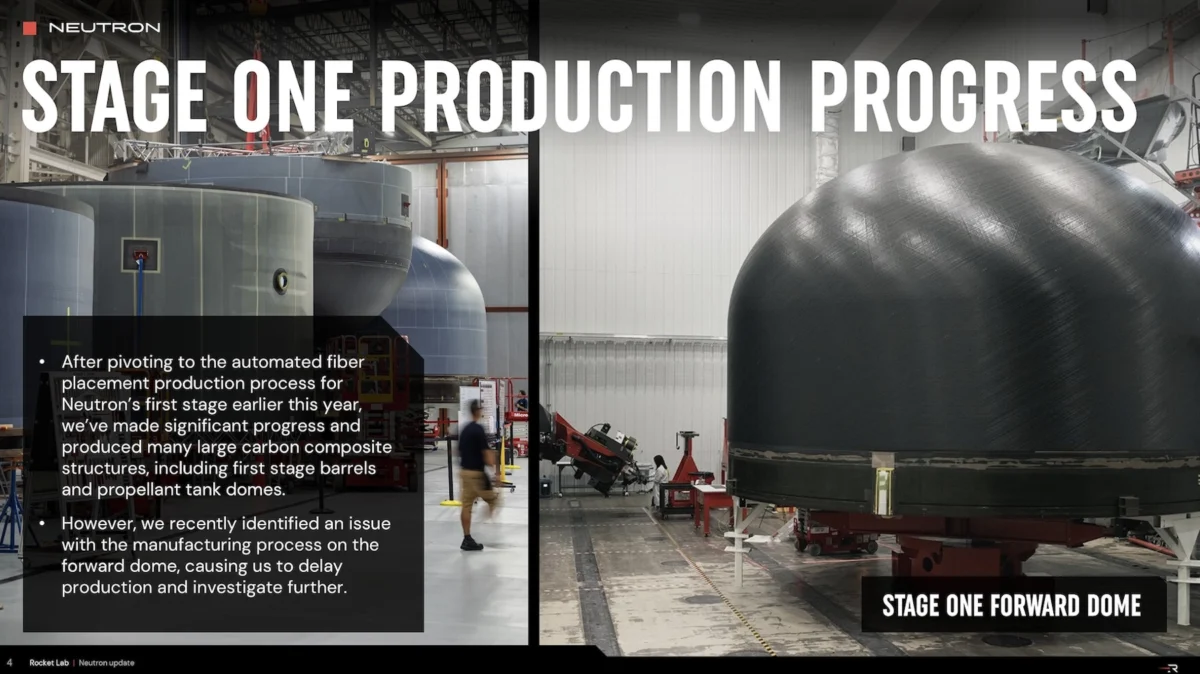
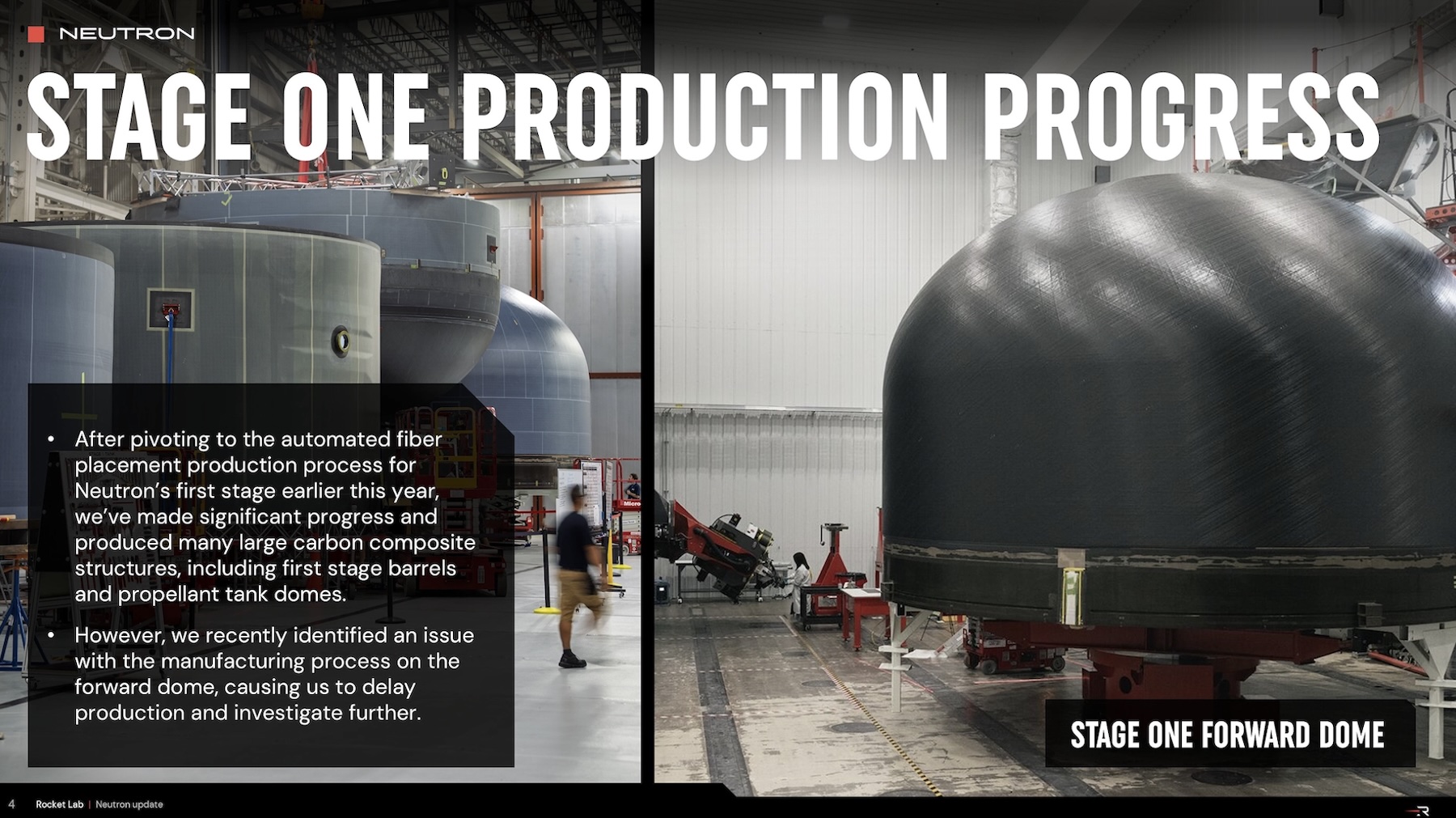
- Early 2026: In response to the failure, the engineering team pivots to an automated fiber placement process, moving away from manual hand-lay techniques. They also introduce design changes, including the removal of certain joints and the thickening of specific carbon composite sections to bolster structural integrity.
- August 2026: Despite lingering internal concerns, Rocket Lab maintains an official stance that a 2024 launch attempt remains within the realm of possibility, even as industry observers note the shrinking window.
- October 2026: Rocket Lab formally updates the schedule, confirming that manufacturing issues with the propellant domes have forced a delay to 2027.
Engineering the "Largest Pressurized Structure"
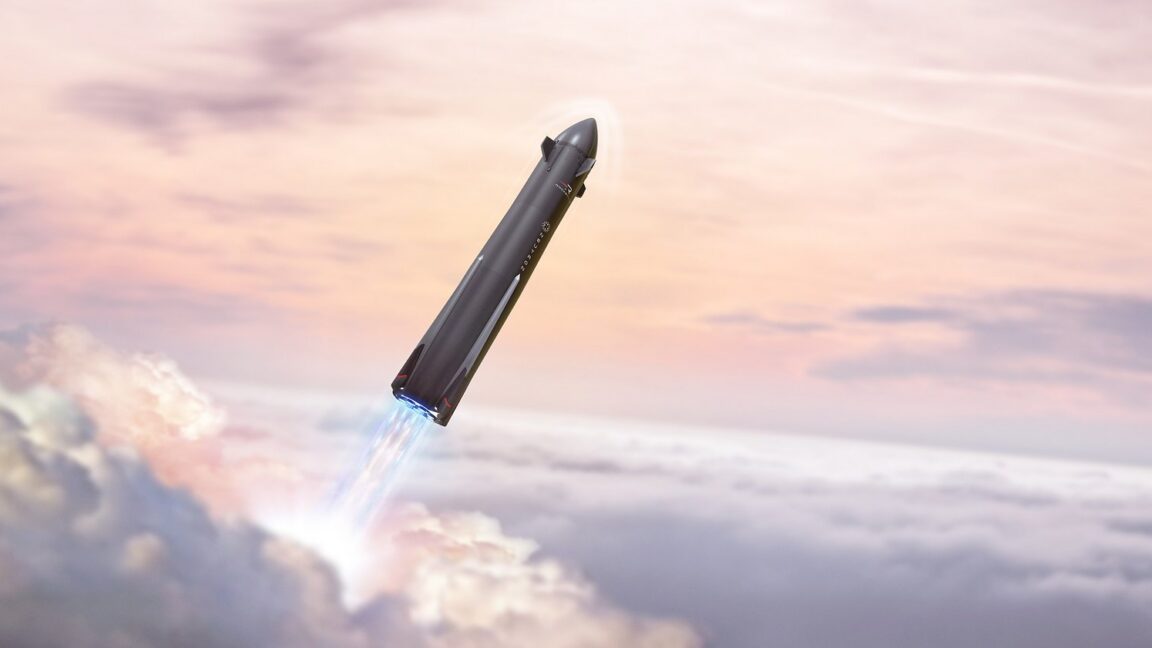
The core of the issue lies in the sheer scale of the Neutron rocket. Unlike traditional rockets that utilize metallic structures, Neutron is designed to be the "largest pressurized structure ever made out of carbon composite." While carbon fiber offers unparalleled strength-to-weight ratios and exceptional corrosion resistance—critical for a reusable vehicle that must endure the harsh conditions of atmospheric reentry—it introduces a level of manufacturing complexity that is exponentially higher than that of traditional aluminum or steel alloys.
The Problem with Voids
The specific defect identified by Rocket Lab’s engineering team involves the formation of "voids"—tiny, undesirable air pockets trapped between the layers of carbon fiber. These domes are cured through specialized, out-of-autoclave processes, as their size makes traditional high-pressure thermal curing chambers impractical or unavailable.
During the curing cycle, the thickened sections of the composite—a design change intended to increase safety margins following the January tank failure—created conditions where air could become trapped. As CEO Peter Beck explained in a recent company video, while these voids might not necessarily guarantee a catastrophic failure, they fall below the rigorous structural reliability standards that Rocket Lab demands for its maiden flight.
"We’ve solved the problem," Beck noted, confirming that a new aft propellant dome, manufactured using an updated, refined process, has successfully passed inspection. This success has provided the engineering team with the confidence needed to proceed with the forward dome, but the time lost in identification, investigation, and process validation has inevitably consumed the remainder of the 2026 calendar year.
Implications for the Competitive Landscape
The delay of the Neutron rocket is more than a mere technical hurdle; it is a significant strategic moment in the commercial space race.
Filling the Vacuum
The market is currently in a state of flux. SpaceX, the undisputed leader in launch cadence and capacity, is aggressively shifting its focus toward Starship. As SpaceX pivots away from the commercial service model of its Falcon 9 vehicle to accommodate the massive requirements of its own constellation and deep-space missions, a void is opening in the medium-lift market.
Satellite operators, particularly those building out megaconstellations for global internet and telecommunications, are desperate for reliable, affordable, and frequent launch options. Neutron was specifically designed to capture this market, offering a lift capability of nearly 29,000 pounds (13,000 kilograms) to low-Earth orbit—a sweet spot for modern commercial and military payloads.
The Rise of the Challengers
Rocket Lab is not operating in a vacuum. Companies such as Relativity Space, Stoke Space, and Firefly Aerospace are all racing to establish their own medium-lift capabilities. By delaying its entry, Rocket Lab risks allowing these competitors to secure initial launch contracts and operational "flight heritage," a currency of immense value in the risk-averse space insurance and government contracting sectors.
The Philosophical Commitment to Success
Despite the pressure from shareholders and the market, Peter Beck has consistently maintained a philosophy of "getting it right the first time." In previous investor calls and public addresses, Beck has emphasized that Rocket Lab has no interest in a "pad-clearing" success—the act of merely launching and surviving, only to fail in orbit.
"Our aim is to make orbit on the first try," Beck stated last year. "That means we don’t want to learn something during Neutron’s first flight that could be learned on the ground during the testing phase."
This conservative approach to risk is deeply rooted in the success of the Electron program. With 97 flights to date and 56 consecutive successes, the Electron has built a reputation for reliability that is the envy of the industry. Rocket Lab clearly believes that the brand equity of a flawless first Neutron flight outweighs the short-term negative optics of a schedule delay.
The Road to 2027: The Checklist Ahead
With the manufacturing process for the propellant domes now stabilized, the focus shifts to the final stages of the pre-launch campaign. The "to-do" list for the engineering team remains daunting:

- Full Stage Qualification: Following the resolution of the dome issue, the first stage must undergo comprehensive qualification testing to ensure it can withstand the pressures of flight and the thermal stresses of repeated reentries.
- Archimedes Engine Completion: The rocket will be powered by nine Archimedes engines. While Rocket Lab reported in August that they were in the "final stretch" of qualification, these powerplants are the heart of the vehicle. Their performance is non-negotiable.
- Launch Site Integration: Once the hardware is ready, the focus shifts to the launch site at Wallops Island, Virginia. The integration of a new rocket into a launch facility is a multi-month endeavor involving complex fueling tests, countdown rehearsals, and the high-stakes "static fire" test, where the engines are ignited while the rocket is held down on the pad.
Conclusion
Rocket Lab’s decision to delay the Neutron flight to 2027 is a pragmatic, if painful, acknowledgment of the realities of pioneering new aerospace technologies. The shift from manual hand-lay processes to automated, large-scale composite manufacturing is a transition that has challenged many of the world’s most capable aerospace firms.
By prioritizing structural integrity over a rushed timeline, Rocket Lab is betting that the long-term value of a reliable, high-performance medium-lift vehicle will ultimately vindicate this patience. As the company moves toward 2027, the eyes of the aerospace industry will remain fixed on Wallops Island, waiting to see if this methodical, detail-oriented approach will indeed allow Neutron to secure its place as the next great workhorse of the orbital economy.