In an era where digital surveillance has become a sophisticated, multi-billion-dollar industry, the average smartphone user remains largely oblivious to the clandestine battles occurring within their own hardware. While the public often focuses on data breaches involving large-scale corporate hacks, a more insidious threat persists: mercenary spyware. Tools like NSO Group’s Pegasus, capable of turning a high-end smartphone into a 24-hour listening and tracking device without the user ever clicking a link, have redefined the threat landscape for high-risk individuals.
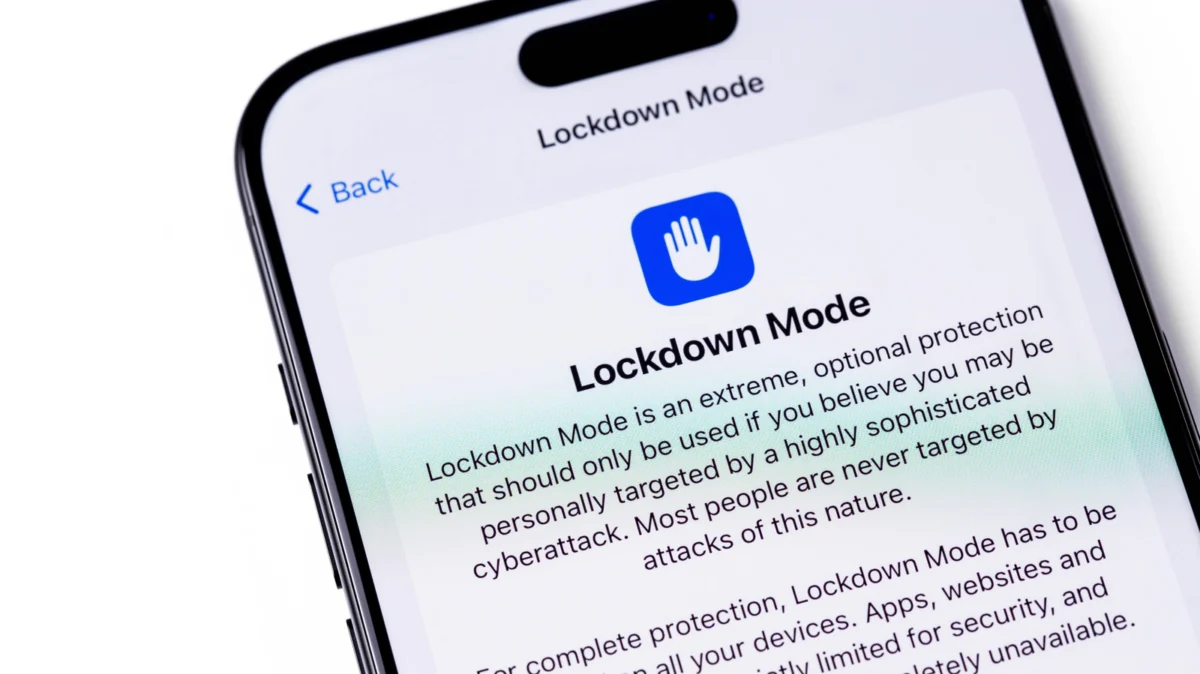
In response, Apple introduced "Lockdown Mode" in 2022. It is not a feature for the casual user, but rather a digital bunker designed for those whose professional or personal lives make them targets for nation-state-level actors. As we navigate an increasingly hostile digital terrain, understanding this "extreme" security layer is essential—not necessarily to use it, but to understand the lengths to which modern technology must go to maintain privacy.
The Genesis of Digital Defense: A Chronology of Lockdown Mode
The development of Lockdown Mode was not a reaction to common malware, but a direct counter-offensive against sophisticated "zero-click" exploits.
- 2021: The Turning Point: The global revelation of the Pegasus Project, which detailed how journalists, activists, and heads of state were being monitored by government clients of NSO Group, put massive pressure on big tech companies. Apple realized that standard security patches were insufficient for those being targeted by state-sponsored cyber-intelligence firms.
- July 2022: The Introduction: Apple announced Lockdown Mode alongside the preview of iOS 16. It was presented as an unprecedented, "extreme" optional security feature.
- 2023: The "Blastpass" Validation: The true efficacy of the feature was proven during the "Blastpass" exploit. Researchers discovered a vulnerability in the PassKit (Apple Wallet) framework that allowed attackers to deploy Pegasus without the victim interacting with the device. Critically, devices with Lockdown Mode enabled were found to be completely immune to the exploit.
- 2024 and Beyond: Apple continues to refine the feature, integrating it across its ecosystem, including watchOS and macOS, while consistently raising the financial stakes for researchers who can find ways to bypass the wall, offering up to $2 million for successful exploits.
The Mechanics of Exclusion: What Actually Happens?
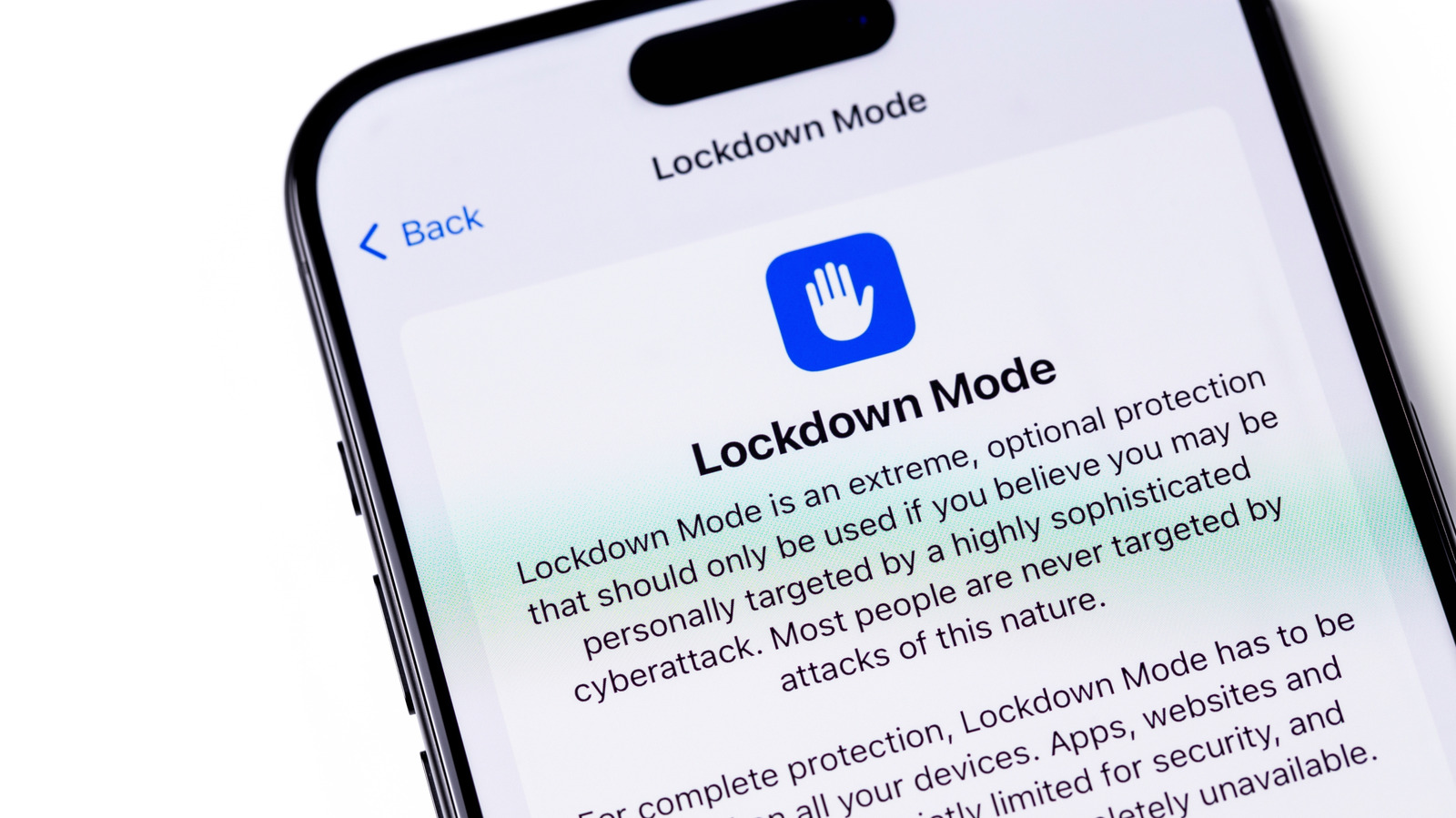
When a user toggles Lockdown Mode in their Privacy & Security settings, the operating system undergoes a radical transformation. The philosophy behind the mode is "attack surface reduction"—the fewer features that are active, the fewer potential vulnerabilities exist for an attacker to exploit.
Communications and Media
The most immediate impact is felt in the Messages app. Most attachment types, such as PDFs, GIFs, or complex document files, are blocked from being sent or received. Link previews—a common vector for malicious script injection—are disabled entirely. This effectively renders the messaging experience purely text-based for the majority of interactions. FaceTime is similarly restricted; incoming calls are blocked unless the initiator is already in the user’s "recent" contact list, preventing strangers from triggering an exploit simply by calling your number.
Browsing and Web Content
Web browsing is one of the most common pathways for spyware delivery. In Lockdown Mode, Apple’s WebKit engine imposes severe restrictions on JavaScript. Many complex web features are disabled, which often leads to websites loading slowly or appearing "broken." This is a deliberate trade-off: by stripping away the ability of a website to execute complex code, the browser becomes a much safer, albeit less convenient, environment.
External Connectivity and Synchronization
Lockdown Mode severs the "convenience" features that hackers often exploit to pull data from a locked phone. If an iPhone is locked, it will refuse to establish a wired connection with a computer or accessory. This prevents "juice-jacking" or forensic tools from accessing the device’s storage through the charging port. Furthermore, the device will no longer automatically join insecure Wi-Fi networks and has effectively deprecated support for legacy 2G and 3G network protocols, which are notoriously easy for cell-site simulators (often called "Stingrays") to intercept.
Ecosystem Limitations
The "Apple Garden" becomes significantly more walled-off. Configuration profiles—often used by corporate IT departments to manage device security—cannot be installed. This makes the feature incompatible with most managed work devices. Additionally, HomeKit invitations are disabled to prevent unauthorized access to a smart home network, and photo sharing is restricted to prevent the exploitation of metadata-heavy image files.
The Cost of Security: A Critical Trade-off
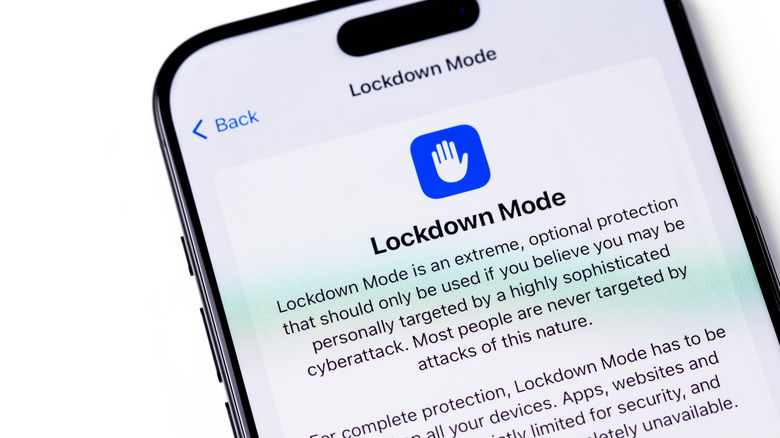
The primary implication of Lockdown Mode is the total erosion of user convenience. Apple makes it clear: this is not a mode for everyone. For the average user, the friction of a broken web browser, the inability to receive photos from friends, and the loss of peripheral connectivity are significant burdens that outweigh the marginal security gains.
However, for those at risk, this "inconvenience" is the price of survival. The feature is specifically tailored for "journalists, activists, and politicians"—individuals who may be targeted by state-sponsored surveillance. For these users, an image failing to load is a minor irritation compared to the life-altering consequences of their private communications being exfiltrated by a hostile government.
Official Stance and Bug Bounty Incentives
Apple’s commitment to this feature is underscored by its financial investment. Through its Security Bounty program, Apple has placed a massive target on the back of Lockdown Mode, inviting the world’s best security researchers to attempt to break it. By doubling the bounty to $2 million, Apple is essentially "crowdsourcing" the hardening of the feature.
If a researcher finds a way to penetrate the walls of Lockdown Mode, they aren’t just getting paid; they are providing Apple with the data needed to plug the hole. This creates a feedback loop of security that is significantly more robust than the standard, iterative updates seen in most consumer software.
Implications for the Future of Personal Privacy
The existence of Lockdown Mode suggests a pessimistic, yet realistic, outlook on the future of personal technology. It acknowledges that for a specific segment of the population, the standard protections offered by consumer electronics are insufficient against a determined, well-funded adversary.
Who Should Use It?
- The High-Risk Target: If you have received an "Apple Threat Notification" informing you that you are a target of a state-sponsored attack, enabling this feature is non-negotiable.
- The Privacy Enthusiast: If you have an extreme commitment to digital hygiene and are willing to sacrifice functionality for peace of mind, you can use it, though you will find the device frustrating for daily tasks.
- The Casual User: There is no empirical benefit to using this mode if you are not a target. The standard security features already present in iOS—such as advanced data protection, end-to-end encryption for iCloud, and rigorous app sandboxing—are sufficient for 99.9% of users.
The Verdict
Lockdown Mode is a triumph of engineering that proves mobile devices can be hardened significantly if the user is willing to pay the price in utility. As we move forward, it is likely that many of the protections pioneered in Lockdown Mode will eventually be "trickled down" into the standard iOS experience, albeit in a more seamless, less restrictive form.
For now, however, it remains a "panic button" for the digital age—a powerful, uncompromising, and deeply necessary tool for those who find themselves in the crosshairs of the world’s most sophisticated digital threats. Whether or not you ever turn it on, the fact that such a mode exists serves as a vital reminder: in the modern world, privacy is not a passive state, but an active, and sometimes difficult, choice.