Updated: 26 October 2026 – 23:20 GMT+1
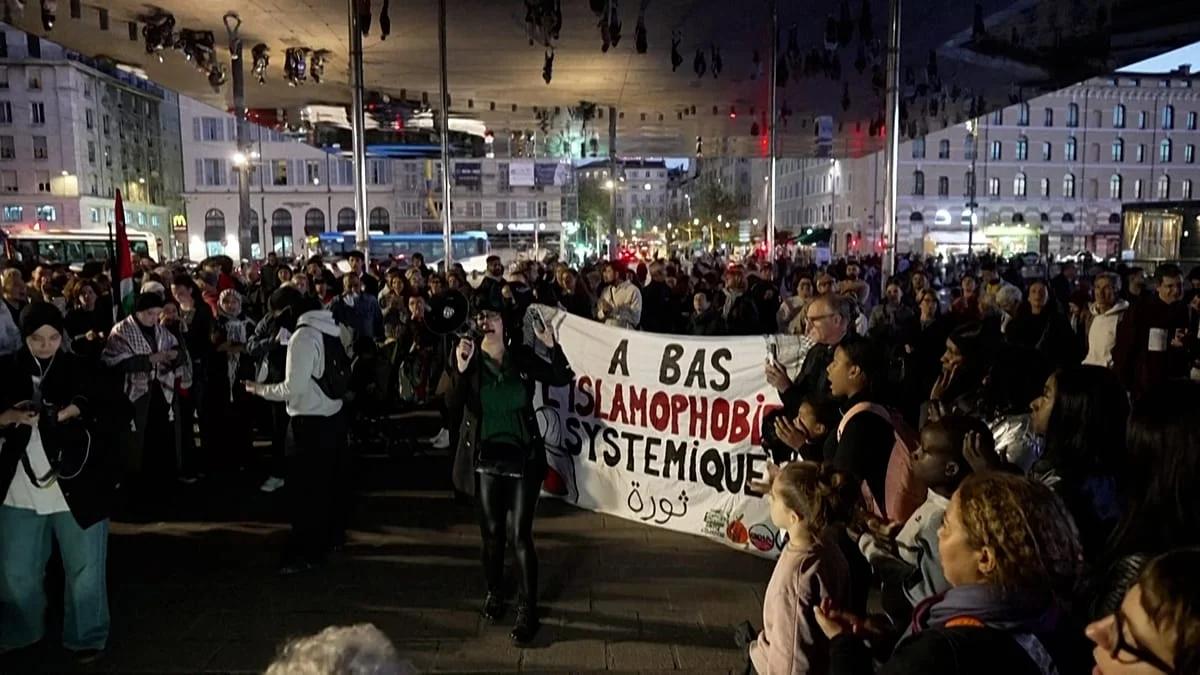
MARSEILLE – As the sun set over the Vieux-Port in Marseille on Monday evening, a sea of somber, determined faces gathered in a powerful display of national grief and defiance. Hundreds of citizens, ranging from local activists and trade unionists to families and students, converged on the historic harbor to denounce the scourge of racism that has once again shattered the tranquility of a French community.
The demonstration, organized by a broad coalition of anti-racism advocacy groups, trade unions, and local grassroots organizations, served as a poignant response to the senseless violence that occurred three days prior in the southwestern suburbs of Paris. While police officials estimated the turnout at approximately 800, organizers reported that over 1,000 individuals had joined the march, transforming the iconic waterfront into a stage for unity and a firm rejection of hate.
The Tragedy in Trappes: A Chronology of Violence
The catalyst for the nationwide outpouring of anger and sorrow was the harrowing events of Friday, October 23, 2026. In a series of calculated attacks that have left the nation reeling, a gunman targeted innocent passers-by in the towns of Trappes and the neighboring La Verrière.
Friday, October 23: The Assault
The violence began in the early afternoon, a time when the streets of these suburban communities were filled with residents attending to their daily errands. According to eyewitness accounts and subsequent police reports, the assailant moved through the area with cold efficiency, opening fire on civilians without provocation.
The primary victim was 26-year-old Pengo Bossio Wangi, a respected local figure and amateur Mixed Martial Arts (MMA) fighter known for his discipline and commitment to community sports. Wangi succumbed to his wounds at the scene. His death has sent shockwaves through the local sports community, where he was celebrated not only for his athletic prowess but for his role as a mentor to younger fighters.
The Human Toll
The violence was not confined to a single victim. In total, five other individuals were struck by gunfire. Among the most harrowing reports is that of a 12-year-old girl, who was intercepted by the shooter while walking to a local swimming pool. As of Monday evening, medical officials confirmed that she remains in critical condition, fighting for her life in a specialized trauma unit. The brutality of targeting a child has intensified the public’s call for justice and a systemic review of how the French state handles hate-motivated violence.
The Apprehension
Following a rapid response from local law enforcement and tactical units, the 39-year-old suspect was apprehended in the nearby commune of Coignières shortly after the attack. The swift arrest prevented further loss of life, but the psychological wounds inflicted upon the community of Trappes remain raw.
Investigative Focus: The Spectre of Racist Terrorism
The French legal system has responded with the gravity the situation demands. The National Anti-Terrorism Prosecutor’s Office (PNAT) has assumed jurisdiction over the case, signaling the state’s intent to treat the shootings as a suspected racist terrorist attack.
Legal experts note that this classification is significant. By designating the event as "terrorist" in nature, the state acknowledges that the motive was not merely a random act of violence, but a calculated effort to intimidate a specific segment of the population. Investigators are currently examining the suspect’s digital footprint, social media activity, and potential links to extremist ideological circles.
The focus of the investigation is to determine whether the suspect acted as a "lone wolf"—a term often used in security circles to describe individuals radicalized in isolation—or if he was part of a broader network of hate-driven actors. Authorities are also scrutinizing the acquisition of the firearm used in the assault, aiming to trace its origin and identify any potential accomplices who may have aided or abetted the suspect.
A City in Mourning: The Marseille Response
The atmosphere at the Vieux-Port on Monday was one of solemn reflection. Protesters carried placards bearing slogans such as "No to Racial Hatred," "Justice for Pengo," and "Unity Against Fear."
"We are here because when one of us is targeted because of who they are, all of us are diminished," said a spokesperson for one of the leading anti-racism organizations during the rally. The demographic diversity of the crowd underscored the message that the fight against racism is not the responsibility of a single group, but a collective imperative for the French Republic.
Trade union representatives, who often stand at the forefront of social justice movements in France, emphasized the intersection between economic insecurity and the rise of far-right ideologies. They argued that divisive rhetoric in the political sphere has created a climate where such acts of violence are increasingly perceived as permissible by extremists.
Official Responses and Political Implications
The attack in Trappes has reignited a fierce national debate regarding internal security and the rising influence of extremist ideologies within the country.
Government Statements
High-ranking government officials have issued statements condemning the attack, promising that the full weight of the law will be applied to the perpetrator. In a brief press conference, a representative for the Interior Ministry reiterated the government’s commitment to protecting all citizens regardless of their background, religion, or ethnicity.
However, opposition parties have been quick to criticize the administration, questioning the efficacy of existing surveillance programs and the ability of intelligence agencies to identify radicalized individuals before they act. Some lawmakers have called for an emergency parliamentary session to discuss stricter gun control measures and a more robust strategy for deradicalization.
Societal Tensions
The shooting has laid bare the persistent fractures within French society. The suburbs—or banlieues—have long been flashpoints for tensions between residents and the state, often exacerbated by high unemployment, social marginalization, and perceptions of institutional discrimination.
Sociologists observing the fallout suggest that the attack in Trappes is a litmus test for the country’s social cohesion. If the state is perceived to be failing in its duty to protect its vulnerable populations, the potential for further civil unrest increases significantly. Conversely, the widespread demonstrations in cities like Marseille indicate a resilient desire among the populace to bridge these divides and demand a more inclusive, secure future.
Looking Ahead: The Path to Justice
As the investigation continues, the eyes of the nation remain fixed on the judicial process. The suspect is expected to face a preliminary hearing in the coming days, where the formal charges—likely including murder and attempted murder with a terrorist intent—will be laid out.
Beyond the courtroom, the events of October 23 have spurred a broader dialogue about the soul of the nation. Educational institutions, religious leaders, and community centers are already planning a series of workshops and forums aimed at countering hate speech and promoting inter-communal dialogue.
The death of Pengo Bossio Wangi will be remembered not only as a tragic loss of life but as a rallying point for those who believe that France’s core values of Liberté, Égalité, Fraternité must be defended against the encroaching darkness of racial hatred.
As the protest in Marseille concluded on Monday night, the crowd did not disperse in anger, but in a shared, quiet resolve. The banners were rolled up, but the message remained clear: in the face of terror, the community stands united, and the pursuit of justice will not be silenced by the sound of gunfire.
For the families of the victims, and for the residents of Trappes, the road to healing will be long and arduous. Yet, the support shown in cities across France serves as a testament to the fact that when faced with the threat of division, the collective strength of the people remains a formidable barrier against those who seek to tear the social fabric apart.
The nation now waits for the wheels of justice to turn, hoping that the tragedy in Trappes will not merely be recorded as another statistic in a history of violence, but as a turning point that led to a more vigilant, compassionate, and unified society.