A major new report from the Resolution Foundation has ignited a fierce debate regarding the fairness of the United Kingdom’s local taxation system, revealing that the current structure of council tax functions as an effective £3bn annual subsidy for Londoners. The report, which advocates for a radical overhaul of property taxation, suggests that the current system is not only antiquated but fundamentally biased against the north of England, where residents are paying significantly higher effective tax rates on their homes compared to those in the capital.
A System Built on 1991 Foundations
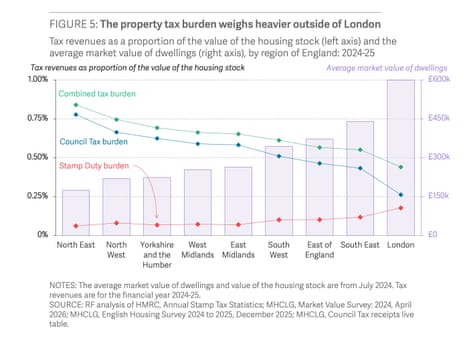
The crux of the issue lies in the historical design of council tax. When the system was introduced in 1991, it was based on property valuations that have not been updated for 35 years. Because the system utilizes a "compressed rate schedule"—where the multipliers determining the tax bands mean that even the most expensive properties pay only a fraction more than the cheapest—the system fails to reflect modern market realities.

The Resolution Foundation’s report, titled Home Economics, highlights a stark example of this regional imbalance: a property at the lower end of the top council tax band in the London borough of Richmond-upon-Thames is valued at 15 times more than a property at the top of the lowest band in Hull. Yet, the owner in Richmond pays only slightly more than double the council tax of the resident in Hull.
The report calculates that if Hull residents were taxed at the same effective rate as those in Richmond, they would be saving over £1,800 annually. On a national scale, this regional disparity resulted in a £3.1bn "giveaway" for London in the 2024-25 financial year, while almost every other region—particularly in the north—overpaid relative to property value.
The Call for Radical Reform
The thinktank is calling for the abolition of both council tax and stamp duty, proposing they be replaced with a proportional property tax levied at a flat rate of 0.7% of a property’s value. Such a move would be designed to be revenue-neutral for the state but would necessitate a massive redistribution of the tax burden across the country.
Recognizing the political volatility of such a change, the report suggests a gradual transition to allow households in higher-value areas, particularly in London and the south-east, to adjust. While Prime Minister Andy Burnham has previously expressed sympathy for such reforms, he has been notably silent on the matter since entering Downing Street, reflecting the precarious political tightrope the government must walk.

Hannah Aldridge, a senior research and policy analyst at the Resolution Foundation, was unequivocal in her assessment: "The UK raises more tax revenue from the homes we live in than most other advanced economies. Unfortunately, our two main housing taxes—council tax and stamp duty—are terribly designed, grossly unfair and economically harmful."
A Chronology of Economic and Political Tensions
The release of this report coincides with a week of heightened political activity in the UK. As the nation prepares for the upcoming autumn budget, the pressure on Chancellor John Healey to address these structural inequalities is mounting.

- September 23, 2026: Government housing figures show a 20% year-on-year increase in housing starts, with London seeing a massive 298% surge. Housing Minister Matthew Pennycook hailed this as a "radical overhaul" of the planning system.
- September 24, 2026: The Resolution Foundation publishes its findings on council tax, immediately drawing criticism from those who fear a shift in tax burden will hurt homeowners in the south.
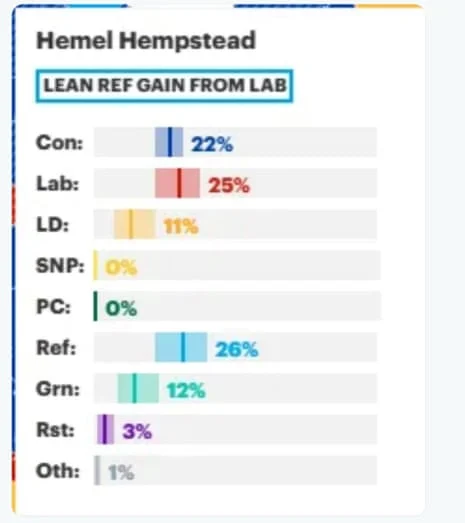
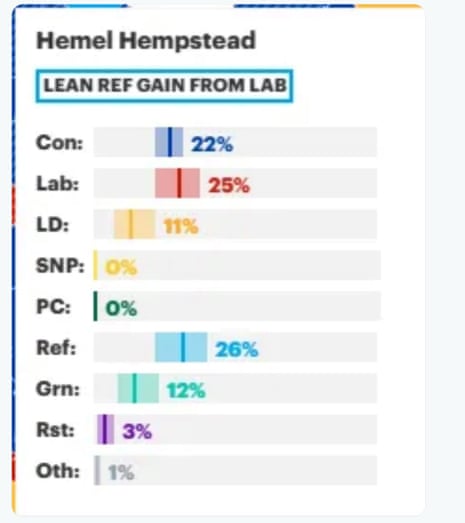
- September 24, 2026: A new YouGov MRP poll suggests that while Labour remains the largest party, the political landscape is highly volatile, with tactical voting playing a significant role in how the next election might play out.
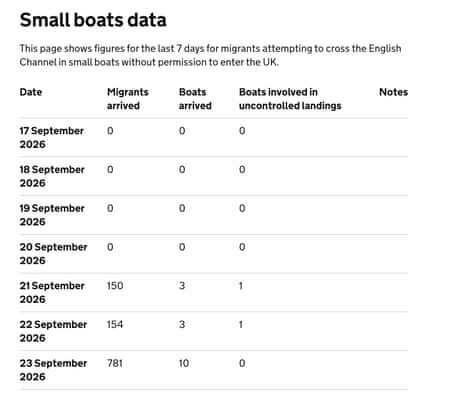
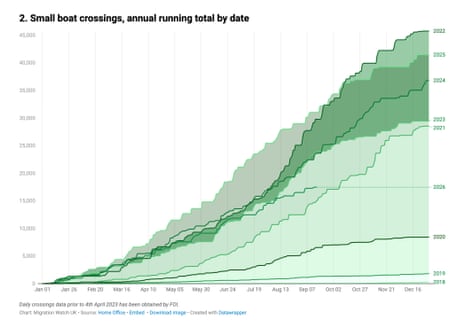
- September 24, 2026: Tensions in the Channel reached a new peak as 781 migrants arrived in a single day—the highest daily total for 2026—prompting the Home Office to announce an urgent review of border security.
The Political Landscape: Tactical Voting and "Uniting the Right"
While the tax debate simmers, electoral experts are focused on the shifting dynamics of the party system. New polling data released today indicates that Labour’s path to a majority is increasingly dependent on "progressive" tactical voting.
Data from both YouGov and Survation suggests that the rise of Reform UK has created a complex "three-way" competition in many constituencies. Conservative leader Kemi Badenoch, however, has firmly ruled out any electoral pacts with Reform UK. In a recent interview with GB News, she cited "character" and "sleaze" as primary reasons for the refusal, pointing to ongoing investigations into the party’s funding and donations.
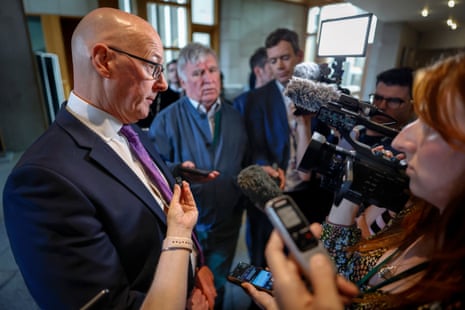
"Uniting the country behind common sense is what Conservatives want to do," Badenoch stated, rejecting the idea of a formal coalition of the right. Her focus appears to be on rebuilding the reputation of the Conservative party from within, a task she describes as "cleaning up" after years of internal turmoil.
Courts in Crisis: The Justice System Backlog
Beyond the economy and electoral strategy, the government is facing a mounting crisis in the judicial sector. New figures from the Ministry of Justice confirm that backlogs in both crown and magistrates’ courts have reached record levels.
At the end of June 2026, there were 80,829 cases awaiting trial in the crown courts, a 3% increase from the previous year. Even more concerning is the length of time these cases are held, with the median waiting time hitting 203 days—a 21% increase.
Sarah Sackman, the courts minister, acknowledged the severity of the situation, noting that "victims are waiting far too long for justice." The government has launched a recruitment drive to expand the number of magistrates to 21,000 by 2029, hoping to shift the burden away from the clogged crown court system.
However, Shadow Justice Secretary Nick Timothy has slammed the government’s approach, arguing that Labour’s attempts to reform the court system are "dead in the water" and that their focus on attacking the right to jury trial is a distraction from the fundamental lack of resources and judicial personnel.
Education and the Vocational Shift
In the education sector, the government is pressing ahead with its plans to broaden the GCSE curriculum. Education Secretary Lucy Powell has defended the move to include more vocational subjects, such as building and construction, arguing that it is essential for meeting the demands of the modern labour market.
Conservative critics, led by Laura Trott, have argued that this "dumbing down" of the curriculum will sabotage the futures of young people. Powell hit back at these claims, insisting that subjects like engineering and construction require rigorous problem-solving skills and that the new qualifications will be strictly regulated to ensure high standards.
Conclusion: A Nation at a Crossroads
The breadth of the issues currently facing the government—from the regional inequity of the tax system to the crisis in the courts and the shifting electoral map—paints a picture of a nation in transition. The Resolution Foundation’s report on council tax serves as a reminder that structural inequalities, left unaddressed for decades, eventually create systemic pressures that demand reform.

As the budget approaches and the Labour party gathers for its annual conference, the question is not just whether the government can navigate these immediate crises, but whether they have the political capital to implement the long-term, "whole-system" changes that the thinktank and other experts are demanding. Whether it is the fundamental redesign of property taxes or the restoration of faith in the justice system, the next few months will likely define the legacy of the current administration.
For now, the country waits to see if the government will opt for incremental fixes or the "sensible roadmap to reform" that analysts suggest is now an economic and moral necessity.