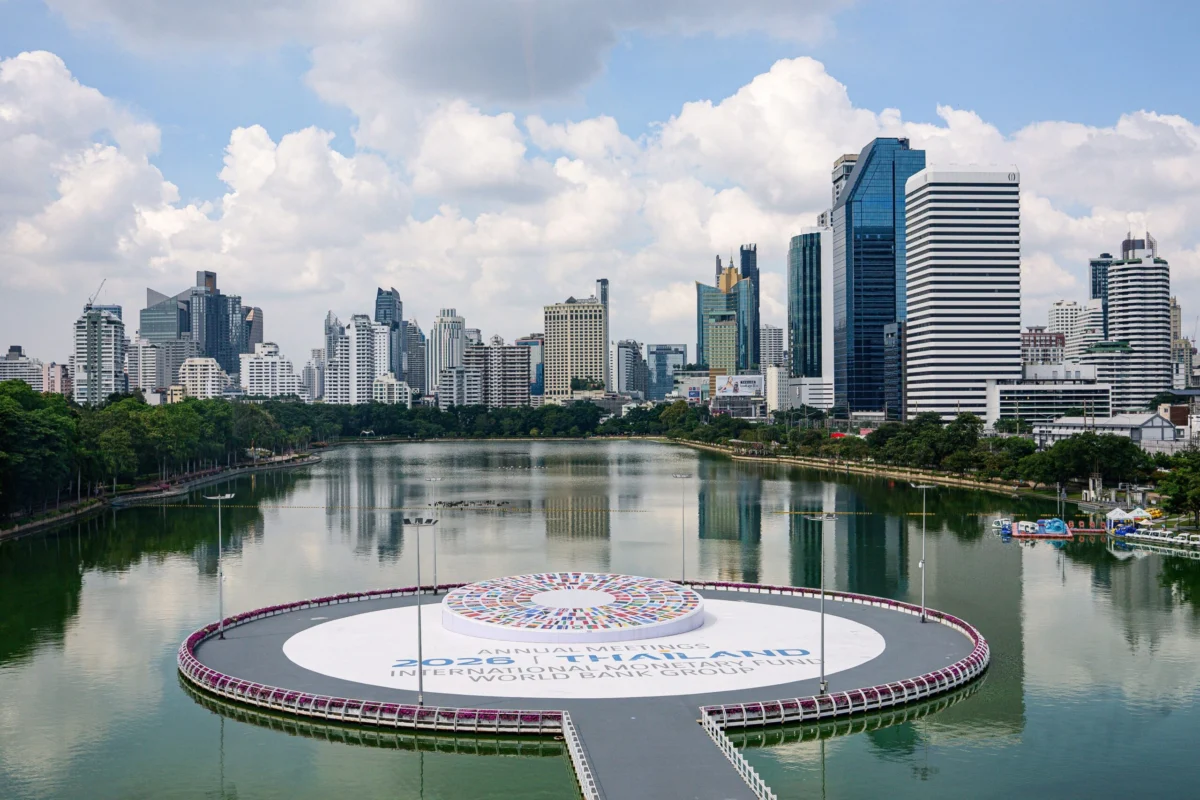
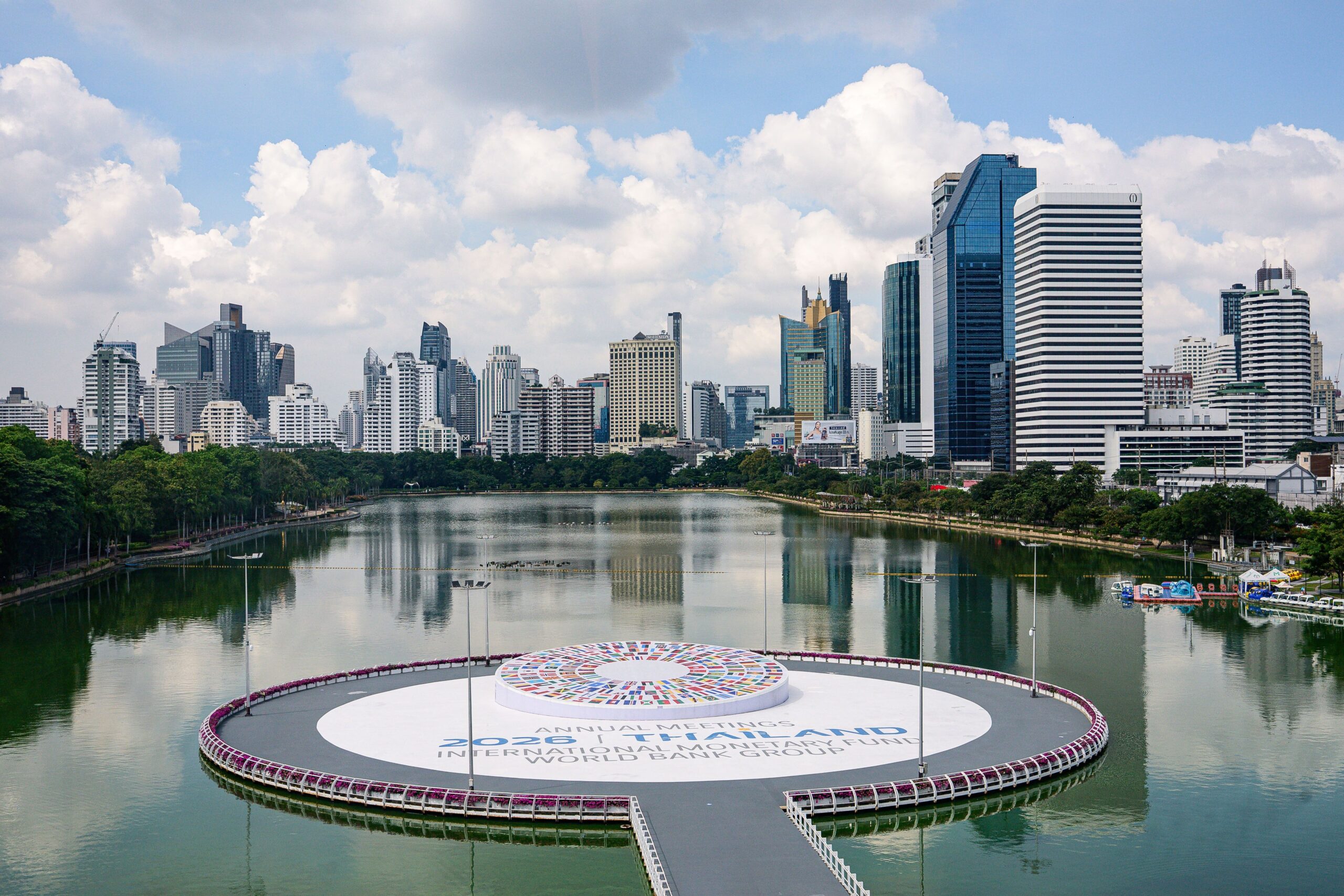
BANGKOK – The world’s financial elite have descended upon Thailand’s capital this week for the 2026 Annual Meetings of the International Monetary Fund (IMF) and the World Bank. Against the backdrop of the Queen Sirikit National Convention Center, the atmosphere is markedly different from the optimism of previous decades. As finance ministers, central bank governors, and policy architects gather, the consensus that once defined the Bretton Woods era is being challenged by a volatile cocktail of geopolitical conflict, staggering public debt, and the disruptive arrival of artificial intelligence.
The Main Event: A World in Flux
The 2026 meetings are framed by a central, uncomfortable reality: the global economy is no longer moving toward seamless integration. Instead, it is retreating into a more fragmented, security-obsessed landscape. Experts on the ground report that discussions are dominated by the "triple threat" of regional conflict—specifically in the Middle East and Ukraine—that continues to strangle energy supplies, the unsustainable trajectory of sovereign debt in advanced economies, and the systemic risks posed by an AI-driven economic shift.
For the Bretton Woods institutions, the stakes could not be higher. Founded in the post-WWII era to foster global cooperation, the IMF and World Bank are now tasked with navigating a world where trade, technology, and finance are increasingly weaponized for national security objectives.
Chronology of Challenges
The week’s agenda is structured to address the erosion of the post-Cold War economic order.
- Pre-Meeting (Early October): Preliminary reports from the GeoEconomics Center highlighted the "New Geoeconomics," noting that globalization is not dying but rather being "contested."
- Day One (October 12): Focus shifted to the immediate fiscal squeeze on emerging markets (EMDEs). Experts underscored that while advanced nations accumulate record debt, the "price" is being paid by the developing world through capital flight and currency depreciation.
- Mid-Week (Ongoing): High-level panels are dissecting the IMF’s internal policy reviews, with a focus on whether the institution can pivot toward more "realistic" and "selective" program design.
- Closing (October 18): The meetings will conclude with a search for a consensus on how to harmonize AI-driven productivity gains with the reality of high, long-term interest rates.
The Debt Trap: Advanced Economies vs. The Developing World
One of the most sobering topics at this year’s summit is the surge in sovereign debt among advanced economies, which has ballooned to nearly 110 percent of GDP. In the United States, that figure sits at a staggering 126 percent.
Macroeconomist Amin Mohseni-Cheraghlou, speaking at the event, provided a stark analysis of the spillover effects. "Advanced economies are accumulating the debt, but emerging markets are paying the price," he noted. The mechanism is simple yet destructive: as G7 nations borrow more to fund their deficits, global borrowing costs rise. This forces developing nations to pay record premiums to access capital markets.
Data from the World Bank paints a harrowing picture: in 2024, developing countries paid $415 billion in external debt interest. Between 2022 and 2024, these nations paid $741 billion more in debt service than they received in new financing—the largest negative net transfer in half a century. This fiscal "crowding out" leaves virtually no room for investments in critical infrastructure, healthcare, or education, threatening to set back development progress by generations.
The Three Shocks: Energy, AI, and Public Debt
Hung Tran, a nonresident senior fellow at the Atlantic Council and former IMF official, identified a "triple shock" currently destabilizing the global financial architecture:
- The Energy Supply Shock: Persistent conflict in the Middle East has kept crude oil prices above $100 a barrel, fueling inflation and forcing central banks to maintain restrictive monetary policies.
- The AI Demand Shock: The global rush to build AI infrastructure—with expenditure expected to exceed $1 trillion in 2026—is fundamentally shifting capital allocation. While this promises long-term growth, the immediate effect is a spike in the equilibrium real interest rate (r*).
- The Public Debt Shock: With global public debt reaching $102 trillion, the sheer weight of interest payments is consuming fiscal space across the board.
The implication for equity markets is equally concerning. With the S&P 500 trading at rich valuations and the Shiller CAPE ratio exceeding 41, the market is currently priced for perfection. However, the extreme concentration of gains in the AI sector—where ten companies account for nearly 40 percent of index weight—creates a systemic risk. A market correction here would not be contained; it would have immediate, cascading effects on the global real economy.
Official Responses: Reforming the IMF
In light of these pressures, the IMF has published four critical reviews covering debt sustainability, program design, financial sector assessments, and economic surveillance. The findings are unusually candid. The reports acknowledge that the IMF has often suffered from overly optimistic projections and a lack of selectivity in its conditionality.
Martin Mühleisen, former IMF chief of staff, notes that while the recommendations—calling for "greater realism" and "stronger follow-through"—are sound, they are not new. "The ultimate test," Mühleisen argues, "will arise in everyday program decisions, especially in cases involving large exposures and politically sensitive shareholders."
To combat institutional inertia, experts are calling for an annual "implementation scorecard." This would force the IMF’s Executive Board to go on the record for why they chose to follow—or ignore—their own staff’s guidance. Without such transparency, critics fear the next five-year review cycle will merely repeat the same cycle of missed warnings and failed interventions.
Implications for the Global Order
The "New Geoeconomics" of 2026 is defined by a shift from efficiency to resilience. Governments are no longer prioritizing the lowest-cost supply chain; they are prioritizing the most "politically aligned" one. This, combined with the rise of industrial policy and protectionist trade barriers, suggests that the era of hyper-globalization is definitively over.
For the Bretton Woods institutions, the challenge is to remain relevant in a world where the major shareholders—the US, China, and the EU—are engaged in strategic competition. The IMF and World Bank were built on the premise that international rules could govern economic behavior. Today, those rules are being bent to serve national security objectives, from export controls on semiconductors to subsidies for green technology.
Conclusion: A Call for Fiscal Discipline
As the Bangkok meetings draw toward their conclusion, the underlying message from the experts is one of urgent, if difficult, reform. Policymakers are being urged to "put their fiscal houses in order" to reduce the pressure on global interest rates.
The hope remains that the massive capital investment in AI will eventually lead to a productivity surge sufficient to offset the costs of high debt and energy insecurity. However, until that productivity manifests in real economic data, the world remains in a fragile state.
The Bretton Woods institutions stand at a crossroads. They can either evolve into more transparent, agile, and politically neutral arbiters of global stability, or they risk becoming sidelined by the very forces of fragmentation they were created to prevent. As the sun sets over the Chao Phraya River, the message to the assembled leaders is clear: the status quo is no longer a viable strategy for a world in the midst of a historic, and dangerous, reordering.