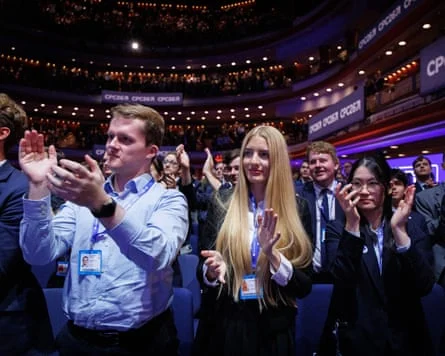
The Conservative Party’s annual conference in Birmingham has concluded, leaving behind a portrait of a political organization struggling to reconcile its diminished electoral standing with a newfound, singular devotion to its leader, Kemi Badenoch. What was billed as a pivotal moment for the official opposition to redefine its identity against the backdrop of a stagnant 20% polling position instead devolved into an exercise in personal branding, culminating in a keynote address that highlighted both the strengths and the deep structural vulnerabilities of the modern Tory party.
The Strategy of the "One-Woman Show"
The central narrative of this year’s conference has been the total consolidation of power around Kemi Badenoch. In a political climate where the party is fighting to remain relevant after a crushing general election defeat, the Conservatives have opted for a strategy of "Kemi-centrism."
Badenoch, who has openly characterized herself as the "captain, coach, and owner" of the Conservative Party, has effectively tethered the organization’s fate to her personal persona. This approach carries significant political risks. By positioning herself as the sole arbiter of party policy and vision, she has inadvertently created a dynamic where the party leadership is shielded from internal criticism. Within the Birmingham halls, any divergence from the leader’s vision is treated not as a policy disagreement, but as an affront to the party’s only viable path forward.
A Chronology of the Conference: From Surrealism to Stagnation
The four-day event in Birmingham was marked by a series of surreal performances and a notable lack of engagement from the wider public.
- Day One and Two: The conference began with an atmosphere of "soporific tranquillity." Attendance was thin, and the traditional bustle of a major party conference was replaced by a sterile, almost detached mood. The absence of high-profile, polarizing figures like Robert Jenrick and Liz Truss contributed to a sense of a party in transition—or perhaps, in hiding.
- Day Three: The Shadow Cabinet Showcase: Wednesday morning featured a presentation of the Shadow Cabinet that critics likened to a "third-rate talent show." Proceedings were marred by logistical errors, including presenters failing to recognize the Shadow Justice Secretary, Nick Timothy, and mispronouncing the names of senior frontbenchers. The conspicuous absence of Tom Tugendhat, who opted for a trip to India, served as a quiet acknowledgment of the prevailing tensions within the shadow cabinet.
- The Keynote Address: The climax of the week was Badenoch’s speech. Spanning over an hour, it was characterized by a heavy reliance on well-worn political clichés and standard attacks on Labour and Reform UK. While it was widely regarded as the most coherent speech of the conference—a testament, perhaps, to the lack of competition—it suffered from a lack of structural depth, appearing more like a collection of disjointed observations than a cohesive manifesto for government.
Supporting Data and Political Context
The Conservatives currently find themselves in a precarious position, trapped in third place with approximately 20% support in national polls. The party’s inability to "cut through" to the electorate is a central concern. Analysts suggest that the lack of public interest in the Birmingham proceedings reflects a broader malaise; the messaging coming out of the conference appears to be resonating only with a small, core group of party faithful, failing to address the concerns of the swing voters necessary to regain power.
The party’s reliance on "AI-style" rhetoric—heavily scripted slogans and populist jabs—seems to be missing the mark. While Badenoch’s delivery was praised for its confidence, the substance of her message—particularly her focus on tax cuts for the wealthy—is viewed by critics as a disconnect from the immediate economic realities of the average British voter.
The Retail Offer: Inheritance Tax and the "Mega-Rich"
The most significant policy announcement of the week was a proposal to abolish inheritance tax on primary residences, supplemented by a million-pound tax-free allowance. The implications of this are twofold:

- Economic Strategy: The proposal is designed to energize the party’s traditional base, particularly the lower-middle and middle classes who have seen their property values soar over the last decade. By framing this as a relief for families passing on their homes, the Tories are attempting to capture the sentiment of aspirational voters.
- Public Perception: Critics have characterized the policy as an "uncosted gift to the mega-rich." The move reinforces the perception that the Conservative Party remains focused on protecting the assets of the wealthy, rather than addressing broader issues like the cost-of-living crisis or public service reform. The funding for this policy, which remains tied to as-yet-unspecified welfare cuts, has already drawn significant scrutiny from economic watchdogs.
Official Responses and Internal Discord
While the public face of the party has been one of unity, behind closed doors, the atmosphere is described as "fragile." The "Kult of Kemi" is not universally accepted. Several senior figures have expressed private concerns that the party is becoming too insular.
When questioned about the potential for a coalition or a formal electoral pact with Reform UK, Badenoch adopted a tone of sharp contempt. This aggressive stance effectively closes the door on a significant portion of the right-wing electorate, signaling that the party intends to fight its way back to dominance on its own, regardless of the electoral arithmetic.
Implications: Messiah or Lemming?
The long-term implications of this conference are profound. The Conservative Party has effectively bet its entire future on the leadership of Kemi Badenoch. The party’s narrative is now exclusively tied to her performance, her rhetorical style, and her ideological purity.
There are two schools of thought regarding this high-stakes gamble:
- The "Messiah" Perspective: Supporters argue that Badenoch provides the strength and clarity that the party has lacked since its defeat. They believe her willingness to confront political correctness and her focus on traditional conservative values will eventually coalesce into a powerful electoral movement.
- The "Lemming" Perspective: Skeptics argue that by silencing dissent and concentrating power, the party has created an echo chamber. They warn that if Badenoch’s strategy fails to move the needle in the polls, the party has no "Plan B." By branding her as indispensable, the Tories have made it impossible for her to fail without taking the entire party down with her.
As the delegates leave Birmingham, the fundamental question remains: does the party have a vision for the soul of the country, or have they simply become a vessel for a singular personality? The lack of public engagement suggests that, for now, the electorate is waiting for more than just slogans and tax cuts. Whether the "Kult of Kemi" can evolve into a credible government-in-waiting, or whether it will lead the Conservatives further into the political wilderness, remains the defining question of the next parliamentary session.
Ultimately, the party’s trajectory will depend on whether they can move beyond the confines of their internal echo chamber and start engaging with the economic and social realities of a nation that, as of now, remains largely indifferent to their efforts.