Editor’s Note: This article was produced in collaboration with our sister publication, GlobalPost.
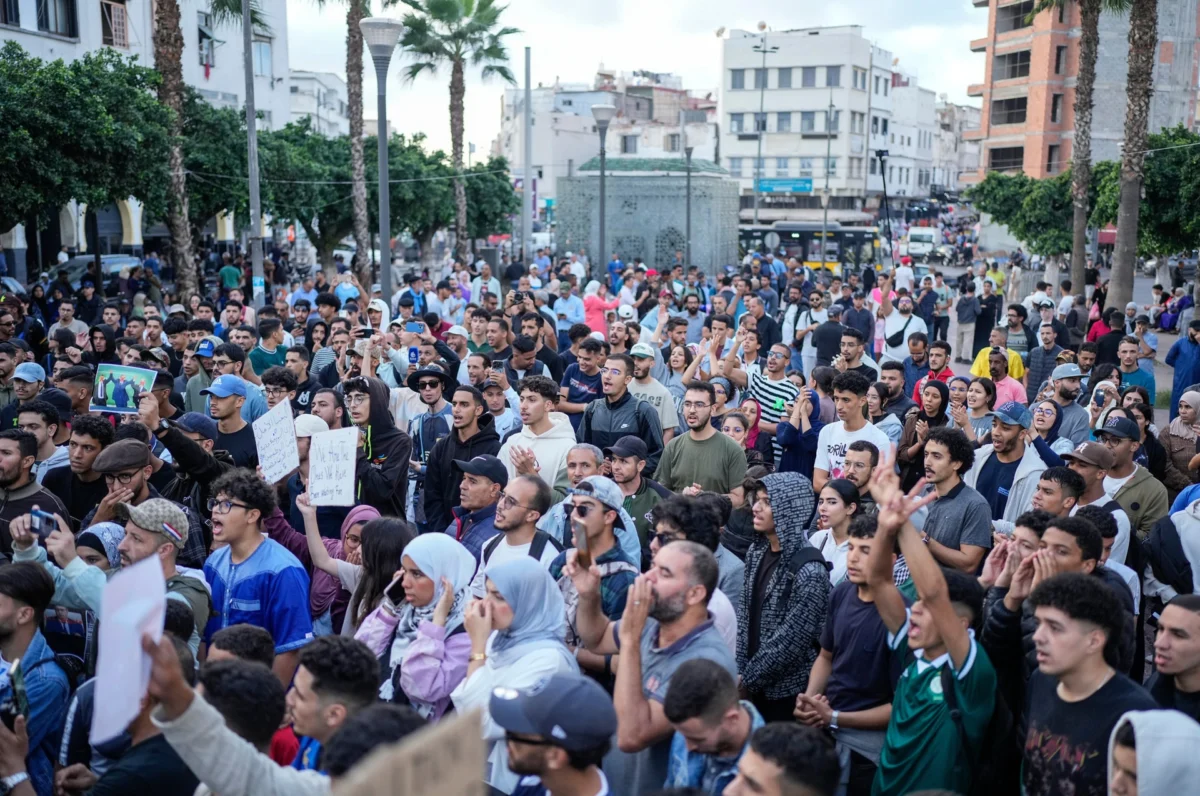
As citizens across Morocco head to the polls today to elect a new parliament, the atmosphere on the ground is marked not by the fervor of democratic participation, but by a profound, pervasive silence. In cafes in Casablanca, university courtyards in Rabat, and the bustling souks of Marrakech, a prevailing sentiment has taken root: a sense of detachment from a political process many perceive as performative rather than transformative.
For Morocco’s burgeoning youth population—the Gen Z cohort that has come of age in an era of digital connectivity and economic uncertainty—the election represents a recurring cycle of broken promises. As one young voter recently remarked to Middle East Eye, “We no longer want to be part of this farce. We’ve lost hope in the parties or the state to represent us and our hopes and aspirations. Gen Z see no point in holding elections.”
This disillusionment is not merely a sign of apathy; it is a critical indicator of the widening gulf between the Moroccan political establishment and the demographic engine of the nation’s future.
Main Facts: The Anatomy of a Muted Election
The current parliamentary elections are taking place under a cloud of systemic skepticism. Despite constitutional reforms implemented in 2011 following the Arab Spring—reforms designed to decentralize power and enhance the role of the elected parliament—the perception persists that the true levers of authority remain firmly in the hands of the monarchy and its inner circle.
Key facts regarding the current political landscape include:
- The Power Dynamic: While the head of government is appointed from the winning party, the Moroccan Constitution grants the King significant executive powers, particularly in the realms of security, religion, and foreign policy.
- Voter Turnout Concerns: Government officials have expressed concern over low participation rates, particularly among urban youth, which threatens the perceived legitimacy of the incoming legislative body.
- Party Fragmentation: The political scene remains highly fragmented, characterized by shifting alliances and a lack of clear ideological differentiation, making it difficult for voters to see tangible policy differences between major parties.
Chronology: The Evolution of Moroccan Political Reform
To understand the current impasse, one must look at the timeline of Morocco’s post-2011 political evolution.
2011: The Constitutional Pivot
Following widespread regional unrest, Morocco introduced a new constitution. It was hailed as a landmark document that purportedly strengthened the office of the Prime Minister and recognized the autonomy of the judiciary. It was meant to bridge the gap between the palace and the public.
2016: The Rise of the PJD
The Justice and Development Party (PJD), an Islamist-leaning, moderate party, secured a second consecutive mandate. While this demonstrated a level of stability, it also marked the beginning of a decline in enthusiasm. The party’s struggle to balance its reformist rhetoric with the realities of governing within a monarchy-led system led to significant public frustration.
2020-2021: The Pandemic Catalyst
The COVID-19 pandemic exacerbated existing socio-economic inequalities. Morocco’s reliance on tourism and manufacturing meant that lockdowns hit the youth workforce particularly hard. As the country transitioned into the 2021 election cycle, the pre-existing disillusionment had calcified into a cynical worldview.
Supporting Data: The Socio-Economic Drivers of Discontent
The skepticism expressed by youth is rooted in quantifiable economic data. According to the High Commission for Planning (HCP), Morocco’s official statistics agency, the challenges facing the next government are daunting.
- Youth Unemployment: Unemployment among those aged 15–24 remains alarmingly high, frequently hovering above 30% in urban areas. This is not merely a cyclical issue; it is a structural crisis that leaves a generation feeling "locked out" of the formal economy.
- The Informal Sector: A significant portion of Morocco’s youth labor force operates in the informal economy, lacking benefits, job security, or a path to upward mobility.
- Educational Mismatch: There is a well-documented disconnect between the skills produced by the Moroccan educational system and the demands of the modern, globalized job market, leading to high rates of underemployment among university graduates.
These figures illustrate a stark reality: for many young Moroccans, the ballot box feels disconnected from the kitchen table.
Official Responses: The State’s Narrative
In response to the growing apathy, the Moroccan state and major political parties have launched extensive "Get Out the Vote" campaigns. The rhetoric from the capital focuses on the importance of "political participation as a duty" and "the necessity of institutional stability."
The "Stability" Argument
Pro-establishment voices argue that in a volatile region, Morocco’s stability is its greatest asset. They posit that the parliamentary process, however imperfect, is the only mechanism for peaceful reform. Government spokespersons have urged youth to engage, arguing that change can only happen from within the system.
The "Participation as Agency" Narrative
Political parties have attempted to modernize their messaging, utilizing social media and digital outreach to capture the attention of digital natives. However, critics argue that these campaigns are superficial, focusing on marketing rather than the substantive policy changes—such as anti-corruption measures, judicial independence, and economic reform—that young voters are demanding.
Implications: The Long-Term Consequences of Alienation
The disconnect between the state and the youth population carries significant implications for the Kingdom’s future.
The Rise of Non-Institutional Politics
When youth feel that formal political channels are unresponsive, they often seek alternatives. This can manifest in two ways:
- Digital Activism: A shift toward decentralized online movements where agendas are set by grassroots users rather than political parties.
- Emigration Pressures: The "Harraga" (illegal migration) phenomenon remains a poignant symbol of the desperation felt by those who believe the Moroccan dream is no longer attainable at home.
The Legitimacy Gap
If the voter turnout is historically low, the next government will face an immediate crisis of legitimacy. A parliament perceived as being elected by a minority of the population will struggle to pass difficult but necessary reforms, potentially leading to further stagnation.
The Potential for "Democratic De-coupling"
There is a risk that the political system will eventually decouple entirely from the socio-economic reality of the people. While the monarchy provides a unifying national symbol, the lack of a functional, vibrant, and trusted political party system creates a vacuum that can be destabilizing in the long term.
Conclusion: Bridging the Divide
The skepticism of Moroccan youth is not a rejection of the nation, but a rejection of a political status quo that they perceive as stagnant. As the polls close today, the results will provide a snapshot of the current political alignment, but the real story will be the silence of those who stayed home.
For Morocco to thrive, the next legislative session must move beyond the rhetoric of stability. It must address the structural issues that have alienated the nation’s most vital asset: its young people. Whether through substantive economic reform, greater transparency, or a genuine empowerment of the parliamentary process, the path forward requires a new social contract—one that acknowledges that in the 21st century, legitimacy is earned, not just bestowed.
Until the political class can demonstrate that a vote is a tool for change rather than a rubber stamp for the status quo, the cycle of disillusionment is likely to continue. The future of Morocco’s democracy depends not on the counting of the ballots today, but on the ability of the state to listen to the voices of those who chose not to cast them.