In the high-stakes world of global logistics, silence is often the criminal’s greatest ally. For years, transportation companies—haunted by the stigma of being "duped"—have quietly absorbed the financial and reputational blows of sophisticated fraud schemes. From identity theft to intricate double-brokering rings, the victims often suffer in isolation, mistakenly believing they are the only ones targeted.
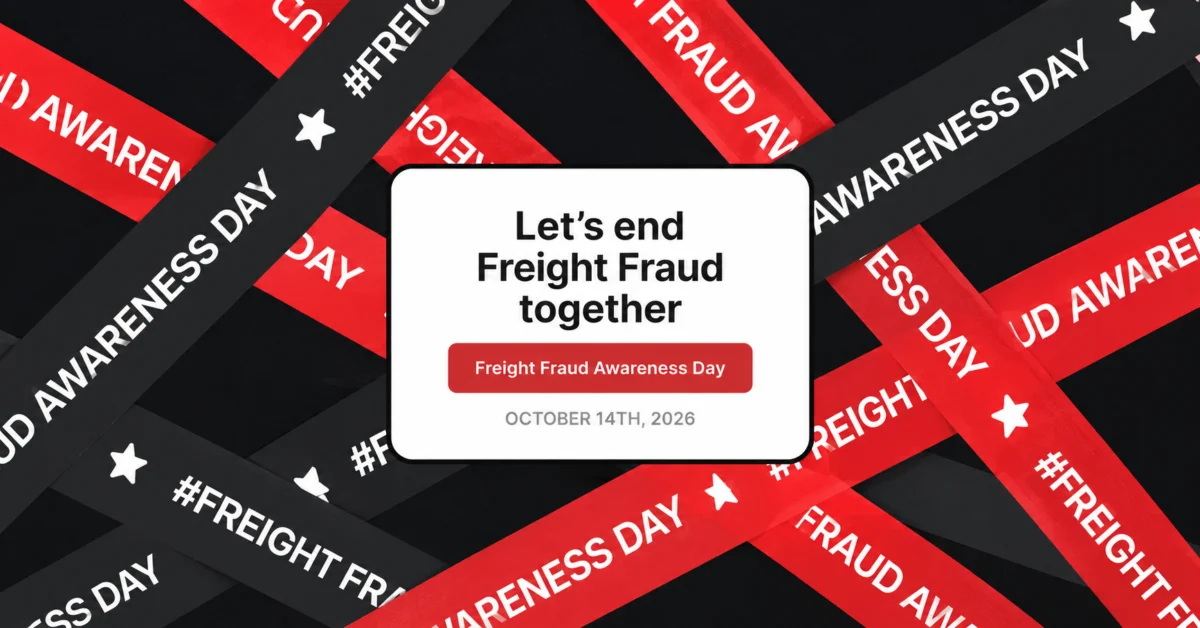
On October 14, that culture of silence faces a reckoning. Freight Fraud Awareness Day returns for its third year, bringing together industry advocates, insurance giants, and law enforcement to drag these shadow operations into the light. By prioritizing education, collaborative advocacy, and open dialogue, the campaign aims to transform a fragmented defense into a unified front against an evolving threat.
The Evolution of the Threat: From Truck Stops to Digital Deception
To understand the urgency of this year’s campaign, one must first recognize how radically the criminal landscape has shifted. A decade ago, cargo theft was largely a physical game: criminals relied on proximity, force, or simple opportunism at truck stops and rest areas. Today, the battlefield has moved into the digital ether.
Gary Thomas, manager of risk and mitigation at SPG Cargo & Logistics, notes that the modern perpetrator is no longer just a thief in the night; they are a digital strategist. "We went from a traditional bad guy waiting at the truck stop to someone who can digitally manipulate an identity and the entire supply chain from thousands of miles away," Thomas explains.
This shift is corroborated by experts like retired Los Angeles County Sheriff’s Detective Gerardo Pachuca. According to Pachuca, the industry is seeing an influx of bad actors who possess deep, technical knowledge of logistics operations. "Cargo theft has been exploding," he says. "These criminals know exactly how to exploit and misuse the loopholes within our own systems. They aren’t just breaking in; they are being invited in because they’ve mastered the digital identity verification process."
A Chronology of a Growing Crisis
The trajectory of organized freight crime has been steep and alarming:
- Pre-2020: Cargo theft remains largely localized and physical, involving traditional hijacking or theft from unsecured trailers.
- 2020–2023: The pandemic-era shift to digital freight matching platforms creates a "Wild West" environment. Cyber-enabled schemes, such as fictitious pickups and load poaching, begin to surge as brokers and carriers pivot to remote, rapid-fire booking.
- October 2024: The inaugural Freight Fraud Awareness Day is launched in response to the massive spike in sophisticated, tech-driven scams. FreightWaves documents the industry’s struggle to reconcile convenience with security.
- 2025: Insurance premiums spike as losses reach record highs. The industry begins to realize that individual security protocols are insufficient against organized, transnational criminal syndicates.
- October 2026: The third annual Freight Fraud Awareness Day focuses on actionable intelligence sharing, marking a shift from merely identifying the problem to establishing a defensive community.
The "It’s Not Just Me" Realization
Perhaps the most significant achievement of the Freight Fraud Awareness Day campaign is the emotional and psychological shift it encourages among industry professionals. For many, reporting a fraud incident carries a fear of being viewed as incompetent or negligent.
Andrey Drotenko, president of strategic relations at Verified Carrier, describes the campaign as a "moment to slow down, compare notes, and act together." By creating a space where companies can discuss the mechanics of an attack without exposing their proprietary security safeguards, the campaign fosters a "herd immunity" approach to fraud.
"When you talk to peers and realize they’ve faced the exact same sophisticated identity swap, the shame evaporates," says Drotenko. "The realization that ‘it’s not just me’ is the first step toward effective industry-wide prevention."
Official Perspectives: The Regulatory and Investigative Front
The federal response is matching the intensity of the industry’s grassroots efforts. The FBI’s Memphis Cargo Theft Task Force has been particularly vocal, issuing warnings that cyber-enabled schemes are no longer just "petty theft"—they are multi-million-dollar operations. These task forces have observed a pattern where criminals use phishing and credential harvesting to monitor load boards, identifying high-value pharmaceutical or electronic shipments before they are even posted.
Chuck Forsaith, vice president of the Pharmaceutical Cargo Security Coalition, highlights a terrifying secondary effect of this fraud. In the pharmaceutical sector, the risk is not just the loss of goods, but the risk to human life.
"In the past, it was straight theft—they took the product, and it was gone," Forsaith explains. "Today, because of the complexity of modern fraud, stolen pharmaceutical products are often reintroduced into the legitimate supply chain." This means that after a fraudulent "pickup," the stolen goods—which may have been stored in non-refrigerated, unsanitary, or unauthorized environments—eventually reach pharmacies or hospitals, posing a direct threat to patient health.
The Data Behind the Danger: Why Awareness is Currency
The statistics accompanying the rise of freight fraud paint a grim picture. With billions of dollars in cargo moving across the U.S. daily, even a small percentage of fraudulent activity represents an existential threat to smaller carriers and brokerages.
Key data points driving the urgency of this year’s campaign include:
- Identity Manipulation: A 300% increase in fraudulent carrier registrations on major load boards over the last 24 months.
- Double Brokering: Estimates suggest that a significant portion of "phantom" freight movements now involve at least two layers of illegal subcontracting, making it nearly impossible for the original shipper to track their assets.
- Financial Impact: Recent court cases, such as the $3.5 million Amazon fraud scheme involving 23 distinct trucking accounts, demonstrate that criminal entities are building robust, multi-layered infrastructures to sustain their operations.
Implications for the Future of Logistics
As the industry looks toward the end of 2026, the implications of these threats are clear: the era of "trust-based" logistics is over. The future belongs to "verification-based" logistics.
For companies looking to insulate themselves, the solution lies in a combination of technology and training. Initiatives like the FreightWaves Certified Fraud Compliance Officer (CFCO) course are helping to standardize the way companies vet carriers. By turning fraud prevention into a repeatable, audit-ready process, firms can move from a reactive posture to a proactive one.
Training teams to spot the "inconsistencies"—a mismatch in email domains, a carrier MC number that was recently reactivated, or a driver who lacks basic knowledge of the pickup facility—is no longer optional. It is a fundamental requirement for survival.
Moving Forward: A Unified Industry
The upcoming Brokerage Compliance Symposium in Chattanooga, scheduled for late October 2026, serves as a physical manifestation of the lessons learned during Freight Fraud Awareness Day. By gathering attorneys, operators, and insurance specialists, the industry is signaling that it is no longer willing to operate in silos.
The message is clear: criminal organizations are collaborative, organized, and technologically adept. If the legitimate logistics industry continues to operate as a collection of isolated, vulnerable entities, it will remain a target. However, if it embraces the transparency and collective intelligence championed by the Freight Fraud Awareness Day organizers, it can begin to close the loopholes that have allowed this crisis to fester.
As the industry convenes for the F3: Future of Freight Festival, the conversation will undoubtedly shift from the pain of past losses to the power of future defenses. The "it’s not just me" mentality is evolving into a more powerful realization: "It’s not just my problem; it’s our industry, and we are responsible for securing it together."
The path forward requires more than just awareness; it requires a permanent, systemic commitment to verification. In a world where digital identity can be spoofed in seconds, the only constant that will keep freight moving safely is the vigilance of those who refuse to let the shadows win.