In the upper echelons of corporate governance, the discourse surrounding Artificial Intelligence (AI) has shifted from speculative curiosity to an existential mandate. Yet, within the specialized domain of procurement, a profound dichotomy has emerged: a small cohort of visionary leaders are rapidly integrating AI to redefine value creation, while a significant majority remain mired in a state of professional paralysis.
For Chief Procurement Officers (CPOs), the era of "wait and see" is drawing to a close. The message from industry pioneers is blunt: in the rapidly evolving landscape of global supply chains and digital operations, leadership is no longer about maintaining the status quo. It is about choosing to drive the technological transition, or finding oneself at the mercy of a transformation imposed by external forces.
The State of the Function: A Crisis of Confidence
It is increasingly rare to encounter a CPO willing to openly critique the collective progress—or lack thereof—within the procurement function regarding AI. While boardrooms are buzzing with discussions on digital operating models and ROI, the reality on the ground is often far less dynamic.
Recently, a candid conversation with a prominent CPO revealed a startling assessment of the profession’s current climate. Challenging the prevailing narrative of gradual adoption, this leader pointed to a pervasive culture of fear. "What I’ve seen from an AI perspective with the majority of procurement professionals is a tendency to stick their heads in the sand," the CPO noted. "There is a phenomenal amount of anxiety surrounding the speed of this change."
This sentiment is not merely anecdotal; it reflects a deeper, structural hesitation. The reasons for this stagnation are multifaceted, creating a "perfect storm" that prevents many organizations from moving beyond the pilot phase of AI integration.
Chronology of Hesitation: Why Procurement Lagged
To understand the current inertia, one must look at the historical context of procurement’s relationship with technology.
- The Legacy of Underperformance: For decades, procurement functions have been promised "silver bullet" technology rollouts—massive, multi-million-dollar ERP migrations or suite implementations that promised to automate the function but often failed to deliver on ROI. This has left CFOs deeply skeptical, effectively deprioritizing procurement’s requests for AI investment.
- The Fear of Obsolescence: AI represents a fundamental shift in how tasks are performed. The visceral fear of job displacement, particularly in administrative and analytical roles, has created a defensive posture among the workforce.
- The Myth of the "Big Box": Many organizations are paralyzed by the belief that they must acquire a singular, enterprise-wide AI platform that solves every problem simultaneously. This "all-or-nothing" mentality leads to analysis paralysis, as leaders struggle to identify a solution that fits the complexity of their unique procurement ecosystems.
- The Cost Escalation: As the demand for computing power and proprietary AI models has surged, the token costs and operational expenditures associated with AI have spiraled, further complicating the business case for risk-averse procurement departments.
Supporting Data: The Case for Urgent Transformation
The friction between desire and execution is evident in the current data regarding procurement maturity. While nearly 80% of organizations express interest in AI, fewer than 20% have successfully deployed generative AI tools across their strategic sourcing or supplier management workflows.
Furthermore, the "cost of inaction" is beginning to manifest in financial performance. Organizations that have successfully piloted AI in procurement have reported a 15–20% reduction in cycle times for contract management and a significant improvement in spend visibility. Conversely, those waiting for "perfect" tools are seeing their competitive advantage erode as agile competitors leverage AI to negotiate better terms, mitigate supply chain risks in real-time, and identify cost-saving opportunities that remain invisible to traditional, manual analysis.
Official Responses: The Call to Action
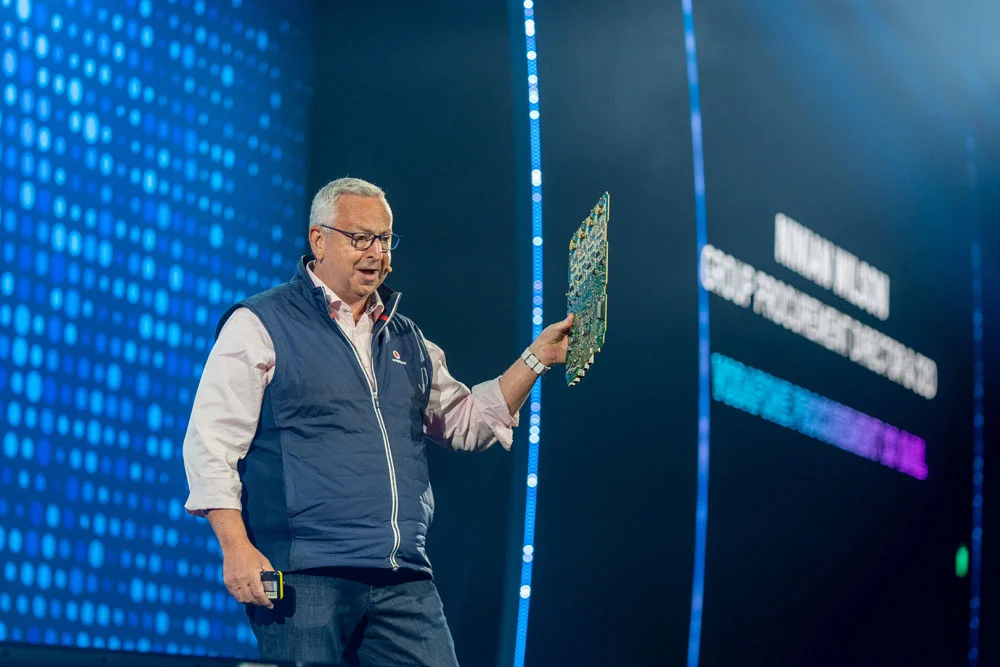
The industry is not without its trailblazers. At the recent World Procurement Congress 2025, Ninian Wilson, CPO of Vodafone, provided a clarion call that echoed through the halls of the event. His address, which challenged delegates to abandon caution in favor of bold adoption, remains a benchmark for modern leadership.
"Adopt AI and bring it in," Wilson urged. "I encourage you all to seize the opportunity, seize the day, and don’t sit and wait. Because you either do it to yourselves, or it gets done to you."
This perspective is shared by an increasing number of global leaders who view AI not as a threat to procurement, but as an opportunity to elevate the function from a transactional support role to a strategic business partner. By offloading repetitive, data-heavy tasks to AI, procurement professionals are freed to focus on high-value activities: category strategy, supplier relationship innovation, and ESG (Environmental, Social, and Governance) compliance.
The Implications: A New Era of Leadership
The implications of this shift are profound. As we look toward the future, the procurement leader of 2026 and beyond will look fundamentally different from their predecessor.
1. The Human-AI Hybrid Model
The future of the function does not lie in total automation, but in "augmented intelligence." The most successful teams will be those that integrate AI as a tool to enhance human decision-making. Procurement leaders must now become "orchestrators" of technology, capable of managing the interface between algorithmic outputs and strategic business requirements.
2. Radical Transparency
With AI, the excuse of "not having enough data" is disappearing. Procurement leaders will be expected to provide real-time insights into supply chain volatility, inflation impacts, and supplier risk. This shift requires a level of transparency and data integrity that many legacy systems cannot currently provide, forcing a long-overdue overhaul of underlying digital architecture.
3. Cultural Stewardship
Perhaps the most important implication for CPOs is the need to manage the human side of the transition. Addressing the "fear and paralysis" mentioned by industry peers requires proactive communication, upskilling, and a redesign of job roles to emphasize the value of human intuition and complex problem-solving—skills that AI cannot replicate.
Looking Forward: The Austin Summit
As the global community converges on Austin, Texas, for Tomorrow’s Procurement Leader 2026, the focus will shift from the why to the how. With a roster of speakers representing industry titans like Flex, Clorox, Meta, and Cisco, the event serves as a critical junction for those looking to move beyond the theoretical.
The agenda is designed to move the conversation from "fear" to "execution." Sessions will focus on practical applications: how to build a scalable AI roadmap, how to prove ROI to a skeptical finance department, and how to foster a culture of innovation that embraces rather than fears technological disruption.
Conclusion: Seizing the Day
The evidence is clear: the integration of AI into procurement is not a luxury or a future-state aspiration—it is a current-state requirement. The paralysis born of fear, the legacy of failed tech investments, and the quest for the perfect, monolithic solution are barriers that must be dismantled.
For leaders in this space, the choice is binary. One can choose to wait, hoping the landscape stabilizes, and risk being left behind as the rest of the enterprise evolves. Or, one can choose to be the architect of that change, leveraging AI to redefine the value of procurement within the organization.
As Ninian Wilson so aptly noted, the change is coming regardless of your participation. The only variable remaining is whether you will be the one driving the transformation or the one reacting to it. The time to stop looking at the sand—and start looking at the horizon—is now.