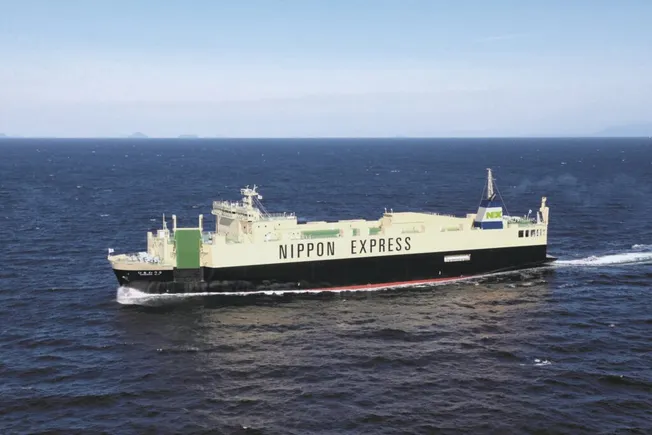
In the modern global economy, the logistics sector is often reduced to the physical movement of freight—ships docking, trucks rolling, and warehouses bustling. However, beneath the surface of every physical shipment lies a gargantuan, invisible layer of complexity: a labyrinthine series of documents, data points, inter-departmental coordination, billing cycles, and customer support requirements.
For many logistics enterprises, this back-office engine is the "silent killer" of growth. While companies invest millions in fuel efficiency and fleet maintenance, the administrative processes supporting these physical operations often remain shackled to legacy methods. As firms scale, the reliance on spreadsheets, manual email threads, and fragmented data entry becomes a significant liability. In an era where speed is the primary currency of supply chain management, the inability to move information as efficiently as one moves freight is no longer just an operational nuisance—it is a critical business risk.
The Chronology of Inefficiency: From Startup Agility to Enterprise Friction
To understand why back-office operations falter, one must look at the natural evolution of a logistics firm. In the early stages of a business, manual processes are not just acceptable; they are advantageous. Spreadsheets offer the flexibility needed to pivot, and human-led email communication allows for the personalized customer service that builds an early reputation.
However, as a company transitions from local to regional, or regional to global, the "manual" model encounters a scaling wall:
- The Entry Phase: Shipment details are manually keyed into Transportation Management Systems (TMS). Data is extracted from emails and input into trackers.
- The Validation Phase: Billing teams attempt to reconcile carrier invoices against original shipment records. This is where "leakage" begins—a missing Proof of Delivery (POD) or a minor data entry error can stall an invoice for weeks.
- The Exception Phase: When an unverified accessory or a discrepancy occurs, the manual process requires a "round-robin" of emails between departments.
- The Customer Impact Phase: Because data is trapped in silos (the TMS, the WMS, the ERP), customers are left waiting for status updates. What was once a personal touch becomes a source of frustration.
As the volume of shipments grows, these small, manageable issues aggregate into a massive overhead burden. Every manual handoff is a potential point of failure. When information sits in isolated systems, teams spend their time performing "system-to-system" checks rather than value-added analysis. This is the moment when an organization stops growing and starts merely "managing chaos."
Supporting Data: The Cost of the Status Quo
The financial implications of a messy back office are often hidden within "Cost of Goods Sold" or administrative line items, but they are substantial. According to industry research, including insights from organizations like PwC, the impact of digital transformation in supply chains is measurable. Firms that embrace advanced supply-chain capabilities report an average ROI of 14.5%, driven by a 7.7% increase in revenue and a 6.8% reduction in operational costs.
Why is the return so high? Because the cost of manual processing is not just the hourly wage of the clerk; it is the cost of friction.
- Revenue Leakage: When freight audit and payment processes are manual, missed accessorial charges (such as detention fees or fuel surcharges) go unnoticed.
- Cash Flow Stagnation: The "Days Sales Outstanding" (DSO) metric is directly tied to the speed of documentation. If a POD is delayed by three days because it is sitting in an email inbox, the invoice is delayed by three days. Multiply that by thousands of shipments, and the impact on working capital is immense.
- Customer Churn: In a competitive market, data visibility is a product feature. Customers demand real-time transparency. When manual data entry creates a lag in reporting, customer satisfaction scores plummet.
Automated Data Management: The Strategic Pivot
For CXOs, the transition to automated data management is not a technical upgrade—it is a strategic necessity. By shifting from manual data entry to an automated data flow, logistics leaders can turn the back office from a cost center into a competitive advantage.
1. From Data Entry to Data Flow
In an automated environment, information is treated as a continuous stream rather than a series of static files. Automated data capture tools—utilizing OCR (Optical Character Recognition) and API integrations—ensure that when a shipment status changes, it is reflected immediately across the customer platform, the billing software, and the ERP. This eliminates the "information gap" between the warehouse floor and the finance department.
2. From Reconciliation to Consistency
The primary cause of billing disputes is data inconsistency. When the TMS, WMS, and ERP all hold different versions of the truth, reconciliation becomes a manual, costly exercise. Automation synchronizes these records. By applying business rules to the data, the system can validate that a carrier invoice matches the agreed-upon contract rate before it even enters the payment queue.
3. From Constant Monitoring to Exception Management
One of the most profound shifts is the move toward "Management by Exception." In a manual office, staff spend 90% of their time processing routine, error-free shipments and only 10% on the difficult cases. Automation flips this ratio. The system handles the 90% of routine transactions, only flagging the 10% that actually require human intervention—such as missing PODs, rate discrepancies, or service failures. This allows the workforce to focus on high-value problem-solving rather than rote data entry.
Official Perspectives: The CXO’s Mandate
Industry leaders are increasingly recognizing that the "Digital Champion" status is no longer optional. As one industry expert noted, "The goal is to make the data move as fast as the freight."
For the modern logistics executive, the investment in automation is a direct hedge against inflation and rising labor costs. By offloading the repetitive, error-prone tasks to software, firms can scale their volume without the proportional increase in headcount. This scalability is the cornerstone of sustainable growth. Furthermore, it provides the agility required to survive market shocks, where the ability to quickly pivot operations is contingent on having accurate, real-time data at one’s fingertips.
Implications for the Future of Logistics
As we look toward the future, the integration of AI and machine learning into these automated pipelines will further widen the gap between industry leaders and laggards. Imagine a system that doesn’t just record that a shipment was delayed, but predicts the delay based on weather patterns and automatically notifies the customer with a recalculated ETA—all without a single human keystroke.
However, the technology is only as good as the strategy behind it. When selecting an automation partner, CXOs must prioritize five key pillars:
- Integration Capability: Can the partner bridge the gap between legacy TMS/ERP systems and modern, cloud-native platforms?
- Data Integrity: Does the partner have robust validation rules to ensure the data is accurate before it triggers a financial transaction?
- Scalability: Can the architecture handle peak-season volumes without breaking?
- Business Impact: Does the solution directly contribute to KPIs like DSO, invoice accuracy, and operating margins?
- Governance: Is there a "human-in-the-loop" mechanism that ensures critical decisions remain under executive oversight?
Conclusion: A Call to Action
The logistics industry is built on the promise of movement. Yet, many organizations are currently failing to uphold that promise within their own four walls. If your back office is still relying on manual spreadsheets and manual email checks, you are essentially asking your business to run a marathon while dragging a heavy, outdated anchor.
The path forward is clear: automate the data flow or risk being left behind. By treating data as a vital asset—equal in importance to the fleet and the warehouse—logistics leaders can unlock a new level of profitability, customer loyalty, and operational efficiency. The question for every CXO today is no longer "Can we afford to automate?" but rather "How much longer can we afford not to?"
The technology exists, the business case is proven, and the competition is already moving. It is time to ensure that your information moves with the same precision and speed as your freight.