The landscape of American retail is undergoing a structural metamorphosis, and at the heart of this shift sits J.C. Penney. As the department store giant navigates the second quarter of 2026, it finds itself in a precarious position: fighting for relevance in a sector that is increasingly defined by agility, digital integration, and shifting consumer loyalties. While competitors like Dillard’s and Macy’s have managed to eke out marginal gains, J.C. Penney’s recent performance underscores a persistent struggle to capture market share, leaving industry analysts to question whether the company’s current trajectory is sufficient for long-term survival.
Main Facts: A Challenging Second Quarter
J.C. Penney’s Q2 financial results present a sobering picture. While the broader retail market showed signs of expansion during the quarter, J.C. Penney reported a contraction in sales that has placed it toward the bottom of the retail league table. For the first half of 2026, the company’s total net sales have slumped by 6.5%.
This decline is not merely a reflection of a difficult macroeconomic environment; it is a clear indicator of lost market share. While peers such as Kohl’s saw their sales decline by less than 1%, J.C. Penney’s performance lagged significantly behind, suggesting that even as the department store category experienced growth, J.C. Penney failed to capitalize on the rising tide.
Internal management has attributed the shortfall to a trifecta of operational hurdles: lower unit inventory levels, frustrating in-stock gaps, and a marked cooling in demand for seasonal apparel categories. Despite significant investments in store aesthetics and creative marketing campaigns, the "momentum" that leadership has sought to build remains elusive.
Chronology: The Long Road from Sephora to Modernization
To understand J.C. Penney’s current state, one must look at the timeline of its transformation over the past four years.
2022–2023: The Post-Sephora Pivot
Nearly four years ago, the termination of the landmark Sephora partnership marked a significant turning point. At the time, many industry observers feared the loss of the beauty powerhouse would hollow out the department store’s traffic. Interestingly, that partnership has since become a drag on Kohl’s—the retailer that inherited the Sephora shop-in-shops—while J.C. Penney has been forced to innovate.
2024–2025: The Catalyst Era
The integration into Catalyst Brands provided a crucial financial and operational floor for the company. This period saw increased investment in store infrastructure and a pivot toward long-term stabilization rather than short-term liquidation.
Q2 2026: The Current Reality
The company launched its new online marketplace late in the second quarter. Early indicators suggest the platform is outperforming internal expectations, providing a potential lifeline for long-term e-commerce growth. However, this progress is currently overshadowed by the broader sales decline in core apparel and home departments.
Supporting Data: Where the "Cylinders" Are Firing
Despite the overarching narrative of struggle, the granular data reveals specific pockets of success that provide a roadmap for potential recovery. The company is not failing across the board; it is firing on some cylinders, even if the engine as a whole is sputtering.
- Active Apparel Growth: Sales in the active apparel segment surged by approximately 12% year-over-year. This success is largely credited to the strength of Nike, team sports merchandise, and high-performing Adidas footwear, alongside what industry analysts describe as highly effective World Cup merchandising.
- Home and Beauty Resurgence: Furniture sales saw a remarkable 41% increase, while jewelry grew by 9%. The salon business also saw a 7% lift, indicating that in-person services remain a key driver of foot traffic.
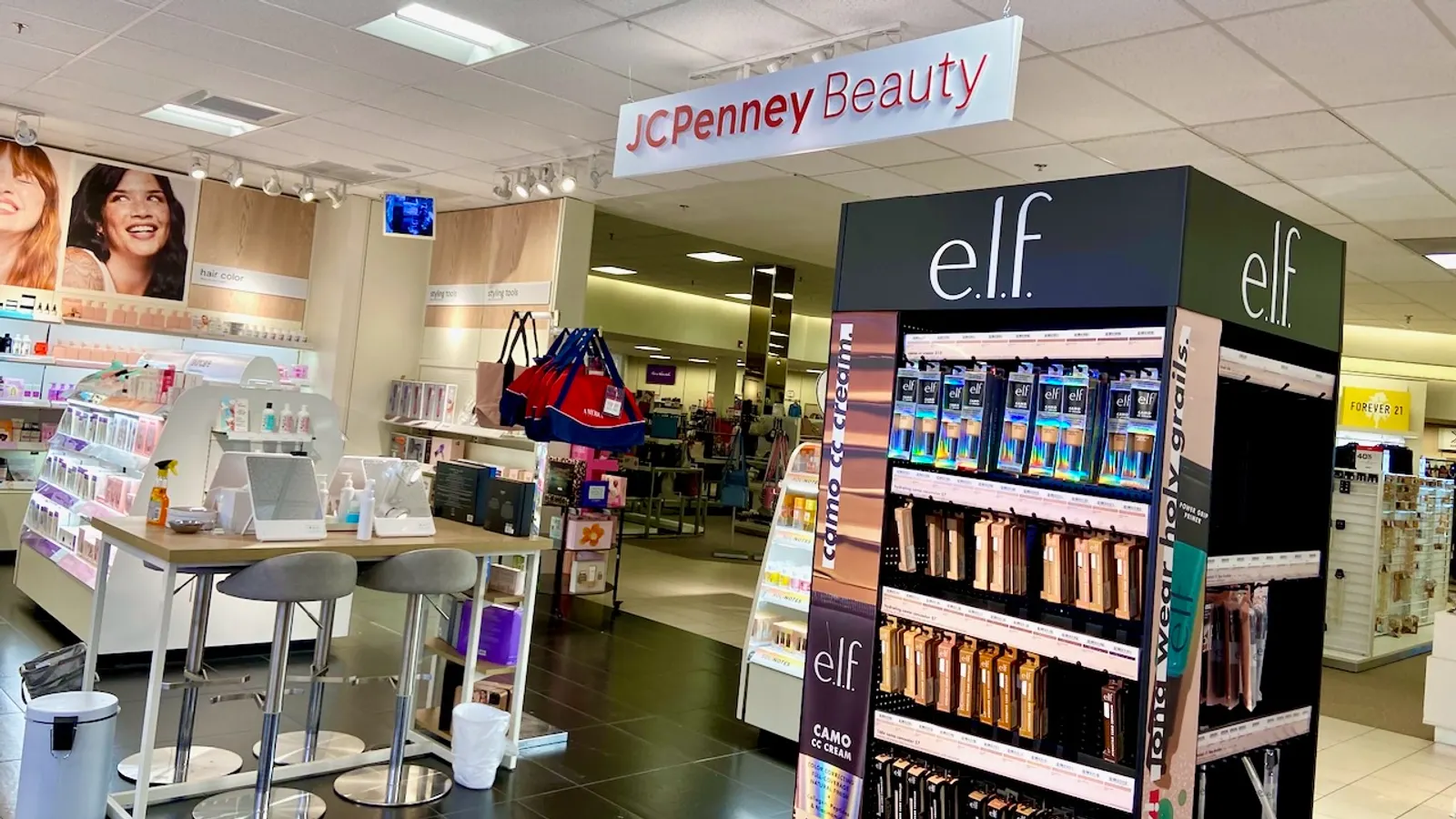
- The Beauty "Rebuild": In a surprising turn, J.C. Penney’s beauty category saw a boost from skin care and new color launches, such as Milani and K-beauty. Neil Saunders, Managing Director of GlobalData, noted that the retailer has been "quite thoughtful about creating a modern proposition that replaces Sephora."
- Marketplace Performance: The nascent J.C. Penney Marketplace is already contributing incremental growth, offering a scalable digital avenue to supplement the traditional brick-and-mortar revenue stream.
Official Responses and Analyst Perspectives
The discourse surrounding J.C. Penney is characterized by a mix of constructive criticism and guarded optimism. Neil Saunders has been a prominent voice in assessing the company’s performance.
"The sales decline over last year isn’t particularly convincing," Saunders remarked. "The market, even just for department stores, grew during the quarter, so JCP’s sales dip represents a serious loss of market share."
Saunders emphasized that a department store’s success relies on the synergy of its various departments. "The problem is that, to work properly, a department store needs almost all of its departments to work. But JCP doesn’t fire on all of these cylinders, so it remains under pressure."
However, Saunders also defended the retailer against comparisons to the slow, agonizing death of Sears. "JCP remains financially stable, and with the backing of Catalyst and investors, it’s really not going anywhere. It’s not being run into the ground in the way Sears was—on the contrary, there is investment and effort to rebuild things."
In response to these challenges, J.C. Penney management has outlined a clear path for the upcoming holiday season. The company intends to double down on "value-focused pricing activities," centering their holiday marketing presentations on "clear value and family moments." Furthermore, leadership has committed to maintaining a strict monitoring protocol for the consumer environment, promising to make "strategic adjustments as necessary" to remain competitive.
Implications: The Structural Future of J.C. Penney
What does this mean for the future of the brand? Several key implications emerge from the current data:
1. The Real Estate Buffer
Unlike many of its peers, J.C. Penney is unlikely to face mass store closures in the immediate future. Because two of the company’s primary landlords are also its owners, the traditional pressure to close underperforming locations is mitigated by a vested interest in keeping the storefronts active. This gives the brand the "breathing room" required to iterate on its store experience.
2. The Multi-Channel Necessity
The success of the J.C. Penney Marketplace is critical. As physical foot traffic remains volatile, the company’s ability to capture share through digital e-commerce channels will be the primary determinant of whether it can return to growth in 2027. The company is betting that a marketplace model—which allows for a wider, more diverse product assortment without the overhead of physical inventory—will solve some of the "in-stock gap" issues that plagued Q2.
3. The Need for Cohesion
The core issue, as identified by analysts, is not the failure of any single product line, but the lack of a cohesive store experience. When a customer walks into a J.C. Penney, they need to find compelling reasons to visit the beauty department, the activewear section, and the home goods aisle simultaneously. The current "patchwork" of success—strong furniture and activewear, but weak seasonal apparel—creates a disjointed shopping experience.
4. The Value Proposition
As inflation and economic uncertainty continue to influence consumer behavior, J.C. Penney’s pivot toward "clear value" is a calculated play. If the company can successfully market itself as the destination for value-conscious families during the holiday season, it may be able to stem the tide of market share loss. However, this requires a delicate balance: the retailer must offer lower prices without compromising the perceived quality of the brand, a challenge that has historically been the undoing of many department stores.
Conclusion
J.C. Penney stands at a definitive crossroads. It has successfully avoided the fate of retail entities that have collapsed under the weight of debt and neglect, thanks in large part to the support of Catalyst Brands and a clear willingness to invest in store modernization. Yet, the numbers from the second quarter of 2026 serve as a stark reminder that investment alone does not guarantee relevance.
To thrive, J.C. Penney must transform its pockets of success—such as its robust active apparel and home categories—into a holistic retail experience that draws the customer in for more than just a single purchase. The upcoming holiday season will be the ultimate litmus test for the company’s "value-focused" strategy. If the retailer can leverage its marketplace, stabilize its inventory, and unify its disparate departments, it may yet find a path to sustainable growth. If not, the slow erosion of market share will continue to pose an existential threat to one of America’s oldest retail institutions.