The Port of Los Angeles, the busiest gateway for international trade in the Western Hemisphere, has officially entered a new era of environmental stewardship. According to the port’s recently released Inventory of Air Emissions for 2025, the facility achieved its lowest emissions per container on record. This milestone represents the culmination of two decades of aggressive decarbonization strategies, proving that the high-octane demands of global supply chains can coexist with stringent air quality improvements.
Despite managing a massive throughput of nearly 10.2 million Twenty-Foot Equivalent Units (TEUs) in 2025, the port successfully decoupled its economic output from its carbon footprint. The data confirms a continuing, long-term trend of environmental progress that serves as a global benchmark for the maritime industry.
The Chronology of Progress: Two Decades of Transformation
To understand the magnitude of the 2025 achievement, one must view it through the lens of the port’s twenty-year trajectory. Since 2005, the Port of Los Angeles has undergone a radical transformation, moving from a traditional industrial operation to a high-tech, sustainability-focused logistics hub.
The 2005 Baseline
In 2005, the port established its foundational emissions baseline. At that time, the maritime industry relied heavily on conventional diesel-powered equipment and ships with limited emission controls. Over the last twenty years, the port’s leadership implemented a series of Clean Air Action Plans (CAAP), which have become the blueprint for ports worldwide.
The 2017 Strategic Pivot
A critical turning point occurred in 2017 when the Port of Los Angeles and its neighbor, the Port of Long Beach, updated their CAAP. This update signaled a pivot from merely "reducing" pollution to actively pursuing a "zero-emissions" future. By prioritizing the electrification of cargo-handling equipment and mandating cleaner ship-to-shore technology, the ports set an ambitious path that has now yielded significant dividends.
2025: A Year of Unprecedented Efficiency
The year 2025 stands as the most efficient year in the port’s history. The annual inventory revealed that even as cargo volumes rose by 37% since 2005, the total emissions profile plummeted. Specifically, the port saw year-over-year reductions in 2025 across all major pollutant categories: diesel particulate matter (down 2%), nitrogen oxides (down 4%), sulfur oxides (down 5%), and greenhouse gases (down 3%).
Supporting Data: A Comprehensive Breakdown by Sector
The Port of Los Angeles’ success is not the result of a single initiative, but rather a multi-modal approach that addresses every link in the logistics chain.
Revolutionizing the Trucking Fleet
The trucking sector has seen some of the most dramatic improvements. By incentivizing the turnover of older, diesel-dependent trucks to cleaner, modern alternatives, the port has achieved a 98% reduction in diesel particulate matter since 2005. In 2025 alone, the shift toward cleaner units resulted in a 16% reduction in particulate matter and a 25% drop in nitrogen oxides, underscoring the effectiveness of the port’s transition toward cleaner heavy-duty vehicle requirements.
Electrification of Cargo-Handling Equipment
The port’s terminal yards are rapidly becoming electrified. The number of electric cargo-handling units increased by 20% in 2025, with zero-emission equipment now accounting for 14% of the total fleet. Furthermore, hybrid technology has seen a ten-fold increase since 2017. These investments have collectively slashed diesel particulate matter and nitrogen oxides by over 80% compared to 2005 levels.
Greening the Harbor Craft
Smaller vessels, such as tugs, barges, and ferries, have traditionally been difficult to regulate. However, through fleet turnover and the widespread adoption of renewable diesel, the port has modernized its harbor craft. By 2025, 55% of the fleet met the highest Tier 3 and Tier 4 emissions standards, a massive jump from 20% in 2017 and 0% in 2005.
Maritime and Rail Advancements
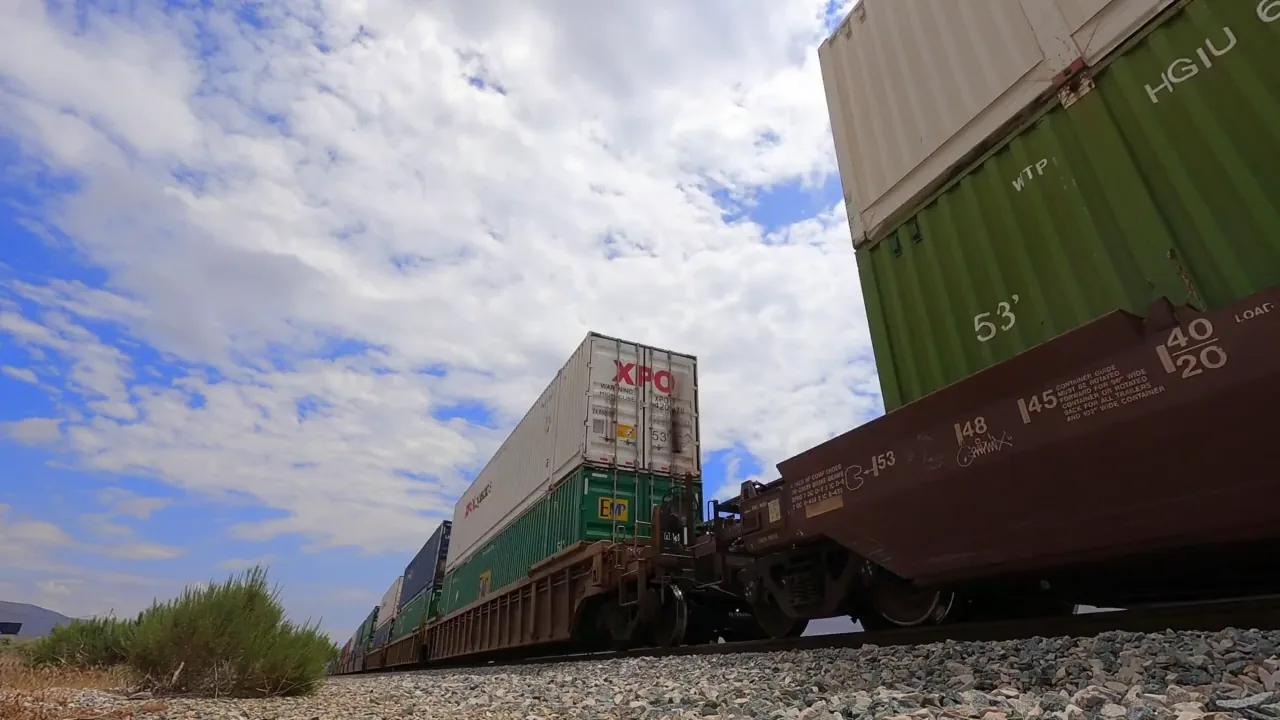
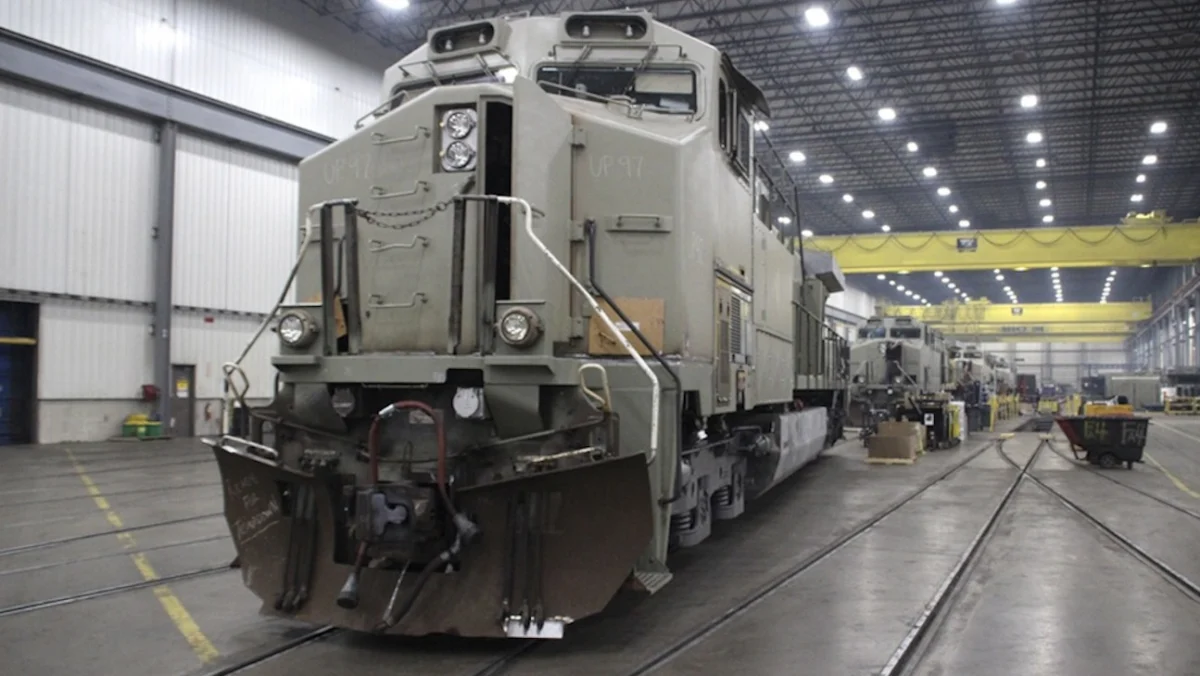
Ships and locomotives, the backbone of port transport, have also seen significant gains. The reduction of ship arrivals, combined with the use of cleaner marine fuels and enhanced shore-power technology, has driven a 94% reduction in diesel particulate matter since 2005. Meanwhile, the rail sector, through improved operational efficiency and the deployment of newer locomotives, has successfully reduced its nitrogen oxide output by 52% over the same two-decade period.
Official Responses and Strategic Outlook
The findings have been met with a mix of celebration and continued determination from the port’s leadership.
Beatrice Hsu, President of the Los Angeles Harbor Commission, noted the historical significance of the report. "As we mark 20 years of our Clean Air Action Plan, these results demonstrate how far we have come," she stated. "However, these numbers also serve as a reminder that the work is not finished. We are firmly on the path to a zero-emissions future, and we intend to accelerate our efforts in the coming years."
Gene Seroka, Executive Director of the Port of Los Angeles, emphasized the economic-environmental balance. "The findings demonstrate that we can handle massive cargo volumes while simultaneously driving down emissions," Seroka said. "This progress is a direct result of sustained investment, technical innovation, and intense collaboration across the maritime industry. Our focus now is on scaling these technologies and maintaining the momentum of the last two decades."
The verification process for this data is rigorous. The inventory is reviewed annually by regional, state, and federal air regulatory agencies, ensuring that the port’s self-reported progress meets the highest scientific standards of accuracy and transparency.
Implications for the Global Supply Chain
The success of the Port of Los Angeles has far-reaching implications for global trade and climate policy.
A Scalable Model for Global Ports
The Port of Los Angeles has effectively proven that decarbonization is not an impediment to economic growth. For other major international hubs, this data provides a roadmap. By integrating green shipping corridors—such as those established with key Asian ports—and fostering public-private partnerships, other regions can replicate this success.
The Role of Regulatory Collaboration
The cooperative agreement between the San Pedro Bay ports and the South Coast Air Quality Management District highlights the necessity of regional cooperation. By aligning infrastructure investments, such as expanded charging and fueling networks for electric and hydrogen-powered trucks, the port creates a predictable environment for private carriers to invest in cleaner fleets.
Future Challenges: The Road to Zero
While the reduction of 90% in diesel particulate matter is a monumental achievement, the remaining 10% represents the most difficult segment of the journey. The transition to fully zero-emissions shipping and heavy-duty logistics will require breakthroughs in energy storage density, grid capacity, and international fuel standards.
The port’s commitment to continued technological investment and grant programs suggests that the next decade will be characterized by the "final mile" of decarbonization. As the port moves toward a future defined by clean hydrogen, renewable electricity, and autonomous, low-emission logistics, it remains a critical case study in how complex, large-scale industrial systems can transform themselves to meet the urgent needs of the climate crisis.
Conclusion
The 2025 Inventory of Air Emissions is more than just a collection of data points; it is a testament to the power of persistent policy and technological innovation. In a world where supply chain resilience is constantly tested, the Port of Los Angeles has demonstrated that long-term sustainability is not just an ethical obligation—it is a functional requirement for the ports of the future. As the industry looks toward the next twenty years, the progress made at the San Pedro Bay will undoubtedly serve as the standard by which all global maritime logistics will be measured.