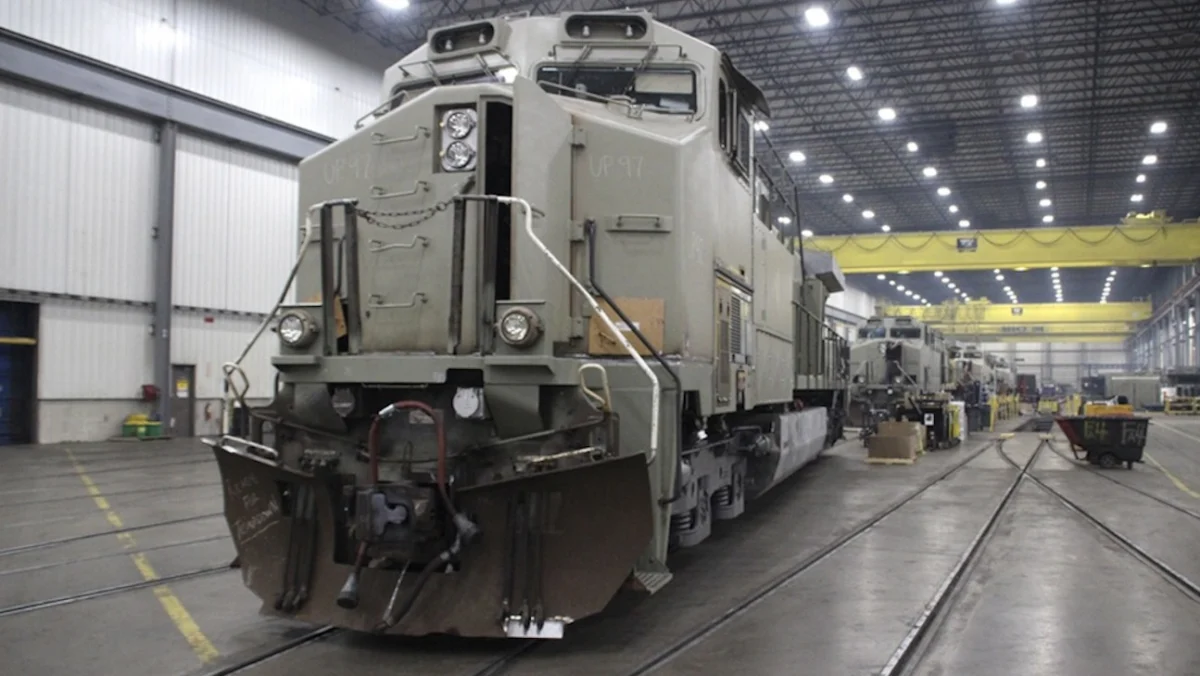
Wabtec Corporation (NYSE: WAB), a global leader in rail equipment and technology, has announced a robust third-quarter performance, marked by significant growth in both revenue and earnings. As the company continues to capitalize on the ongoing modernization of the global rail network, it has successfully raised its full-year guidance, signaling confidence in the current industrial cycle.
For the quarter, Wabtec reported a 27% increase in operating income to $625 million, supported by an 8% rise in total revenue to $3.12 billion. Earnings per share (EPS) surged by 34% to $2.42, far exceeding initial market expectations. This financial vigor has led the company to upwardly revise its full-year adjusted EPS guidance to a range of $10.85 to $11.05, reflecting a significant 21% to 23.2% year-over-year growth trajectory.
The Financial Breakdown: A Deep Dive into Performance
The quarterly results demonstrate the success of Wabtec’s diversified portfolio, which spans across freight and transit sectors. The company’s ability to navigate inflationary pressures while maintaining healthy margins has become a hallmark of its recent strategic direction.
Key Performance Indicators (KPIs)
- Revenue: $3.12 billion (8% increase)
- Operating Income: $625 million (27% increase)
- EPS: $2.42 (34% increase)
- Full-Year Guidance: $10.85–$11.05 (Upgraded)
The growth was not limited to a single segment. The Freight segment saw a 6.9% increase in revenue, heavily bolstered by a 24.2% jump in digital intelligence revenue. This surge in the digital arm is largely attributed to the strategic acquisition of Frauscher Sensor Technologies, which has allowed Wabtec to integrate advanced sensory and monitoring capabilities into its rail infrastructure offerings.
Simultaneously, the Transit segment reported an 11.3% revenue increase, totaling $883 million. This performance was driven by the integration of the Swedish-based Dellner Couplers, alongside strong aftermarket demand for transit parts—a critical component of the company’s "recurring revenue" model that appeals to investors seeking stability in volatile industrial markets.
Chronology of Strategic Evolution
Wabtec’s current position is the result of years of tactical acquisitions and internal restructuring. To understand the current success, one must view the company’s recent trajectory:
- Phase One: Acquisition and Integration: Following its merger with GE Transportation, Wabtec focused on consolidating its position as the primary supplier for North American Class I railroads. This period involved streamlining operations to remove redundancies.
- Phase Two: The Tech Pivot: Recognizing that the future of rail is digital, the company aggressively pursued acquisitions like Frauscher Sensor Technologies. This moved Wabtec from being a "hardware-only" provider to a "systems and intelligence" provider.
- Phase Three: Responding to Macro-Trends: As North American freight volumes fluctuated, Wabtec shifted its focus toward modernization and maintenance. By helping railroads reactivate stored locomotives rather than relying solely on the sales of new units, the company ensured it remained essential regardless of the macro-economic environment.
- Phase Four: Current Stability: The latest Q3 results represent the maturity of this strategy, where growth is now balanced between original equipment manufacturing (OEM) and high-margin software/service contracts.
Supporting Data: Backlogs and Market Demand
One of the most telling indicators of Wabtec’s long-term health is the growth in its 12-month backlog. A backlog represents revenue that is contracted but not yet recognized, providing a "cushion" of future work.
- Freight Segment Backlog: Rose 7.5% from the previous year, now sitting at $6.54 billion.
- Transit Segment Backlog: Increased 12.2% to $2.45 billion.
The uptick in the Freight backlog is particularly significant. During the earnings call, CEO Rafael Santana highlighted that while volume growth has been healthy, the market is currently characterized by a preference for asset optimization. Class I railroads are currently focusing on the reactivation of existing, stored locomotives rather than the immediate procurement of large fleets of new, expensive engines.
Wabtec has successfully pivoted its sales strategy to accommodate this. By providing the parts and services required to bring these stored units back to service, the company has turned a potential shortfall in new locomotive sales into a lucrative aftermarket services opportunity.
Official Responses and Executive Strategy
Chairman and Chief Executive Officer Rafael Santana emphasized that the company’s performance is not a matter of chance, but the result of disciplined execution.
"The strength of our performance reflects our momentum across the portfolio, disciplined execution by our teams, and the continued success of our strategic actions," Santana stated in the official earnings release. "These actions enhance our growth profile, expand margins, and increase the earnings power of the company."
Santana also highlighted the broader vision for the company: "Our teams continue to translate healthy customer demand into profitable growth while investing in technologies that will advance the future of transportation. These investments are strengthening our competitive position and reinforcing Wabtec as a leading industrial technology company."
The executive team’s tone suggests that while they are satisfied with current results, they are laser-focused on the long-term transition toward greener, more automated, and digitally optimized rail networks. By investing in the "future of transportation," Wabtec is positioning itself to be the primary partner for railroads looking to meet future environmental regulations and efficiency targets.
Implications: A New Era for Rail Infrastructure
The implications of Wabtec’s third-quarter results extend far beyond its own stock price. The report serves as a barometer for the North American rail industry, which has been grappling with labor shortages, supply chain complexities, and shifting commodity demand.
1. Recovery Without Rebound
The most critical takeaway is that the rail industry is in a state of "recovery without a broad rebound." Rail freight is essential to the economy, and the usage of rail assets is clearly increasing. However, there is a clear hesitation among carriers to engage in massive capital expenditures for new equipment. This suggests that railroads are prioritizing operational efficiency and balance sheet health over aggressive expansion, likely due to uncertainty regarding the global economic outlook.
2. The Digital Intelligence Mandate
Wabtec’s success in its digital division proves that modern railroads are no longer just interested in heavy machinery; they are hungry for data. The ability to track rolling stock in real-time, predict maintenance needs before a failure occurs, and optimize fuel consumption is now a requirement for profitability. Wabtec is effectively capturing this market, making its software offerings increasingly indispensable.
3. Supply Chain Resilience
By securing $633 million in new locomotive and modernization orders from two Class I railroads (whose names remain undisclosed), Wabtec has demonstrated that it is still the vendor of choice for the largest players in the industry. This trust is built on the company’s ability to deliver despite the persistent supply chain challenges that have plagued the broader manufacturing sector for the last several years.
4. Future Outlook
Looking ahead, the rail sector will likely see continued demand for "upgrades" over "new builds." This favors companies with strong aftermarket capabilities like Wabtec. As the industry moves toward 2026, the focus will likely shift from merely reactivating stored assets to a massive, multi-year replacement cycle for aging diesel-electric fleets. Wabtec’s current backlog puts it in the driver’s seat to facilitate that transition.
Conclusion: A Barometer for Industrial Health
Wabtec’s third-quarter report is a testament to the resilience of the rail sector. While the lack of an immediate, massive surge in new locomotive orders may keep some investors cautious, the underlying data—higher earnings, record backlogs, and a booming digital intelligence segment—paints a picture of a company that has successfully navigated the complexities of the current industrial landscape.
As the industry prepares for upcoming events, such as the Future of Freight Festival, the focus remains clear: how to leverage technology to drive efficiency in an age of uncertainty. Wabtec has shown that it is not just participating in this conversation; it is leading it. For the stakeholders of the global supply chain, Wabtec’s performance offers a rare, optimistic signal that the wheels of industry are not just turning—they are gaining momentum.