By Alejandra Carranza | Supply Chain Dive
Published October 9, 2026
The traditional rhythm of the global supply chain, once governed by predictable seasonal cycles, has been fundamentally disrupted in 2026. Typically, the arrival of China’s "Golden Week"—a seven-day national holiday stretching from October 1 to October 7—serves as a much-needed cooling-off period for the shipping industry. It is a time when factory output slows, export volumes dip, and logistics operators catch their breath before the frantic preparations for the Lunar New Year.
However, this year, the expected relief has failed to materialize. Instead of a seasonal downturn, shippers are grappling with a persistent, high-cost environment fueled by a perfect storm of meteorological disasters, terminal congestion, and the lingering effects of a prolonged peak shipping season. As of early October, spot rates for ocean freight remain stubbornly high, casting a shadow over retail planning and manufacturing schedules through the end of the year.
Main Facts: A Market Defying Gravity
The data from Freightos paints a stark picture of the current landscape. As of October 6, the spot rate per Forty-Foot Equivalent Unit (FEU) from Asia to the U.S. West Coast sat at a formidable $8,322. Meanwhile, the route to the U.S. East Coast commanded an even higher premium, reaching $9,606 per FEU.
These figures represent a market that refuses to yield to traditional post-peak seasonal trends. According to industry experts, the "low demand" period that usually follows the autumn peak has been effectively canceled. Carriers, emboldened by severe capacity constraints and a massive backlog at major Asian hubs, have successfully maintained elevated pricing, leaving shippers with little leverage.
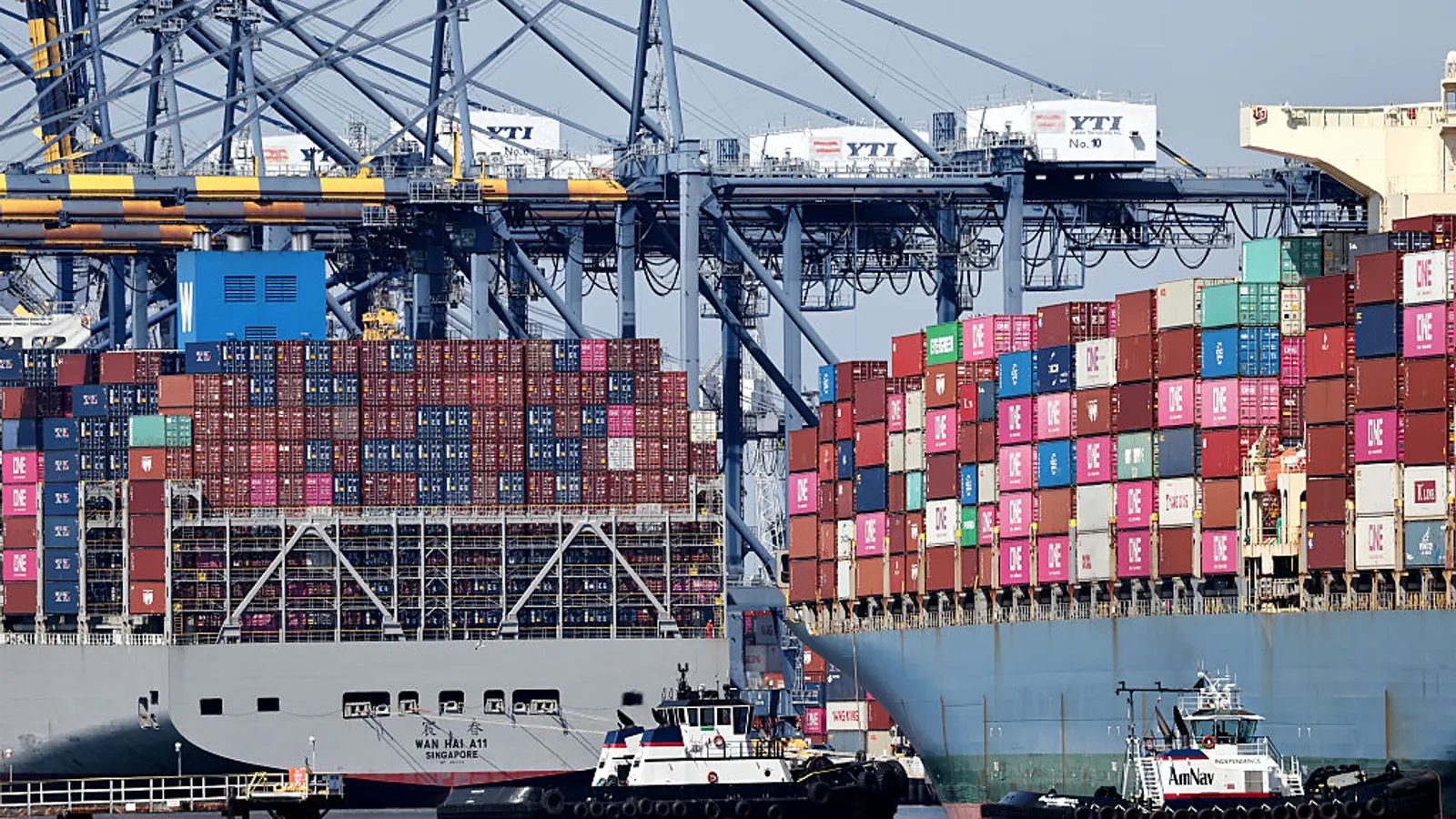
The primary culprit behind this rigidity is a staggering operational bottleneck. Mid-September reports indicated that approximately 157 vessels were waiting at berth in Shanghai alone. This congestion, compounded by average delays of seven to ten days, has prevented the usual "reset" that occurs when ships are allowed to rotate freely through international ports.
Chronology: From Early Frontloading to Persistent Congestion
To understand the current state of play, one must look back at the trajectory of 2026, which diverged from historical norms as early as the second quarter.
- Early Q2 2026: Fearing new tariff deadlines and the imposition of fresh surcharges, U.S. importers began a aggressive campaign of "frontloading." By moving inventory months ahead of schedule, companies successfully avoided potential cost spikes but inadvertently triggered an artificially early peak season.
- August 2026: Contrary to initial forecasts that suggested the peak season would taper off by late summer, demand remained robust. The surge was sustained by high consumer confidence and the continued replenishment of retail inventories.
- Mid-September 2026: Port congestion reached a critical threshold. A combination of vessel bunching—where ships arrive simultaneously after schedule delays—and a lack of available labor at key terminals created a gridlock in major Asian gateways.
- October 1–7, 2026 (Golden Week): While manufacturing output across China slowed in observance of the holiday, the logistical infrastructure remained overwhelmed. Carriers utilized this period to manage the backlog rather than lower rates, keeping freight fees at their peak levels.
- October 8, 2026: The National Retail Federation (NRF) and Hackett Associates released their Global Port Tracker, signaling that the extended peak season is finally wrapping up, though the "tail" of this disruption is expected to persist well into the fourth quarter.
Supporting Data: The Cost of Disruption
The persistence of these high rates is not merely a reflection of carrier pricing power, but a direct consequence of operational inefficiency. When vessels are anchored off the coast of Shanghai or other major hubs, the "velocity" of global trade grinds to a halt.
Current Spot Rate Snapshot (per FEU):
- Asia to U.S. West Coast: $8,322
- Asia to U.S. East Coast: $9,606
These figures, provided by Freightos, represent an environment where supply-side constraints have effectively trumped demand-side cooling. Industry analysts note that "vessel bunching" is the most significant contributor to current instability. When a vessel is delayed by a week, it misses its scheduled return to the port of origin. This creates a ripple effect, forcing other vessels to wait for terminal space, which in turn leads to port omissions—where carriers skip a scheduled stop to regain time—further destabilizing the global network.

Official Responses and Expert Insights
The consensus among industry leaders is that the supply chain is in a state of "extended recovery." Albert Zerega, SVP of commercial at American Global Logistics, noted in a recent LinkedIn analysis that the situation is far from standard.
"Currently, the ocean shipping market should be entering months of low demand," Zerega stated. "Instead, carriers have decided to push already-elevated rates as we see 157 vessels waiting at berth in Shanghai."
Furthermore, the meteorological factor has played an outsized role this year. Ascent Global Logistics highlighted that typhoon-related disruptions at major Asian gateways have been a primary catalyst for the current mess. "Recovery can take several weeks as terminals and carriers work through accumulated cargo volumes," the company noted in a recent trade update.
From the retail perspective, the mood is one of cautious transition. Jonathan Gold, NRF Vice President for Supply Chain and Customs Policy, offered a glimpse of the road ahead: "Most holiday merchandise has arrived, and the remainder of the year is just a matter of last-minute replenishment and preparation for early 2027." This suggests that while the "peak" is over, the logistics network remains in a fragile, high-cost state.
Implications: What This Means for 2027
The implications of this year’s volatility are significant for both retailers and logistics providers. The "frontloading" strategy, while effective in 2026, has left the industry with little flexibility. As companies look toward 2027, several key takeaways are emerging:

1. The Death of Predictability
The traditional "slow" periods are no longer guaranteed. Shippers must now build higher levels of buffer stock and financial contingency into their logistics budgets, assuming that disruptions—whether meteorological or geopolitical—are the new baseline rather than the exception.
2. Infrastructure Resilience
The bottleneck at Shanghai and other major ports has underscored the vulnerability of "just-in-time" supply chains that rely on perfectly functioning port infrastructure. As terminals struggle to clear backlogs, the conversation is shifting toward port automation and the diversification of shipping routes to avoid over-reliance on a few primary hubs.
3. Pricing Volatility as the New Normal
For the foreseeable future, ocean freight rates will likely remain sensitive to minor fluctuations in capacity. The ability of carriers to manage vessel schedules effectively will determine whether rates normalize or remain elevated. For the shipper, this necessitates a move away from purely spot-rate reliance toward more diversified contract strategies.
4. Preparation for 2027
As retailers pivot to "last-minute replenishment," the focus will shift from moving large volumes of holiday goods to managing smaller, high-frequency shipments. However, if the backlogs from October persist into November and December, the early-year inventory cycle for 2027 could start under the same pressure that defined 2026.
In conclusion, while the calendar may suggest that the shipping industry is entering a quieter period, the reality on the water remains turbulent. The combination of typhoon-induced delays, port congestion, and the long-term impact of an early, aggressive peak season has created a scenario where "normal" is nowhere to be found. For those navigating the global supply chain, the coming months will require agility, patience, and a recognition that the old rules of logistics no longer apply in this high-stakes environment.