DHL Group, the global logistics titan, has officially inaugurated a significant expansion of its parcel center in Cologne-Eifeltor, Germany. This strategic development serves as a cornerstone of the company’s broader mission to modernize its domestic network in response to the seismic shift in consumer behavior—specifically, the decline in traditional mail volumes and the relentless growth of e-commerce shipping. By boosting its sorting capacity to nearly 50,000 parcels per hour, DHL is reinforcing its grip on the logistics infrastructure of one of Germany’s most vital economic regions.
The Strategic Expansion: Core Facts
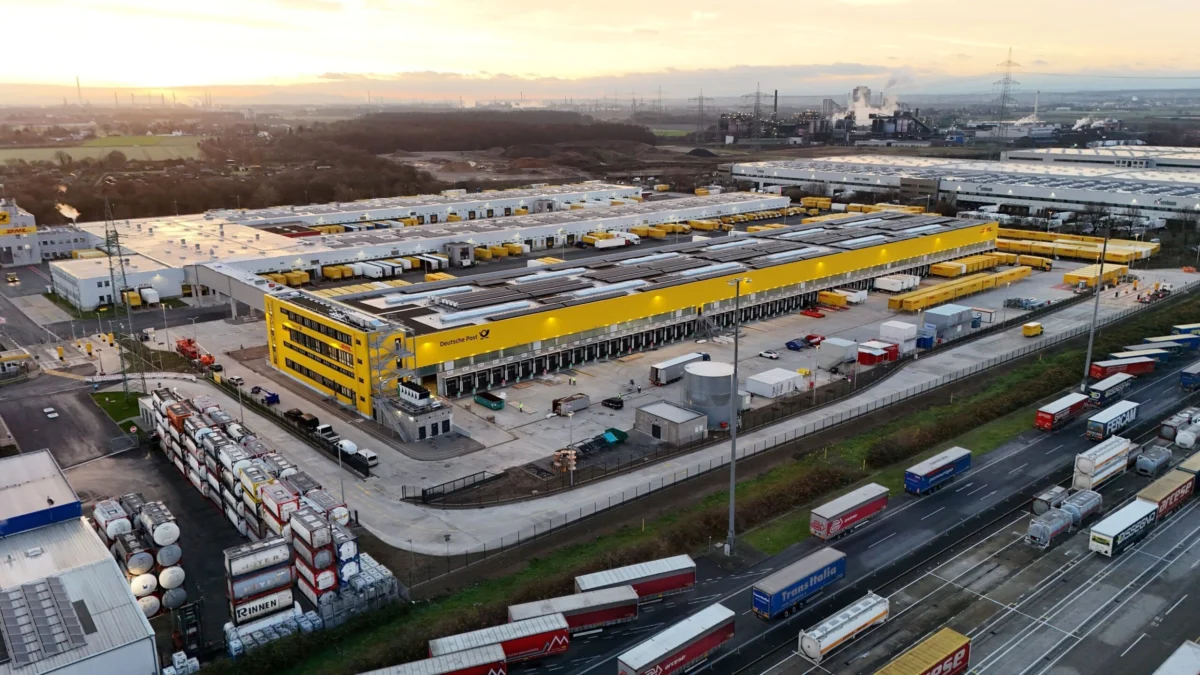
The Cologne-Eifeltor facility, which has been a linchpin of DHL’s regional operations since 1994, serves approximately 1.2 million households. The expansion, which broke ground in 2024 and reached completion on schedule this summer, was designed as a direct response to the increasing parcel volumes originating from both individual consumers and corporate entities in northwest Germany.
The physical expansion is as impressive as the operational upgrade. The new structure is seamlessly linked to the existing parcel center via a bridge, creating a unified, high-performance logistics hub. With this upgrade, the facility now rivals the capacity of the previously largest parcel center in North Rhine-Westphalia, located in Bochum. While the Aschheim center near Munich remains the national leader with a staggering capacity of 72,000 parcels per hour, the Cologne-Eifeltor hub has cemented its status as a critical node in DHL’s national network.
Beyond hardware, the project brings a significant human capital boost to the region. DHL expects to add 250 new jobs at the facility, bringing the total workforce to 750 employees. This surge in hiring is a testament to the labor-intensive nature of last-mile logistics, even in an age of increasing automation.
A Chronology of Modernization
To understand the significance of the Cologne-Eifeltor project, one must view it through the lens of DHL’s long-term corporate strategy. The Post & Parcel division of DHL Group has embarked on a multi-year, multi-billion-euro investment plan, allocating more than 1 billion euros ($1.16 billion) annually to reshape its infrastructure.
- 1994: The original Cologne-Eifeltor parcel center begins operations, serving the dense population centers of North Rhine-Westphalia.
- The Mid-2010s to 2023: As letter volumes across Europe experience a structural decline, DHL pivots its focus toward the "Parcel Boom" fueled by online retail. The company begins a series of incremental investments in automation and digital tracking systems.
- 2024: Construction on the Cologne-Eifeltor extension officially commences, marking a pivotal moment in the site’s history.
- Summer 2025 (Completion): The facility opens its doors, featuring state-of-the-art sorting technology and sustainable architectural elements, marking the official milestone of the project.
This investment is not merely about size; it is about the "rightsizing" of the network. DHL has been systematically restructuring its parcel and letter centers to maximize efficiency, integrating advanced automation and digital logistics platforms that allow for real-time tracking and faster transit times.
Sustainability as a Pillar of Design
In an era where corporate environmental, social, and governance (ESG) criteria are under intense scrutiny, DHL has positioned the Cologne-Eifeltor expansion as a model for sustainable logistics infrastructure. Built on the site of a decommissioned facility, the new extension prioritizes energy efficiency from the ground up.
The building features a sophisticated array of energy-saving systems. The roof is equipped with a solar array that generates renewable power, while the main hall utilizes underfloor heating. To mitigate the energy-intensive nature of climate control, the facility employs automatic ventilation, which reduces the reliance on traditional air conditioning. Furthermore, demand-controlled LED lighting ensures that energy is only consumed where and when it is needed. Perhaps most notably, the facility features a "green roof," which serves a dual purpose: improving thermal insulation to reduce heating and cooling costs while protecting the building from excessive summer heat.
Official Perspectives and Industry Implications
At the official opening ceremony, Marc Hitschfeld, head of operations for Post & Parcel Germany at DHL Group, emphasized that the project was a targeted strategic move. "With the expansion of the Cologne-Eifeltor parcel center, we are making a targeted investment in the performance of our network," Hitschfeld stated. "Online retail continues to grow, and our customers rightly expect fast and reliable delivery."
This sentiment captures the core pressure facing modern logistics providers. The "Amazon effect"—the customer expectation of next-day or even same-day delivery—has forced carriers to move beyond the traditional hub-and-spoke model toward a more decentralized, high-capacity network.
The implications for the broader market are profound. As the largest postal service provider in Europe and the dominant force in the German letter and parcel market, DHL’s infrastructure moves often dictate the baseline for the industry. By maintaining the largest parcel locker network in Germany alongside these massive sorting hubs, DHL is creating a closed-loop ecosystem that makes it difficult for smaller competitors to challenge their speed and reliability.
Furthermore, this expansion supports the wider German economy. Cologne is a major logistics hub; by improving the flow of goods in this region, DHL is facilitating the operations of thousands of businesses that rely on the company’s ability to move products efficiently. Whether it is small, second-hand marketplaces like Vinted—which recently tapped into DHL’s collection points to expand its reach—or massive e-commerce retailers, the efficiency of the Cologne-Eifeltor hub serves as a backbone for commerce in northwest Germany.
The Future of Parcel Logistics
The Cologne-Eifeltor project is a snapshot of a larger transition within the logistics sector. The decline of physical mail is no longer a "future trend"—it is a present reality. DHL is successfully navigating this transition by cannibalizing its own legacy infrastructure and repurposing it for the digital age.
However, the company faces ongoing challenges. Labor shortages in the logistics sector, the increasing cost of energy, and the push for "green" logistics (including electric delivery vans and zero-emission hubs) remain at the forefront of the company’s agenda. The Cologne-Eifeltor facility, with its green roof and solar arrays, represents a prototype of how DHL intends to balance high-throughput industrial operations with the tightening environmental regulations of the European Union.
Looking ahead, the success of this facility will likely be measured not just by the number of parcels it processes, but by its ability to integrate seamlessly with autonomous sorting systems and future-proofed delivery networks. As the company continues to spend over a billion euros annually, the industry will be watching closely to see which technological bets pay off. For now, the Cologne-Eifeltor expansion stands as a clear statement: DHL is committed to maintaining its dominant position, ensuring that as the world shops online, the physical infrastructure of the economy remains fast, efficient, and increasingly sustainable.
Conclusion
The expansion of the Cologne-Eifeltor parcel center is more than a simple building project; it is a manifestation of DHL’s agility in a rapidly changing market. By balancing the demands of high-volume, automated logistics with the imperative of sustainable architecture, DHL has created a facility that is ready for the next decade of digital consumption. With 750 employees and the capacity to process 50,000 pieces per hour, the hub serves as a powerful engine for the German economy, proving that even as the world moves toward a digital future, the physical movement of goods remains the heartbeat of global commerce.