
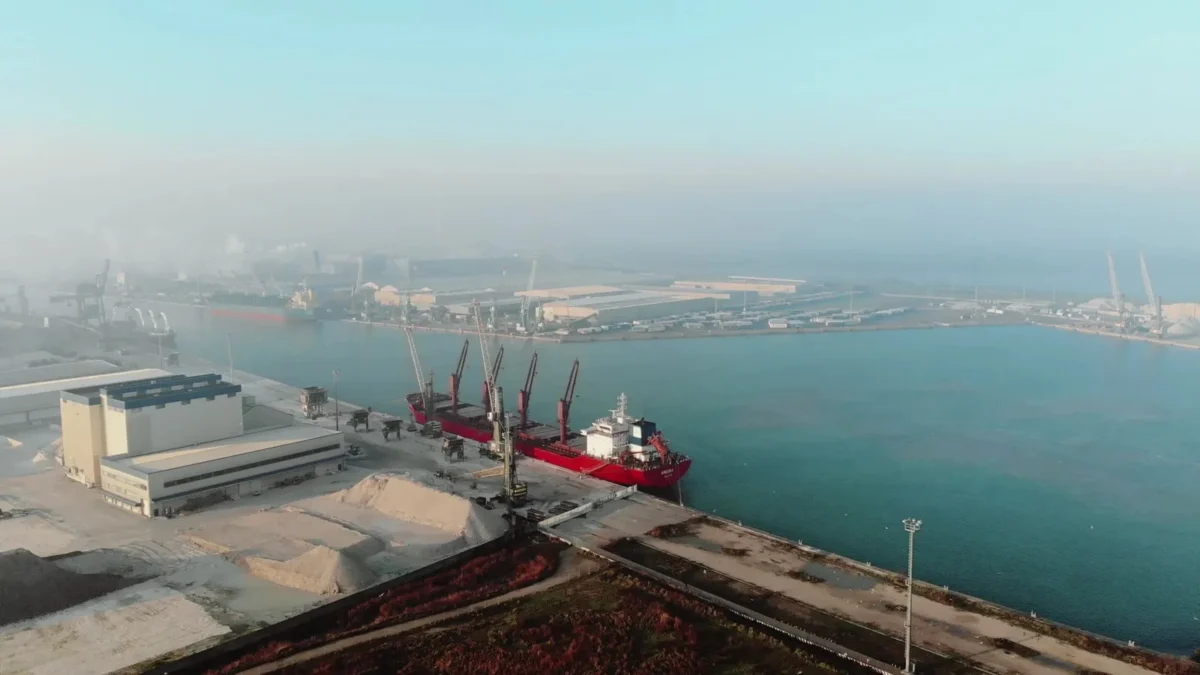
In a robust demonstration of domestic consumption and retail inventory stocking, United States container imports reached a staggering 2.60 million Twenty-Foot Equivalent Units (TEUs) in August 2026. According to the latest Global Shipping Report from Descartes, this performance marks the third-highest monthly import volume in history, signaling a resilient, albeit increasingly complex, landscape for international trade.
The data reveals that August volumes climbed 3.8% compared to July and stood 3.3% higher than in August 2025. This surge, while impressive, arrives at a time when global logistics are being tested by geopolitical tensions, shifting sourcing strategies, and persistent infrastructure bottlenecks at major US gateways.
Main Facts: The August Surge in Perspective
The scale of the August 2026 performance cannot be overstated. US ports moved a total of 2,603,709 TEUs of containerized imports. To put this into historical context, this figure sits just shy of the all-time record set in May 2022 (2,622,465 TEUs) and the second-highest mark recorded in July 2025 (2,621,910 TEUs).
Perhaps most telling is the comparison to pre-pandemic benchmarks. August 2026 volumes were 21.5% higher than those recorded in August 2019, suggesting that despite years of disruption, the baseline for US import demand has shifted to a structurally higher level. However, the year-to-date picture provides a more nuanced narrative: total imports for the first eight months of 2026 remain 0.4% lower than the equivalent period in 2025, highlighting that the year has been characterized by significant volatility rather than consistent growth.
Chronology: A Trajectory of Recovery and Pressure
To understand the current state of US trade, one must examine the timeline of the past few years.
- Pre-Pandemic Baseline (2019): Trade volumes were stable, providing the standard by which current figures are measured.
- The Pandemic Spike (2021–2022): The supply chain saw unprecedented volumes that overwhelmed port capacity, leading to the historic record of May 2022.
- The 2025 Transition: July 2025 served as a recent peak, underscoring the cyclical nature of demand as retailers adjusted to fluctuating economic conditions.
- The 2026 Outlook: The first half of 2026 saw a cautious approach from importers, likely influenced by inventory management strategies. However, the August surge suggests that retailers and manufacturers have entered a period of aggressive restocking, perhaps in anticipation of end-of-year holiday demand or as a proactive measure against looming trade barriers.
Shifting Sourcing: China’s Declining Share
A critical development in the August data is the continued evolution of global sourcing patterns. While China remains the dominant source for US imports, its market share is undergoing a structural decline.
In August, shipments from China amounted to 884,318 TEUs—a 1.3% increase from July and a 1.7% rise year-over-year. Despite these gains, China’s share of total US container imports slipped to 34%, down from 34.8% in July. This contraction is not necessarily a reflection of falling demand for Chinese goods, but rather a testament to the "China Plus One" strategy, where importers are increasingly diversifying their supply chains into Southeast Asia and other emerging markets.
The Rise of Alternative Hubs
The top 10 countries of origin collectively saw imports rise 3.5% month-over-month and 2.3% year-over-year. Within this cohort, Vietnam has emerged as a powerhouse, posting the largest absolute monthly gain of 14,545 TEUs, representing a 5.2% growth.
Even more striking is the performance of smaller, high-growth sourcing nations. Indonesia recorded a massive 19.5% increase in volume, while Thailand followed closely with a 10.4% growth rate. Conversely, India stood out as the only major origin nation to register a decline, with volumes falling by 0.8%. This divergence illustrates a highly competitive global manufacturing landscape where logistical efficiency and production costs are forcing rapid shifts in trade corridors.
The Friction of Global Logistics: Rising Transit Delays
Despite the impressive volume of goods moving through US ports, the report highlights a growing concern: transit delays are widening at every major US gateway. The sheer volume of incoming cargo is testing the limits of port infrastructure, which is already under duress from external factors.
Jackson Wood, Director of Industry Strategy at Descartes, provided a sobering assessment of the situation. "The 2.6 million TEU total confirms that US import demand remains robust," Wood noted. "However, the operational environment is becoming increasingly difficult."
Wood identified four primary "force multipliers" that are complicating global supply chains:
- Port Infrastructure Strains: Mounting delays at key gateways, caused by high throughput and labor or equipment limitations.
- Panama Canal Capacity: Ongoing water-level and transit management issues continue to limit the throughput of vessels from Asia to the US East and Gulf Coasts.
- Tariff Exposure: Growing uncertainty regarding international trade policy is forcing importers to move goods faster, adding to the pressure on logistics networks.
- Geopolitical Instability: Disruption in the Middle East and the Red Sea continues to force shipping lines to take longer routes, increasing transit times and fuel costs.
Implications for the Future of Trade
The current trade data carries profound implications for stakeholders across the supply chain, from retail giants to logistics providers and policymakers.
The Inventory Balancing Act
For retailers, the August surge is a double-edged sword. While it indicates that consumer demand is healthy, the combination of high volumes and rising transit delays creates a risk of inventory stockouts or, conversely, ballooning carrying costs. Companies that rely on "just-in-time" supply chains are finding it increasingly difficult to maintain that model, prompting a return to "just-in-case" inventory holding.
Infrastructure as a Competitive Advantage
The widening transit delays at major gateways underscore a long-term problem: US port infrastructure is struggling to keep pace with the structural shifts in global trade. As sourcing moves toward Southeast Asia, the load distribution across West Coast, East Coast, and Gulf Coast ports is changing. Ports that can invest in automation, deeper channels, and better intermodal connectivity will likely capture more of the shifting trade flows, while those that fail to adapt will become bottlenecks that drive importers to look elsewhere.
The Geopolitical Risk Premium
Perhaps the most concerning aspect of the current climate is the "Hormuz Crisis" and its ripple effects. As reported previously, the costs associated with regional conflicts in the Middle East have reached $330 billion over a six-month period. These costs are not static; they manifest as higher insurance premiums, longer sailing times, and the need for more vessel capacity to move the same amount of goods.
As we look toward the remainder of 2026, the data suggests a market that is fundamentally resilient but increasingly brittle. The ability to handle high volumes of imports is no longer just a question of demand; it is a question of endurance. Importers, carriers, and logistics providers must navigate a landscape where disruption is the new constant and where geographical diversification is no longer an option, but a requirement for survival.
Conclusion
The August 2026 import figures serve as a powerful reminder of the US economy’s dependence on global trade. While the 2.6 million TEU milestone is a testament to the strength of the consumer, the data also provides a clear warning. With transit delays increasing and geopolitical volatility showing no signs of abating, the supply chain is reaching a point of maximum stress. As manufacturers continue to shift production away from China and into emerging markets, the logistical complexity of the global trade network will only continue to grow. Success in this environment will belong to those who can master the art of agility, hedging against disruption while managing the immense volume of goods that keep the global economy moving.