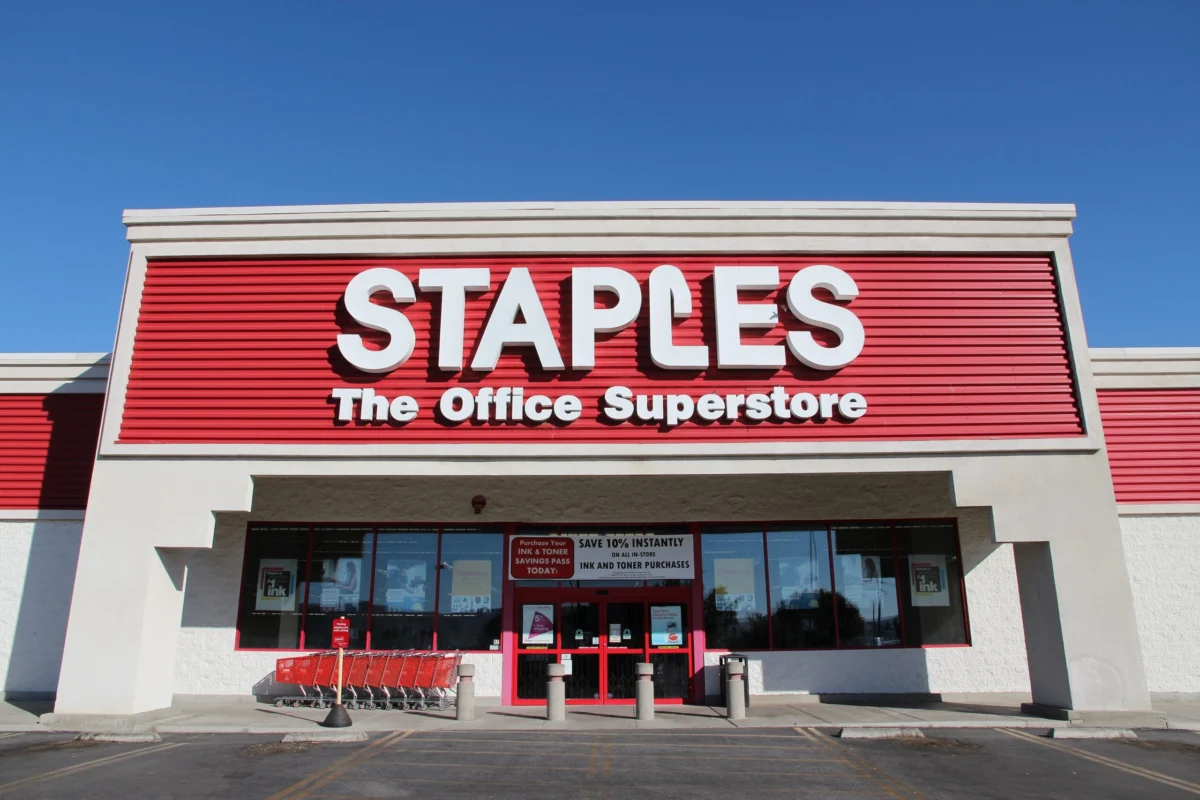
In a significant move to consolidate its market position and sharpen its competitive edge, Staples Canada has officially launched "Staples Business." This new brand identity is designed to serve as a comprehensive, centralized hub for Canadian commercial clients, integrating office supplies, cutting-edge technology, print services, and facilities management under a single umbrella. The initiative marks a fundamental shift in how the Richmond Hill, Ontario-based retailer interacts with the professional sector, signaling a departure from traditional retail-focused models toward a high-touch, specialized B2B service ecosystem.
Main Facts: A Unified Vision for Business Operations
The core of the Staples Business strategy is the segmentation of its service offerings into two distinct tiers, meticulously crafted to address the diverging needs of Canadian enterprises. The first tier is tailored to small-to-medium businesses (SMBs), focusing on ease of use, automated procurement, and rapid response times. The second tier is built for large-scale enterprise buyers, offering bespoke contract pricing, personalized product catalogs, and dedicated, white-glove account management.
For Staples Canada, which operates nearly 300 locations across the country—including those under the "Bureau en Gros" banner in Quebec—the launch is an attempt to simplify the procurement lifecycle. By unifying disparate services into one brand, the company aims to become the "one-stop shop" for everything from breakroom supplies and janitorial equipment to complex IT hardware and managed print services.
A Chronological Evolution: Three Decades of Growth
Staples Canada’s journey toward this B2B pivot is rooted in over 30 years of operational experience. Historically, the company functioned primarily as a retail destination for home office goods and school supplies, with its B2B efforts operating as a secondary, often fragmented, division.
- The Early Years (1990s–2000s): Staples established its footprint as a brick-and-mortar giant, focusing on physical store accessibility for both consumers and small office managers.
- The Digital Shift (2010s): As e-commerce began to dominate the retail landscape, Staples faced pressure from online-first competitors. The company began expanding its online capabilities, though its brand identity remained largely tethered to the retail consumer.
- The Strategic Realignment (2020–2023): Facing the dual pressures of the global pandemic and the subsequent rise of Amazon Business, Staples Canada underwent a structural assessment. Executives realized that to survive, the company needed to differentiate itself through professional services rather than mere product volume.
- The Present (2024): The launch of Staples Business serves as the culmination of this internal reorganization, aiming to formalize the company’s transition from a retailer to a professional service provider.
Supporting Data: The Competitive Landscape
Industry analysts suggest that the launch of Staples Business is less of a cosmetic update and more of a defensive maneuver in a crowded e-commerce arena. The presence of Amazon Business, with its aggressive pricing and massive logistics network, has forced traditional retailers to rethink their value propositions.
Marty Bauer, an e-commerce expert at Omnisend, highlights that while price is a factor, the B2B market is uniquely sensitive to "frictionless procurement." In the modern corporate environment, the administrative burden of managing multiple vendors is often more costly than the products themselves. By consolidating janitorial supplies, IT, and stationery under one account manager, Staples is attempting to sell "time and efficiency" as its primary commodity.
The Two-Tiered Approach
The strategy relies on a sophisticated categorization of client needs:
- The SMB Segment: These clients require self-service efficiency. Their priorities are transparent pricing, automated reordering systems, and rapid delivery windows.
- The Enterprise Segment: These clients demand deep integration. They require complex procurement workflows, volume-based contract pricing, and dedicated human support to manage large-scale office transitions or long-term supply chains.
Official Responses and Strategic Intent
Chris Saniga, Chief B2B Officer at Staples Canada, frames the rebrand as a direct response to the mounting pressures faced by Canadian organizations. "Staples Business brings everything our business customers rely on together under one brand, building on our long-standing commitment to supporting Canadian businesses for more than 30 years," Saniga stated during the launch.
He emphasizes that the goal is to "take more off their plate," acknowledging that both startups and large enterprises are currently struggling with operational overhead. By serving as a partner rather than just a supplier, Staples hopes to foster long-term loyalty that is immune to the "race to the bottom" pricing often found on global e-commerce marketplaces.
Implications: The High Stakes of Execution
The success of Staples Business will ultimately hinge on the company’s ability to bridge the gap between its retail legacy and its professional aspirations. Rich Pleeth, founder of the AI-powered logistics platform Finmile, notes that while the consolidation of services is a logical strategic step, it introduces significant operational risks.
"Someone who thinks of Staples for printer paper may not think of it for IT support or facilities supplies," Pleeth explains. The challenge is one of brand perception. Staples must convince its existing customer base that it possesses the technical expertise to manage IT infrastructure and the logistical capacity to coordinate complex deliveries that go beyond standard consumer goods.
The "Execution Gap"
The most significant hurdle identified by analysts is the "execution gap." If a business orders a comprehensive package—ranging from office furniture and laptops to printed marketing materials—they expect a cohesive experience. If that client is forced to interact with three different, uncoordinated departments to resolve a shipping error or a technical issue, the "Staples Business" value proposition collapses.
Pleeth points out that for large buyers, the value of a dedicated account manager who can resolve cross-departmental problems is immense. It is often more valuable than a marginal discount on stationery. However, this level of service requires a high degree of internal alignment that has historically been difficult for large, traditional retail organizations to achieve.
Looking Ahead: The Future of B2B Procurement
The launch of Staples Business is a bellwether for the broader retail industry. As physical retail margins continue to thin, major players are increasingly pivoting to the "solutions-based" model. For Staples, the objective is clear: by embedding themselves into the workflows of Canadian businesses, they move from being a vendor that can be replaced by a click to an essential partner in the daily operations of their clients.
The company is banking on the idea that Canadian businesses prefer to deal with a local, recognizable entity that understands the nuances of the domestic market. Whether this "home-court advantage" is enough to stave off the global scale of e-commerce giants remains to be seen.
Ultimately, the transformation of Staples Canada into a comprehensive B2B service provider is a high-stakes gamble on the value of human connection and integrated service in an increasingly automated world. If the company can successfully deliver on its promise of simplified management and professional expertise, it will not only secure its market share but also redefine the role of the modern office supply company in the digital age.
As the Canadian business landscape evolves, the success of Staples Business will serve as a critical case study in how established retail brands can successfully navigate the transition to specialized B2B service providers. The next 18 months will be the true testing ground for the brand’s operational capabilities and its ability to deliver the seamless, high-touch experience it has promised to its corporate clientele.