In the landscape of modern retail, the playbook for sports apparel has long been dominated by monolithic brands chasing mass-market appeal. From the hardwood of the NBA to the pitch of international soccer, the industry has prioritized scale and volume. However, Aaron Luo, the co-founder and CEO of the premium bag brand Caraa, is betting that the future of high-end accessories lies not in the massive, crowded stadiums, but in the specialized, high-intensity world of niche sports.
Luo, a lifelong fencer who continues to compete alongside his two sons, has recently bridged the gap between his professional expertise and his personal passion. Since 2023, he has served as an advisor to the CEO of USA Fencing, a role that provided the blueprint for a strategic pivot: the launch of the "Caraa x USA Fencing" collection. By moving away from generic, "label-slapping" merchandise, Caraa is pioneering a new model for how fashion brands can engage with National Governing Bodies (NGBs) to deliver bespoke, functional, and luxury-grade gear to a highly discerning, affluent audience.
The Genesis of the Collaboration
The origins of the Caraa x USA Fencing collection are rooted in personal experience. Luo, who co-founded Caraa in 2015, identified a glaring void in the market: while fencing is a sport defined by technical precision and tradition, its merchandising landscape was stagnant.
"We’re very much a fencing family," Luo told Modern Retail. "When it came time to develop this collection, I jumped at the chance to make products for fencers, by a fencer."
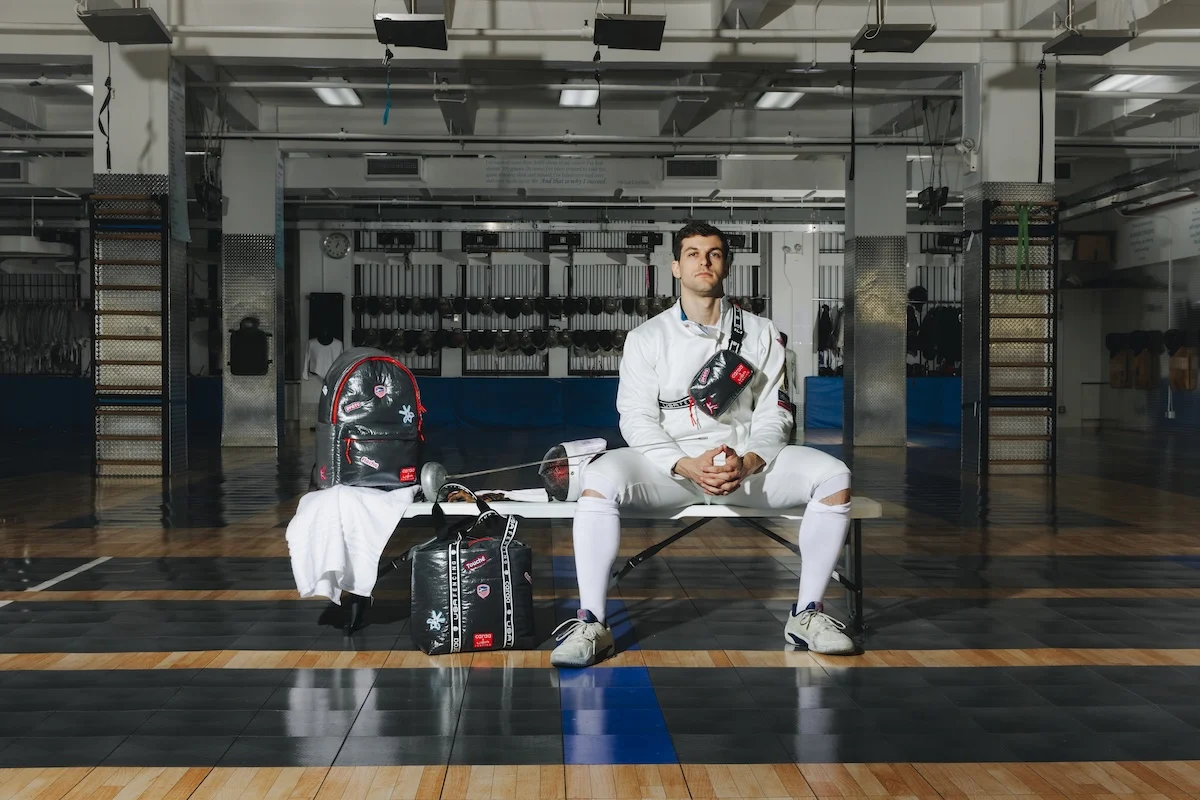
The collaboration, which debuted at the Summer Nationals in Oregon (June 27–July 6), features a thoughtfully curated trio of products: a backpack, an insulated tote, and a sling bag. Eschewing the standard athletic aesthetic, the line utilizes high-end materials usually reserved for luxury handbags, signaling a shift in how sports gear is perceived. The collection even features a unique "Pearl" colorway, reserved specifically for Olympians and Paralympians, adding an exclusive, prestigious layer to the branding.
Chronology of a Strategic Pivot
The development of this collaboration was not an overnight success but a calculated move within Caraa’s broader growth strategy.
- 2015: Caraa is founded, establishing its reputation for high-quality, functional fashion accessories.
- 2023: Aaron Luo begins his tenure as an advisor to the CEO of USA Fencing, deepening his ties to the sport’s administrative and community leadership.
- Early 2024: Development of the Caraa x USA Fencing collection begins, focusing on the specific functional needs of fencers—such as insulated storage for long, four-hour tournament days.
- June 27 – July 6, 2024: The collection makes its in-person debut at the Summer Nationals in Oregon, garnering immediate attention from the fencing community.
- Post-Launch (July 2024): Following a successful 40% sell-through rate in the first week, Caraa begins fielding inquiries from other NGBs interested in similar bespoke partnerships.
- Late 2024 Outlook: Caraa prepares to launch "Caraa Kids" and a new gym-focused collection, continuing its diversification strategy.
The "White Space" Opportunity
For many premium fashion brands, the hesitation to enter niche sports like fencing, judo, water polo, or squash stems from a perceived lack of market size. However, industry experts argue that this hesitation ignores the qualitative value of these communities.
"Brands often aren’t interested in that kind of partnership because the audience is niche and small," Luo explained. "If you look at many NGB organizations, the products are viewed almost as merch—coffee mugs, printed T-shirts, and hoodies. There is nothing ‘fashion’ about them. There is no bespoke design, no custom engineering."
Luo’s philosophy is that by ignoring these audiences, larger brands have left a massive amount of "white space" for agile companies like Caraa to occupy. The strategy is to treat the partnership as a design challenge rather than a branding exercise. By focusing on the unique habits of fencers—who often have higher household incomes and a deep commitment to their sport—Caraa has created a product that feels like a status symbol within the community rather than a souvenir.
Data and Market Implications
The initial performance metrics suggest that Luo’s intuition is supported by market reality. Caraa’s internal projections for the fencing collection were modest, anticipating a 30% sell-through rate within the first week of launch. The final figure reached 40%, a significant over-performance that has validated the company’s pivot toward specialized collaborations.
Neil Saunders, managing director of GlobalData Retail, notes that while the scale of these niche markets is smaller than the NFL or FIFA, the engagement levels are significantly higher. "There is a clear commercial opportunity," Saunders noted. "The trick is to have authentic connections to the sport and to engage with the community. That can be hard for bigger brands to justify, but smaller brands can do this in a way that feels genuine."
This sentiment is echoed by Greg Portell, lead partner at the management consulting firm Kearney. Portell suggests that while the "big fish in a small pond" strategy is effective, it requires more than just a logo. "Brands still need to have thoughtful design, meaningful messaging, and strong execution," Portell said. "Simply inking a deal with a sports body doesn’t automatically translate to sales."
Caraa’s execution has centered on specific functional requirements. The insulated tote bag, for example, addresses a real pain point for fencers: the need for temperature-controlled storage for snacks and drinks during grueling, day-long tournament schedules. By combining these utility features with luxury textiles and fencing-inspired patches, Caraa has managed to bridge the divide between high-performance gear and high-fashion aesthetics.
The Future of Sports Merchandising
The success of the fencing collection has created a ripple effect within the world of NGBs. Because the professional community in sports like fencing is small and highly connected, CEOs of various governing bodies are sharing insights, leading to a surge in interest for similar collaborations.
"I’ve been introduced to a few organizations already," Luo shared. "They are seeing what we’re doing and asking, ‘Can we get in on that?’"
This trajectory suggests that the future of sports apparel may be moving toward a "decentralized" model, where brands move away from competing for mass-market visibility and instead build deep, loyal roots within specific subcultures. This allows brands to maintain premium price points—with Caraa’s fencing bags retailing between $100 and $315—by providing products that offer tangible value to the end-user.
Conclusion: Beyond the Fencing Strip
As Caraa looks toward the second half of 2026, the company is demonstrating a cautious but ambitious approach to growth. The upcoming launch of "Caraa Kids" and a return to the gym-wear market indicate that the brand is confident in its ability to translate its niche successes into broader category expansions.
By focusing on the intersection of professional expertise and personal passion, Aaron Luo has created a blueprint for modern retail that prioritizes authenticity over reach. In an era where consumers are increasingly wary of mass-produced, uninspired merchandise, Caraa’s success serves as a compelling case study. It proves that when a brand stops trying to be everything to everyone and starts being exactly what the right someone needs, it can turn a small, niche community into a thriving, loyal market.
The "fencing family" approach is not just a marketing tactic; it is a fundamental shift in business strategy. As more apparel companies eye the potential in tennis, pickleball, and equestrian sports, Caraa stands at the forefront, having proven that the most effective way to reach a customer is to compete in their arena—quite literally.