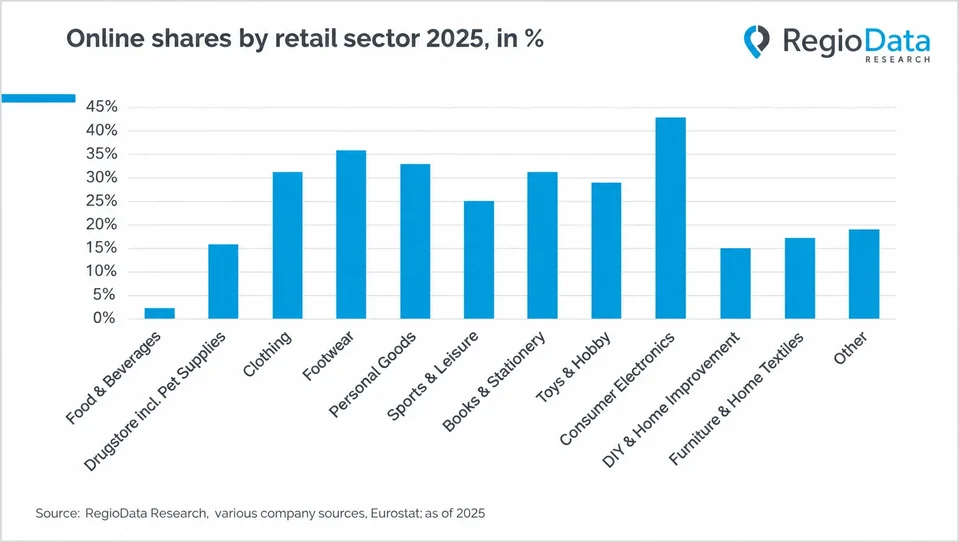
The landscape of Austrian commerce underwent a definitive shift in 2025, as digital transactions claimed an increasingly significant slice of the national retail pie. According to the latest comprehensive analysis by RegioData Research, online channels accounted for more than 16 percent of total consumer retail spending, marking a notable acceleration from the 14.9 percent recorded just one year prior. This growth surge has propelled the national e-commerce market volume to approximately 12.4 billion euros, signaling a robust transition in consumer habits toward digital-first shopping experiences.
The State of Play: Main Facts and Figures
For the average Austrian consumer, the digital storefront has become a primary destination. In 2025, per-capita spending on online purchases hit the 1,400-euro mark annually. This figure is not merely a reflection of convenience but an indicator of deep-seated trust in e-commerce infrastructure, payment security, and logistical reliability.
However, this aggregate growth masks a nuanced reality: the adoption of online shopping is highly sector-dependent. While some industries have embraced the digital transition as their primary revenue engine, others remain anchored in traditional brick-and-mortar retail, serving as a reminder that the "omnichannel" approach is currently the most effective strategy for retailers operating in the Alpine nation.
A Chronological Evolution of Austrian E-commerce
To understand the 2025 figures, one must look at the recent trajectory of the Austrian retail market.
- 2020–2022 (The Pandemic Catalyst): The global health crisis served as the most significant accelerant in the history of modern Austrian retail. With physical shops subject to intermittent closures, digital adoption spiked, forcing traditional retailers to pivot rapidly toward e-commerce.
- 2023–2024 (Consolidation and Optimization): As the dust settled, the market experienced a period of stabilization. The focus shifted from mere survival to the optimization of supply chains and the improvement of the user experience (UX). The online share hovered just below the 15 percent mark, suggesting that while the initial shock had passed, the habits formed during the pandemic were here to stay.
- 2025 (The New Normal): The leap to 16 percent represents a structural shift rather than a temporary trend. This year saw the integration of advanced logistics and a wider acceptance of cross-border platforms, resulting in the record-breaking 12.4 billion euro market valuation.
Sector-Specific Insights: Where the Money Moves
The RegioData research highlights a stark disparity between categories when it comes to online penetration. The "digitalization" of retail is not uniform; it is a tale of varying levels of convenience and tangible necessity.
The Electronics Dominance
The consumer electronics sector stands at the forefront of this digital revolution, with an impressive 43 percent of all spending occurring online. The nature of these products—standardized specifications, high price points, and the ease of comparing technical data—makes electronics the natural leader in e-commerce. Consumers no longer feel the need to visit a physical showroom to touch a processor or a screen; instead, they rely on user reviews and technical benchmarking sites to make informed decisions from their homes.
Fashion and Personal Goods
Footwear follows closely behind with a 36 percent online share. The success of online footwear sales is largely attributed to the refinement of return policies and the widespread adoption of "try-before-you-buy" services. Similarly, personal goods (33 percent), clothing, and books (each at 31 percent) continue to enjoy high digital conversion rates. These categories benefit from high-frequency purchasing patterns and the ability to curate vast inventories that no physical store could feasibly house under one roof.

European Context: Austria in the Continental Mirror
When viewed through a pan-European lens, Austria occupies a comfortable middle-ground. It is neither the trailblazer nor the laggard, but rather a mature market that follows broader continental trends.
The United Kingdom remains the uncontested leader in European e-commerce, boasting an online market share of 29.3 percent. The UK’s dominance is largely attributed to early infrastructure investment and a highly concentrated urban population. Conversely, Germany sits at 16.8 percent, placing it in very close proximity to Austria’s 16 percent. At the other end of the spectrum, countries like Serbia (6.7 percent) highlight the digital divide that persists across Europe, often driven by differences in internet penetration, logistics maturity, and historical consumer trust in digital payment systems.
The Cross-Border Challenge: The Dominance of Global Giants
One of the most pressing findings from the 2025 analysis is the dominance of international, cross-border retailers over domestic players. Currently, just over 40 percent of online spending in Austria is captured by local online stores. This means that nearly 60 percent of the capital spent online leaves the country, flowing into the pockets of global digital behemoths.
The Amazon Effect
Amazon remains the titan of the Austrian market, controlling a massive 35.1 percent market share. The company’s influence is so pervasive that it has become the de facto search engine for products. Following at a distance are Temu (5.1 percent) and eBay (4.1 percent).
A notable trend is the rising prominence of Chinese retail platforms. Temu, Shein, and AliExpress collectively account for 7.9 percent of the market. This surge has sparked internal debates regarding the competitive viability of small-to-medium-sized Austrian enterprises (SMEs) when faced with the pricing power and logistical scale of these global giants.
Official Responses and Industry Outlook
The report has sent ripples through the Austrian Retail Association and government economic advisory boards. The primary concern is not the growth of e-commerce itself, but the trade deficit created by the reliance on foreign platforms.
"The digital shift is irreversible," noted a representative from an Austrian business lobby. "However, our focus for the coming years must be on ‘Digital Sovereignty.’ We are seeing a significant capital flight as consumers favor convenience over local support. Our retailers must double down on unique, localized value propositions—such as superior customer service, sustainability, and regional identity—that international platforms cannot easily replicate."

Economists point out that the high reliance on foreign sellers presents a long-term risk to the Austrian retail ecosystem. As physical high-street shops close, the tax base and local employment levels are impacted. The proposed solution involves a concerted effort toward the digitalization of local SMEs, potentially through state-sponsored grants for e-commerce integration and digital marketing training.
Future Implications: What Lies Ahead?
As we look beyond 2025, the trajectory suggests that the online share of retail will continue to grow, though perhaps at a more moderated pace. The challenge for the Austrian retail sector will be to bridge the gap between physical experience and digital convenience.
The Rise of Phygital Retail
"Phygital"—the blending of physical and digital experiences—is expected to be the next frontier. We are likely to see more Austrian retailers implementing "click-and-collect" models, in-store digital kiosks, and augmented reality (AR) fitting rooms. By turning physical stores into showrooms and experience centers rather than mere warehouses, traditional retailers can reclaim some of the market share currently lost to global e-commerce platforms.
Regulatory Considerations
European-wide regulations, such as the Digital Services Act (DSA), are also expected to play a larger role. By ensuring a level playing field regarding data privacy, product safety, and fair taxation, the European Union aims to make it easier for domestic companies to compete with global marketplaces. For Austria, the goal is to foster an environment where local digital innovation can flourish alongside global players.
Conclusion
The 2025 data from RegioData Research confirms that the digital transformation of Austrian retail is not a fleeting phenomenon but a fundamental shift in the nation’s economic structure. With 12.4 billion euros moving through digital channels, the stakes for the retail sector have never been higher. While global giants like Amazon and the rising wave of Chinese platforms currently dictate the pace of change, there remains a vital opportunity for local retailers to pivot.
The success of the Austrian retail market in the coming years will depend on its ability to leverage its unique strengths—trust, quality, and proximity—while embracing the technological tools that have redefined consumer expectations. As the digital and physical worlds continue to merge, the retailers that thrive will be those that view e-commerce not as a threat to their survival, but as an essential component of their long-term growth strategy. The "middle-ground" position of Austria within Europe offers a unique vantage point: the country has enough experience to know what works, and enough room to innovate in a way that prioritizes both the consumer and the domestic economy.