In the high-stakes world of modern logistics, warehouse managers often find themselves fighting a war against an invisible enemy: the "micro-delay." A forklift driver waiting four minutes for a clear aisle, a dock door left idle for seven minutes, or a staging area congested for a quarter-hour—these incidents rarely trigger a crisis. However, when aggregated across hundreds of shifts and dozens of loading docks, these minor inefficiencies represent a massive, silent hemorrhage of operational capacity.
Seeteria, an emerging AI-driven logistics startup, is positioning itself to solve this exact problem. By leveraging existing camera infrastructure and advanced computer vision, the company is enabling warehouses to identify and resolve these incremental losses in real time, effectively turning “lost time” back into measurable throughput without the need for additional capital expenditures.
The Core Concept: Efficiency Through Existing Hardware
The central value proposition of Seeteria is its "zero-hardware" approach. In an industry where technological upgrades often require massive overhauls—installing new sensors, rewiring facilities, or integrating complex IoT ecosystems—Seeteria offers a frictionless alternative. The platform connects directly to a facility’s existing security camera network via Wi-Fi.
Once connected, the AI platform analyzes floor activity in real time, transforming passive surveillance into an active, intelligent management tool. It alerts supervisors the moment a disruption occurs—whether it’s a bottleneck at a loading bay, an obstruction in a primary aisle, or an imbalance in staging zones.
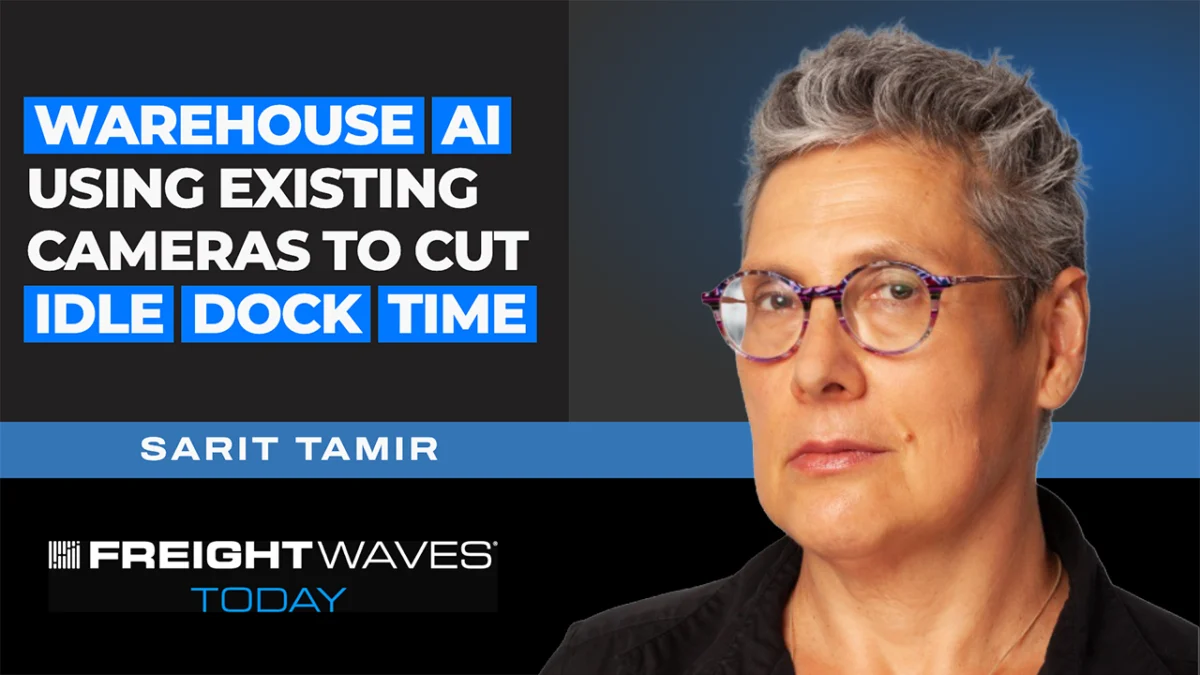
"Our goal all the time is to get the warehouse more capacity from the resources that they are already paying for," says Sarit Tamir, founder and CEO of Seeteria. Tamir, who has spent over a decade architecting AI and computer vision solutions specifically for the logistics and manufacturing sectors, argues that the capacity is already there; it is simply buried under layers of routine operational friction.
Chronology: From Concept to Implementation
The origins of Seeteria are as much about the evolution of industrial vision as they are about cultural inspiration. The company’s name is a derivative of Soteria, the ancient Greek goddess of safety. During a family trip to the Vatican in Rome, the founder felt the need for a name that reflected both protection and foresight, eventually settling on "Seeteria" to highlight the platform’s core competency: computer-aided "seeing."
A Timeline of Development
- The Foundation: Leveraging over a decade of experience in industrial AI, the founder identified that the primary barrier to warehouse adoption of new tech was the high cost of entry.
- The Innovation Phase: Development focused on lightweight, edge-based computer vision that could process video feeds without needing high-bandwidth cloud uploads or expensive specialized hardware.
- The CoLab Experience: To refine its product-market fit, Seeteria joined the CoLab accelerator in Chattanooga, Tennessee. This move followed a strategic connection made at the Home Delivery World conference in Nashville.
- The Launch Phase: Following the accelerator program, Seeteria is now actively recruiting pilot partners in the United States. A new pilot project in Chattanooga is currently in its final stages of launch, serving as a flagship demonstration of the platform’s capabilities.
Supporting Data: Why Small Delays Matter
To the untrained eye, a forklift rerouted for 12 minutes is a trivial event. However, Seeteria’s analytical model emphasizes the "compounding effect" of these delays.
If a facility has 20 dock doors and each experiences a 10-minute cumulative delay per shift due to poor coordination or staging congestion, the warehouse effectively loses over three hours of door-time every single day. Over a year, this equates to hundreds of hours of lost throughput, which translates directly into increased detention fees, labor overtime, and diminished customer satisfaction.
The platform categorizes these inefficiencies into three distinct tiers of visibility:
- Floor Supervisors: Receive real-time push notifications on mobile devices. Using a simple color-coded system (Green, Yellow, Red), they can identify which zones require immediate intervention, allowing them to proactively manage the floor rather than reactively putting out fires.
- Warehouse Managers: Receive post-shift analytics. These reports highlight recurring bottlenecks, allowing managers to adjust staffing levels or traffic patterns shift-over-shift.
- Executives: Gain a bird’s-eye view of the facility’s financial health. By mapping operational delays to financial metrics like detention fees and missed throughput targets, leadership can make data-driven decisions about capital allocation.
Privacy as a Design Constraint
In an era of increasing surveillance, the introduction of AI into the workplace often triggers concerns about worker privacy. Seeteria has made a deliberate, foundational decision to address this head-on: the system is "people-blind."
"The system is completely blind to people," Tamir explains. The AI is programmed to identify objects, zones, and patterns—such as the presence of a forklift, the status of a pallet, or the congestion levels of a doorway—without ever capturing, storing, or analyzing human facial features or individual identity markers.
This design choice serves two purposes:
- Ethical Compliance: It aligns with the company’s commitment to worker privacy and minimizes the potential for anxiety regarding AI surveillance on the shop floor.
- Focus: By ignoring human movement and focusing exclusively on operational assets, the system reduces the data load, making it faster and more accurate at identifying structural bottlenecks.
Implications: The Future of Warehouse Management
The implications of Seeteria’s technology extend far beyond simple time-saving. By reducing the physical stress on supervisors—who are estimated to walk an average of eight miles per shift—the platform acts as a force multiplier. It does not replace the supervisor; it gives them "superpowers" to see the entire warehouse floor at once, allowing them to focus their energy on high-value decision-making.
The Threshold for Success
Seeteria is not designed for every facility. The company specifies a minimum threshold for potential partners: a facility must have at least eight active dock doors and a robust forklift fleet. For smaller operations, the return on investment (ROI) may not be sufficient to justify the implementation of a sophisticated AI tracking system.
However, for mid-to-large-scale logistics centers, the platform offers a path to "hidden" capacity. In an industry where margins are razor-thin and competition is fierce, the ability to squeeze an extra 5%–10% of efficiency out of existing infrastructure is the difference between a facility that merely functions and one that excels.
Conclusion: The Path Ahead
As Seeteria continues to expand its pilot programs across the U.S., it stands as a testament to the "smart" future of warehousing. By reframing the conversation from "expensive new hardware" to "optimizing what we already own," the company is tapping into a massive, underserved segment of the supply chain.
For warehouse operators, the message is clear: your cameras are currently underutilized assets. With the right software, they aren’t just for security—they are the key to unlocking the hidden capacity that has been waiting in plain sight all along.
About the Upcoming FreightWaves Events
For those interested in the future of logistics technology and compliance, FreightWaves will be hosting several key industry events in late 2026:
- Brokerage Compliance Symposium (October 26, 2026): A deep dive into fraud exposure, carrier liability, and FMCSA regulations at The Signal in Chattanooga.
- F3 Awards Dinner (October 26, 2026): Celebrating the innovators in FreightTech with industry leaders.
- F3: Future of Freight Festival (October 27–28, 2026): The marquee event for networking, technology demonstrations, and industry-defining keynotes.
For more information or to register for these events, please visit the official FreightWaves event portal.