In the rapidly evolving landscape of blockchain technology, Solana (SOL) has long been positioned as a high-throughput, low-cost challenger to Ethereum. Recently, the network has achieved a significant milestone in its journey toward mass adoption: a massive surge in stablecoin utilization. However, a closer examination of on-chain metrics reveals a perplexing paradox. While the number of stablecoin holders on the network has skyrocketed, this expansion has failed to ignite a corresponding rally in the price of SOL or a surge in decentralized finance (DeFi) activity.
This disconnect between capital availability and network utility raises critical questions about the nature of liquidity on Solana and whether the current growth trajectory is sustainable or merely a superficial metric.
Main Facts: The Great Stablecoin Expansion
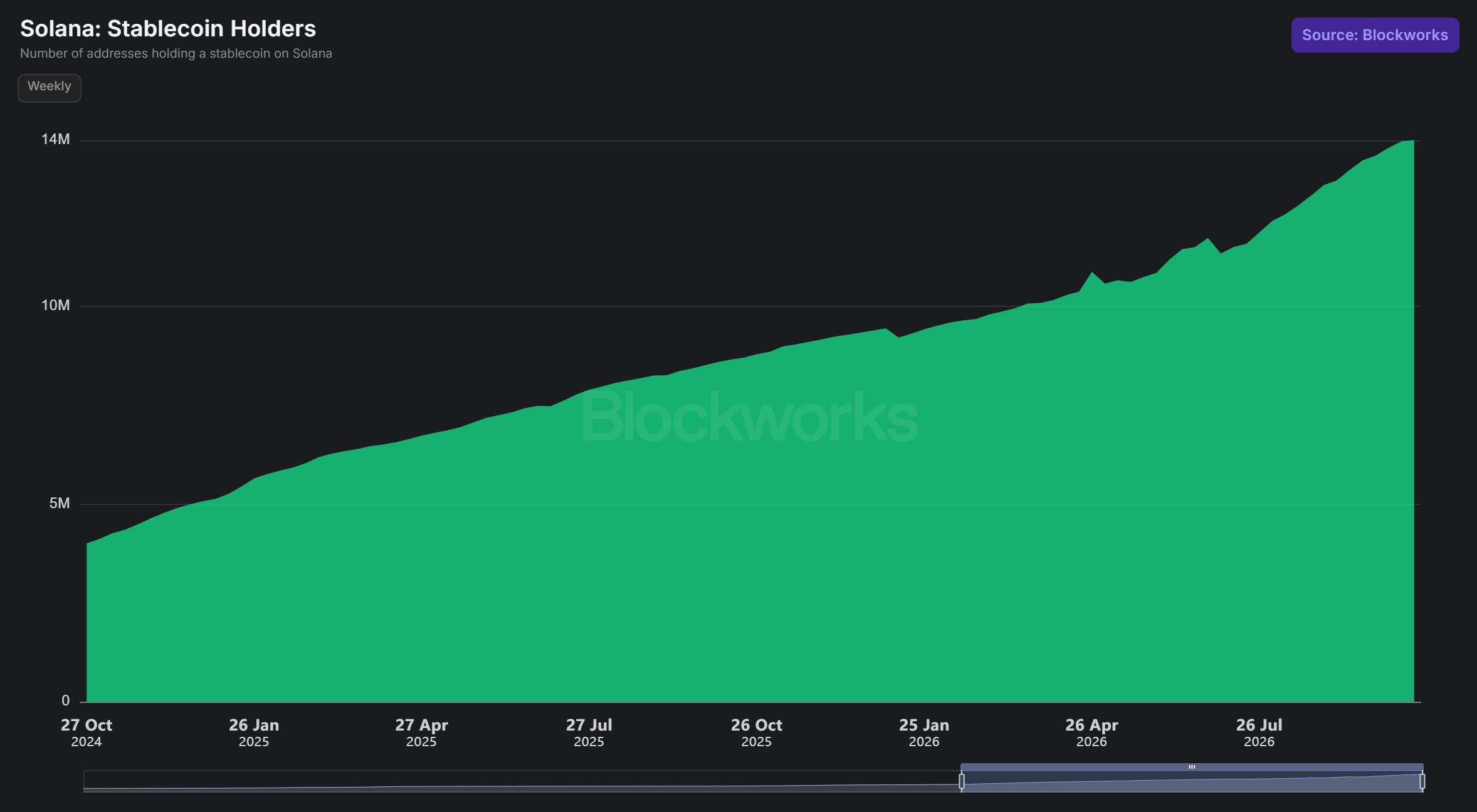
The most striking development in the Solana ecosystem over the past two years has been the explosion of stablecoin accessibility. Data indicates that the number of unique holder address accounts has surged from fewer than 4 million in October 2024 to over 14 million as of October 2026. This represents a more than threefold increase in users holding dollar-pegged assets, such as USDC and USDT, on the Solana blockchain.
This influx of users suggests that the friction of entering the Solana ecosystem has decreased significantly. With more participants holding stablecoins, the network is theoretically better positioned for widespread adoption in areas such as cross-border payments, decentralized trading, and complex DeFi yield farming.
However, the sheer volume of stablecoins sitting on the network—currently hovering at an impressive $15.65 billion—serves as a double-edged sword. While this capital provides the necessary bedrock for liquidity, it remains largely stagnant. The presence of $15 billion in stablecoins indicates that while the "on-ramp" problem has been solved, the "activation" problem—convincing these users to deploy their capital—remains a hurdle.
A Chronological Breakdown of Growth
The trajectory of this expansion has been anything but linear, characterized by periods of rapid acceleration followed by market corrections.

2024: The Foundation
In October 2024, Solana boasted a stablecoin holder base of under 4 million. During this period, the network was primarily focused on stabilizing its infrastructure and attracting institutional-grade stablecoin issuers. The growth was steady, setting the stage for the parabolic interest that would follow.
2025: Gaining Momentum
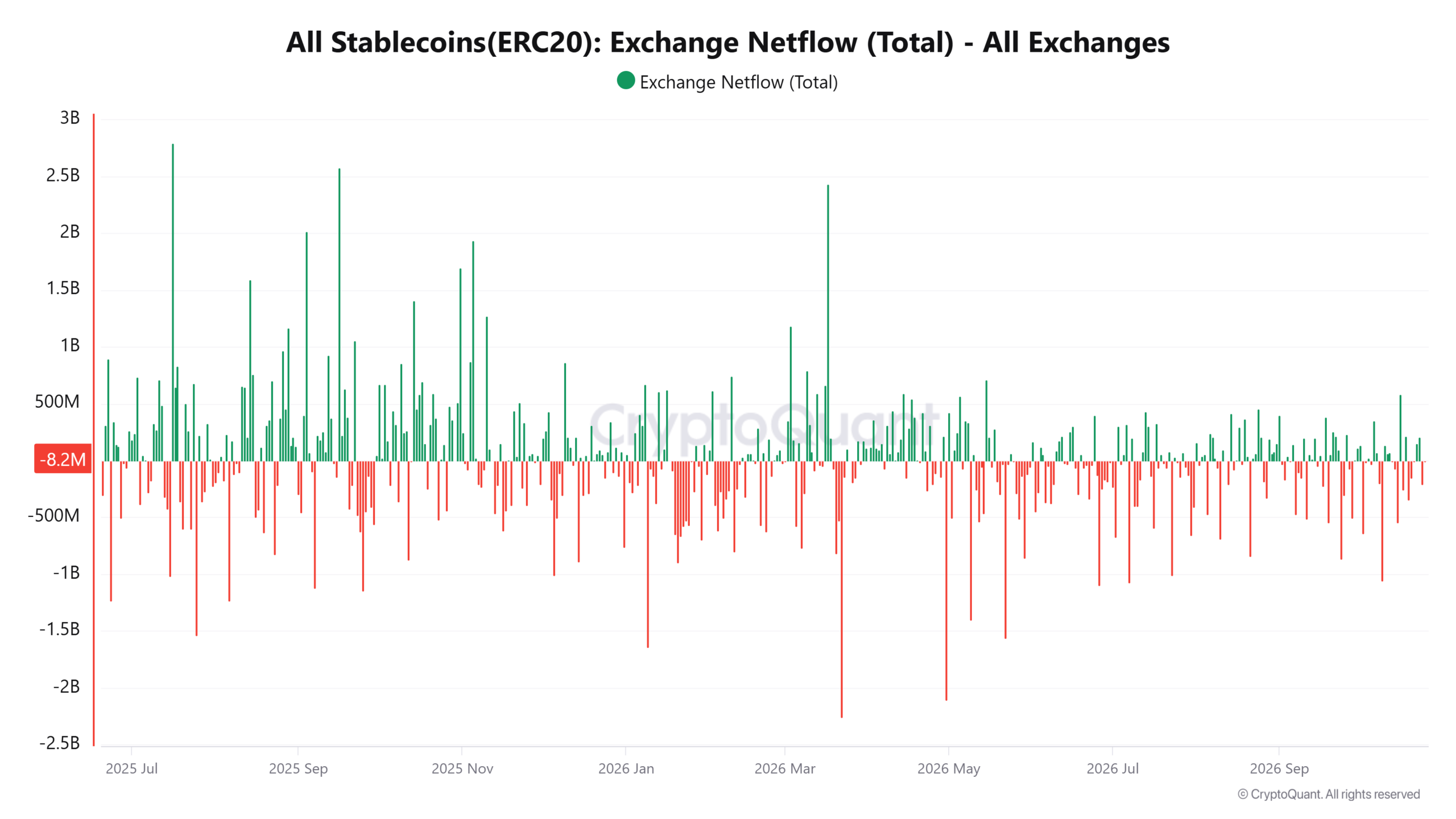
The acceleration of new holders began in earnest during the first half of 2025. As user-friendly wallet interfaces and improved cross-chain bridges became standard, the barrier to entry lowered, leading to a steady climb in address counts. However, by mid-year, the broader crypto market began to experience volatility. Starting in June 2025, analysts observed massive, erratic shifts in exchange netflows. While deposit surges reached peaks of approximately $2.8 billion, suggesting high interest in trading, these were frequently offset by large-scale withdrawals, creating a "revolving door" of capital that prevented the ecosystem from locking in long-term liquidity.
2026: The Disconnect
Throughout 2026, the holder count pushed past the 10 million mark, eventually reaching the 14 million milestone. Yet, this growth was contrasted by a lackluster price performance for SOL. Despite the influx of new capital into stablecoin wallets, the native token saw its value stagnate in the $101–$102 range, failing to capitalize on the increased accessibility of the network.
Supporting Data: The Liquidity Gap
To understand why the Solana ecosystem is currently facing a performance disconnect, one must look at the interplay between exchange netflows, DEX volume, and Total Value Locked (TVL).
The Inflow/Outflow Dilemma
The data from CryptoQuant highlights a volatile landscape. In April 2026, for example, the network saw withdrawals totaling $2.3 billion. These consistent outflows have neutralized the potential gains from earlier, larger inflows. This pattern suggests that traders are using Solana as a temporary "parking spot" for capital rather than a permanent base for long-term investment. Without a sustained, net-positive inflow of capital, the immediate buying pressure required to drive SOL prices upward remains nonexistent.
The DeFi Stagnation
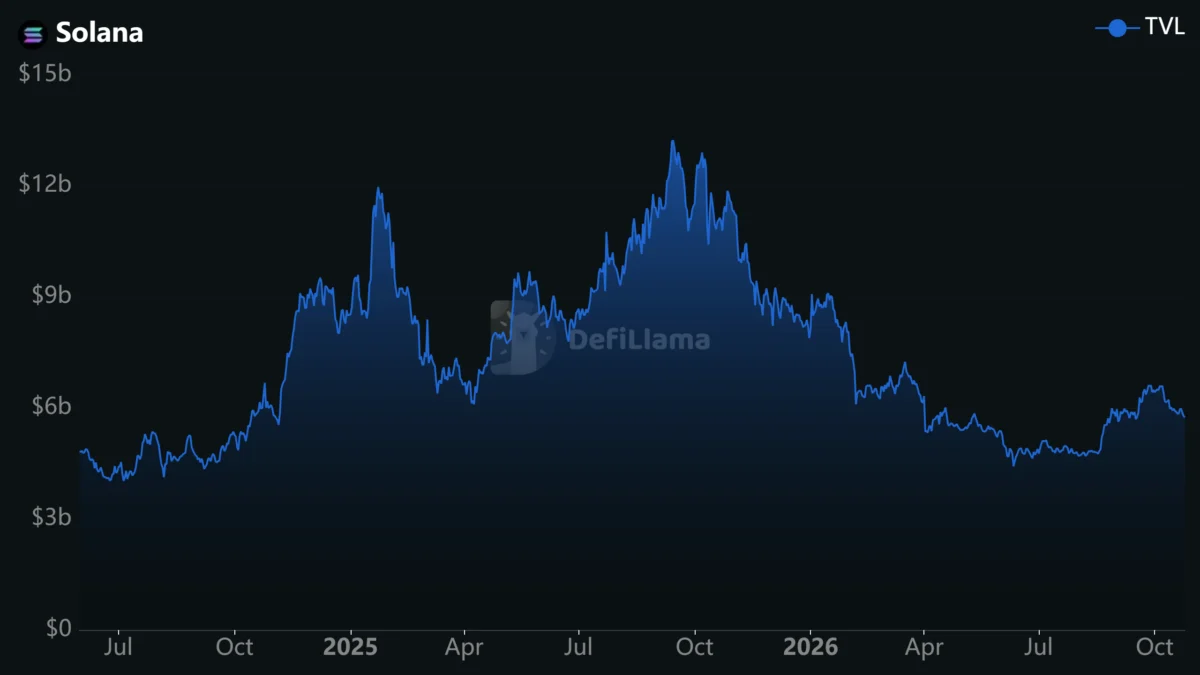
Further evidence of this gap is found in the DeFi sector. While stablecoin supply remains high, decentralized exchange (DEX) volume has actually dipped by approximately 9% on a weekly basis. Additionally, the network’s Total Value Locked (TVL) currently sits at $5.77 billion, and daily network fees have remained flat at approximately $477k.
These metrics are telling. If a network has 14 million holders and $15 billion in stablecoins, one would expect a proportional increase in DEX trading and network fee generation. The fact that these figures are stagnant or declining indicates that the new wave of holders is not actively participating in the DeFi ecosystem.
Official Perspectives and Market Sentiments
While there are no "official" spokespersons for the decentralized Solana protocol, the community sentiment and analyst consensus point toward a period of "liquidity indigestion."
Industry experts suggest that the current stablecoin surge is driven by retail interest and perhaps some institutional testing of the network’s speed. However, until the "utility layer"—the applications that require users to spend or swap their stablecoins—is robust enough to keep users engaged, this capital remains "passive."
Market analysts emphasize that the transition from a "wallet-heavy" ecosystem to an "activity-heavy" ecosystem requires a shift in user behavior. The current market is characterized by caution; investors are holding stablecoins to hedge against volatility, but they are not yet confident enough in the broader market cycle to deploy that capital into riskier assets like SOL or various DeFi tokens.
Implications: The Road Ahead
The data presents a clear roadmap for what the Solana ecosystem must address to reconcile its stablecoin success with market performance.
1. From Holding to Spending
The primary challenge for developers and project founders on Solana is to increase the velocity of money. Having $15 billion on-chain is meaningless if it is not being deployed into liquidity pools, lending protocols, or payment gateways. Efforts to gamify DeFi or introduce more "real-world asset" (RWA) integrations could provide the necessary incentive for holders to move their stablecoins out of static accounts.
2. Sustaining Network Demand
The stagnation in fees and DEX volume is a warning sign. Solana’s value proposition relies on being a high-velocity network. If the fees don’t scale alongside the number of users, the network’s economic model remains under-optimized. There is a pressing need for "sticky" applications that provide continuous utility rather than just speculative trading opportunities.
3. Price Correlation
The failure of SOL to break out of its $100 range despite a massive influx of stablecoin users is a signal that the market is waiting for a "catalyst event." This could be an institutional adoption announcement, a major regulatory milestone, or a surge in network-wide transaction volume that finally forces the market to reprice the token based on actual utilization rather than just network capacity.
Conclusion
Solana stands at a fascinating crossroads. It has successfully mastered the infrastructure needed to hold massive amounts of capital. It has achieved a level of accessibility that most other Layer-1 networks envy. However, the current data underscores a vital truth in blockchain economics: Capital is only as valuable as its velocity.
Until the millions of new stablecoin holders transition from passive storage to active network participation, the "Solana Paradox" will continue. The network has built the highway, and it has successfully attracted millions of cars to the entrance ramp, but the traffic has yet to start moving at the speeds necessary to justify a new rally. The coming months will be critical in determining whether this stablecoin expansion is the precursor to a massive ecosystem boom or simply a record of capital that has nowhere to go.