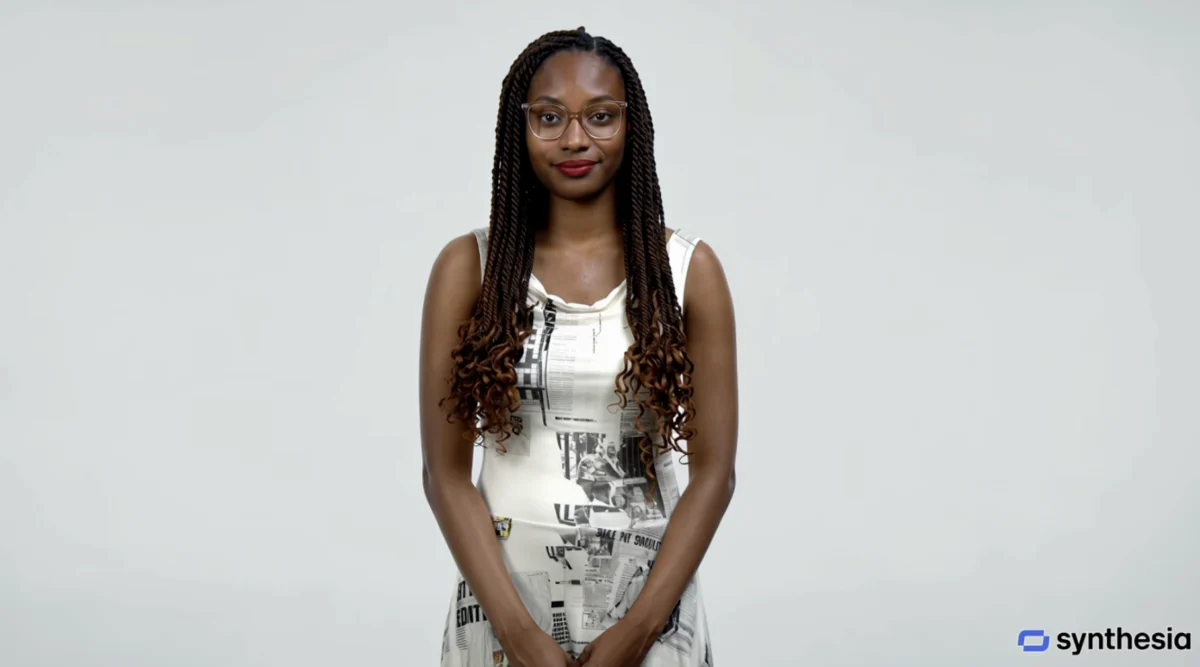
The line between digital representation and physical reality is blurring at an unprecedented pace. This summer, when Alexandru Voica, head of corporate affairs at the video-generation startup Synthesia, sent over a link to the company’s newest team member, the result was jarringly lifelike: an interactive virtual avatar trained to field press inquiries. It wasn’t just a static video; it was an AI-powered entity capable of answering complex questions about the company’s operations in real time.
For many, AI in public relations has been synonymous with generative text—automated press releases or SEO-driven pitches. But Synthesia’s implementation represents a significant leap forward. It is, perhaps, the "final boss" of AI integration in corporate communication. By digitizing a human representative, Synthesia is moving beyond the era of chatbots and into the age of the digital twin.
The State of the Avatar Economy
Synthesia, a U.K.-born juggernaut in the synthetic media space, is currently at the vanguard of a burgeoning industry. Alongside competitors like D-ID, HeyGen, and Colossyan, Synthesia has seen explosive growth as enterprises scramble to automate training, sales, and communication.
The numbers tell a story of rapid adoption. Earlier this year, the company reached a staggering $4 billion valuation, following a previous announcement that it had crossed $100 million in Annual Recurring Revenue (ARR). This financial success is mirrored by its product expansion. While the company initially focused on simple, script-based video generation for corporate training, it has pivoted toward "agentic" systems. Its latest product, Roleplay Sessions, allows employees to practice sales pitches or HR negotiations with an AI that not only listens but evaluates and scores their performance, creating a feedback loop that was previously only possible with human trainers.
Chronology: From Concept to Digital Twin
My journey into the world of digital cloning began at the opening of Synthesia’s new New York office. When the team asked if I wanted to create my own AI avatar, my hesitation was non-existent. The prospect of having a digital proxy—one that could potentially handle the repetitive, administrative burdens of modern journalism—was enticing.
The creation process was surprisingly swift, taking only a couple of days. I stepped into a mini-film studio within the Synthesia office, where the production team captured a series of high-resolution photos and a two-minute voice sample. I was asked to provide consent for the creation of both a "personal" avatar (designed to read scripts verbatim) and an "interactive" avatar (powered by a language model to engage in dialogue).
The technical architecture behind these avatars is a sophisticated assembly of several AI disciplines:
- Voice-to-Text: Converts the user’s spoken input into data.
- Agentic Language Model: An AI brain that interprets the text, determines the intent, and formulates a response based on the training data.
- Text-to-Voice: Synthesizes the AI’s response into a natural-sounding audio stream.
- Video Synthesis: Synthesia’s proprietary model then animates the avatar’s facial expressions and lip-syncing to match the generated audio.
The resulting interactive model was trained specifically on my report regarding why venture-backed startups are more prone to fraud than their bootstrapped counterparts. It was restricted to being "deterministic," meaning it would refuse to veer off-topic, effectively acting as a living, breathing archive of that specific piece of investigative journalism.
The Human Reaction: Between Awe and Uncanny Valley
The public’s perception of AI avatars remains deeply polarized. When I introduced my digital twin to friends and family, the reactions ranged from fascination to profound discomfort.
My mother, upon interacting with the avatar, found it "amazing," yet she couldn’t help but attempt to "break" the system by asking it deeply personal, off-topic questions. The AI’s refusal to answer—dutifully steering her back to the intricacies of venture fraud—created a surreal, slightly chilling effect. She joked, "I don’t remember giving birth to two of you," highlighting the cognitive dissonance that occurs when a familiar face behaves with robotic, pre-programmed logic.
My tech-savvy friends were more critical, noting that while the likeness was high-fidelity, the "humanity" in the voice lacked the nuances of my actual speech. Yet, they admitted that the mere presence of a digital clone was enough to be "creepy." This phenomenon—the gap between a convincing visual representation and the internal "soul" of a human—is the core challenge the industry must face as these tools enter the mainstream.
Implications for Journalism and Society
The existence of my digital twin raises profound questions about the future of professional work. If a journalist can be cloned to deliver news updates or answer reader questions, what happens to the human connection that defines the craft?
The pushback against "AI slop"—the deluge of automated, low-quality content flooding social media—is real. Consumers are increasingly protective of their feeds and wary of synthetic interactions. However, the potential for augmentation is undeniable. Imagine a scenario where a reporter can "be" in ten places at once, or where a subject-matter expert can answer thousands of reader queries simultaneously without sacrificing their own time.
Yet, the bedrock of journalism is trust. Trust is predicated on the idea that the person you are interacting with is accountable, fallible, and human. Can an AI be trusted to hold power to account, or does it merely mimic the structure of authority?
The Future: AI Psychosis and Digital Permanence
As I sat and watched my avatar after it finished its programmed task, waiting for a blink or a micro-expression that didn’t come, I felt a strange sense of existential limbo. The avatar was deterministic, meaning it would never surprise me. But what happens when we move toward non-deterministic models—avatars that are allowed to "think" and evolve?
The potential for "AI psychosis"—where users begin to project consciousness onto these entities—is no longer a science fiction trope. It is a looming psychological reality. I suspect that my generation, Gen Z, will maintain a healthy skepticism of these tools. We are the generation that grew up watching these concepts in movies; we recognize the "sci-fi" nature of it all. Compared to the trend of humanoid robots, digital avatars feel less physically threatening, largely because of the "off" switch: I can always log out.
A New Frontier for Corporate America
Synthesia’s push into the enterprise space suggests that the adoption of digital twins will likely begin in the workplace rather than the media. For companies, the value proposition is clear: efficiency, scale, and the ability to preserve institutional knowledge in a format that feels personal.
However, the transition won’t be seamless. As we incorporate these avatars into our daily lives, we must balance the efficiency of automation with the necessity of human presence. My own experiment proved that while a digital clone can accurately replicate my words and my appearance, it cannot replicate the nuance, the intuition, or the moral weight that comes with being a human journalist.
We are standing at the threshold of a new digital era. Whether these avatars will become our greatest tools for productivity or our most disquieting companions remains to be seen. For now, I have a digital twin that can explain the complexities of venture capital fraud on command. It’s a powerful tool—but I’m still the one who has to write the next story.