For over a decade, the prevailing neuroscientific consensus on the psychedelic experience has been one of entropy: the idea that substances like psilocybin act as a solvent on the brain’s rigid structures. In this view, the brain’s complex networks—the "highways" of communication that regulate vision, attention, and the sense of self—dissolve into a state of hyper-connected, disorganized noise.
However, a groundbreaking study published in Nature (2026) by researchers at Monash University challenges this narrative of "brain chaos." By leveraging advanced artificial intelligence and a unique experimental design, lead neuroscientist Devon Stoliker and his team have unveiled a hidden order beneath the drug-induced turbulence, suggesting that psychedelics do not merely break the brain—they reorganize it.
The Myth of Chaotic Disarray
The long-standing "entropic brain" hypothesis suggests that when an individual consumes psilocybin, the brain’s modularity collapses. Normally, the brain is divided into specialized teams—visual networks handle sight, while the default mode network (DMN) maintains our sense of self. Under the influence of psychedelics, these boundaries erode, leading to a state where disparate regions communicate indiscriminately.
"Think of the networks of the brain as highways," explains Devon Stoliker. "Under psychedelics, these highways break down, and traffic starts moving in all directions at once."
For years, this explanation sufficed to describe the visual "noise" captured by EEG traces. Yet, it failed to account for the most profound aspect of the human experience: the subjective meaning, the clarity of insight, and the long-term therapeutic benefits that participants often report. If the brain were truly descending into random, chaotic noise, why would the resulting experience feel so coherent, significant, and transformative?
Stoliker and his team hypothesized that the "chaos" was not an end state, but an artifact of how scientists were measuring it.
Chronology of the "PsiConnect" Experiment
To test this, the team designed the PsiConnect study, a rigorous experiment involving 62 participants, none of whom had previously used psychedelics. The study was structured to capture the authentic, uninterrupted psychedelic experience without the interference of traditional cognitive testing.
The methodology followed a strict four-part sequence:
- Eight minutes of rest: Establishing a baseline of internal reflection.
- Guided meditation: Focusing on internal states.
- Curated music playlist (11 minutes): Utilizing auditory stimuli to shape the emotional landscape.
- Visual stimulation (6 minutes): Watching clouds move across a screen to engage the visual cortex.
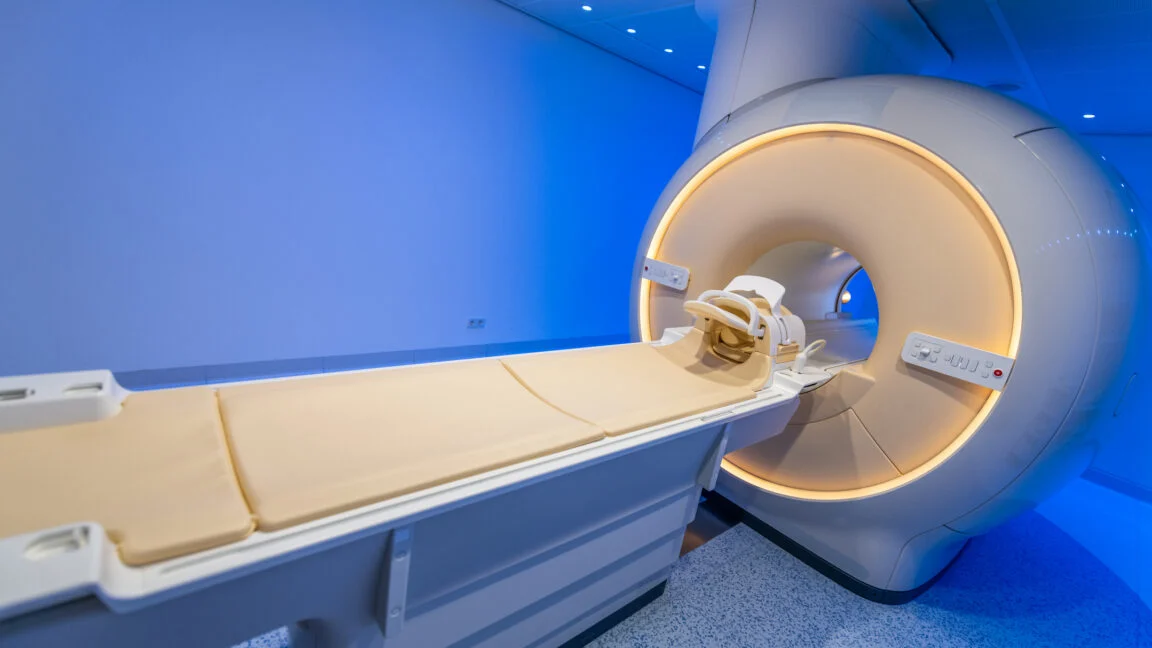
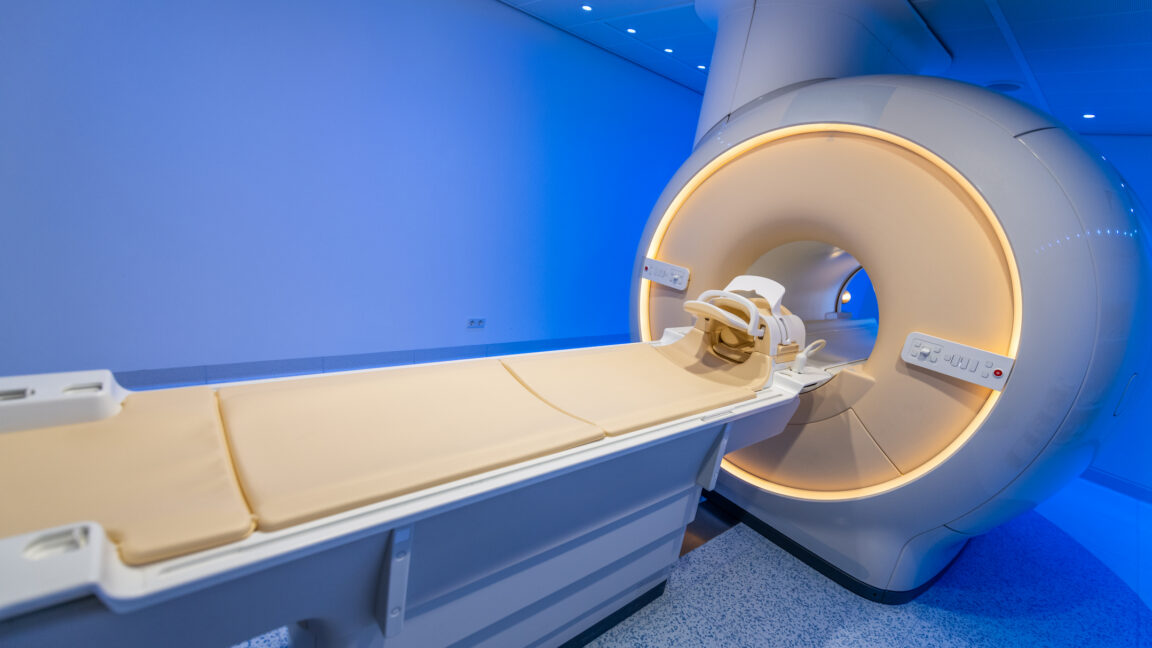
Participants underwent this sequence twice—once while sober and once after receiving a 19-milligram dose of psilocybin. The brain activity was monitored using MRI scanners 80 minutes after dosing and via EEG 150 minutes post-dose. By avoiding active tasks—which researchers note often "ground" a subject and interrupt the very state they are trying to measure—the team maintained high ecological validity, observing the brain as it processed a purely subjective, fluid experience.
Supporting Data: The Disappearance of Boundaries
The results of the PsiConnect study revealed a fascinating shift in how the brain processes reality. When participants closed their eyes, researchers observed that the sway of sensory regions diminished while associative regions—those responsible for imagination, belief, and the sense of self—gained dominance.
"It seems like the brain’s ability to construct reality, imagination, and associations has more dominance over sensory areas," says Stoliker. This shift provides a potential physiological basis for why users experience complex, personally meaningful imagery rather than mere visual hallucinations.
Crucially, the team observed that the "modularity" of the brain—the clean separation of specialist networks—dropped across all four conditions of the experiment. However, the most striking finding involved the "eyes-open" versus "eyes-closed" states. In a sober brain, these two states look drastically different in an MRI scan. Under the influence of psilocybin, that distinction effectively evaporated. The gap between visual network connectivity in open- versus closed-eye states shrank by 85 percent, a finding corroborated by a 50 percent reduction in alpha-band activity—the brain’s traditional "gating" mechanism for visual input.
"When someone takes a psychedelic and sees complex imagery with their eyes closed, there is less boundary between the internal and external world than we ordinarily experience," Stoliker notes.
Hidden Order: The CEBRA Analysis
The most innovative aspect of the Nature study lies in its analytical approach. Traditionally, neuroscientists use two layers of "averaging": they average activity over time (to create a static map) and across people (to cancel out individual noise). Stoliker argued that these methods were precisely why the "chaos" narrative persisted—they were smoothing out the very structures he sought to find.
Instead, the team utilized CEBRA, a machine-learning tool capable of compressing high-dimensional data while preserving the temporal sequence of events. By feeding the moment-by-moment activity of 332 brain regions into the algorithm, the researchers were able to map a "trajectory" for each participant—a unique path through a three-dimensional space representing their brain state.
The results were transformative. Where the raw data appeared as a jumble of signals, the CEBRA trajectories revealed clear, distinct clusters corresponding to the four states: rest, meditation, music, and the movie. The brain was not behaving randomly; it was navigating a highly organized, context-sensitive flow. Furthermore, the accuracy of this "classifier" in identifying which state the participant was in correlated directly with how profound the individual reported their experience to be.

Implications for Therapeutic Intervention
The study’s focus on the Default Mode Network (DMN) and the visual system offers a compelling explanation for the feeling of "embeddedness"—a common psychedelic sensation where the barrier between the self and the universe seems to dissolve. By weakening the distinct boundaries between the narrative self (DMN) and the external world (visual cortex), psilocybin allows for a state where the brain constructs a more integrated reality.
For the field of psychiatry, these findings are revolutionary. If context is not merely a "set and setting" preference but a mechanical variable that shapes brain organization, the clinical environment becomes a precision instrument.
"If we can prove that the room, the playlist, and the instructions are mechanically shaping the brain’s organization, then these become clinical variables we can tune to improve outcomes," says Stoliker.
However, the team urges caution. While the study found that participants experienced positive psychological shifts—such as increased creativity, peace, and connection—the day after their session, the researchers acknowledge significant hurdles.
- Individual Variability: Two people might share an "embeddedness" score but experience the state in wildly different ways.
- Clinical Application: The study was conducted on healthy volunteers. Applying this to patients with severe treatment-resistant depression or PTSD requires further, specialized research.
- Standardization: We have yet to determine the "dosage" of music or visual input that is optimal for specific psychiatric conditions.
A New Framework for Neurobiology
The PsiConnect study marks a pivotal turn in psychedelic research. By demonstrating that the brain’s "disorder" is actually a form of higher-order organization that responds to environment and internal focus, Stoliker and his team have provided a new, sophisticated language for understanding the psychedelic experience.
"Finding this level of organization hidden underneath that disorder and chaos has some really good explanatory value," Stoliker concludes. As we continue to decode the brain’s response to these compounds, the future of mental health treatment may not lie in simply suppressing symptoms, but in carefully, scientifically, and precisely "tuning" the architecture of the mind itself.
Nature, 2026. DOI: 10.1038/s41586-026-10910-z