In the complex ecosystem of modern enterprise technology, the selection of planning, reporting, and analytics software is rarely just an IT procurement task—it is a strategic pivot point that can define a company’s operational efficiency for a decade. With over 20 years of experience navigating the labyrinth of software implementation, industry experts have observed a consistent, immutable truth: the quality of the final solution is directly tethered to the quality of the decision-making process.
Too often, the most critical mistakes in software procurement remain hidden until long after the ink has dried on the contract. It is only when consultants are knee-deep in implementation and organizational expectations have been set that the cracks—functional gaps, integration failures, and performance bottlenecks—begin to show.
The Triggers of Change: Why Companies Pivot
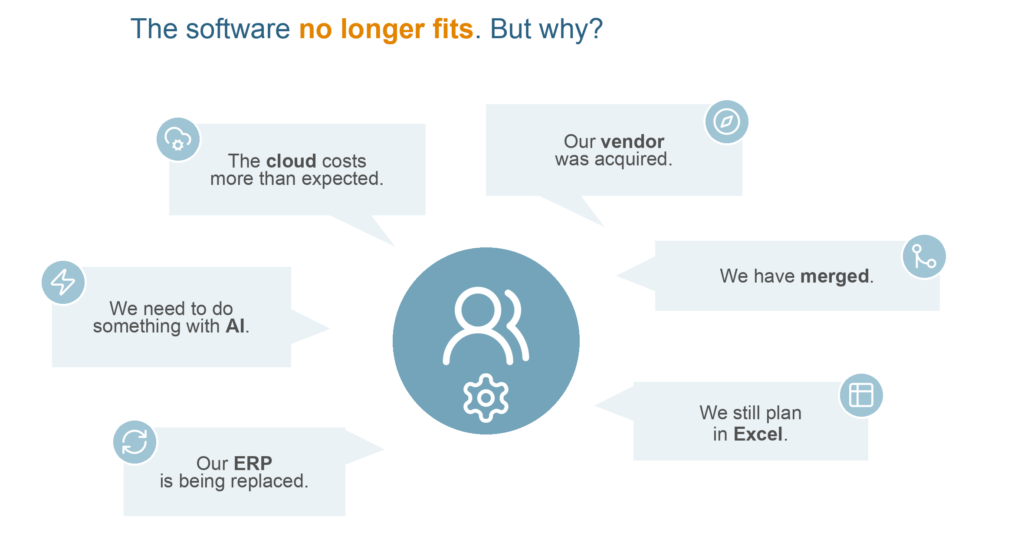
Software selection cycles are rarely arbitrary. They are usually ignited by specific, high-pressure triggers that force an organization to re-evaluate its current technological posture.
- Strategic Uncertainty: Vendor acquisitions or shifts in product roadmaps can leave existing clients stranded on aging infrastructure.
- Economic Pressures: Ballooning cloud consumption costs often force CFOs to seek more efficient, scalable alternatives.
- Structural Transformation: Major ERP migrations or company mergers frequently render legacy systems obsolete, necessitating a clean-slate approach to data architecture.
- The Excel Trap: While spreadsheets offer unmatched flexibility, they introduce profound risks regarding data integrity, version control, and scalability.
In this volatile landscape, the market is expanding rapidly. Established platforms are integrating AI at breakneck speed, while niche players offer specialized capabilities that can outperform legacy giants. However, most organizations possess a dangerously narrow view, often only familiar with two or three major products. Relying on such a limited field of vision for an investment intended to last years is a recipe for strategic misalignment.
The Illusion of Rigor: Why Formal Processes Fail
Many organizations believe they are performing "due diligence" simply by checking boxes. A standard selection process might include a formal requirements catalog, a spreadsheet of scoring models, a series of vendor presentations, and a final, mathematically calculated ranking.
However, this outward display of rigor is often a facade. The value of a selection process is not determined by the presence of a scoring model, but by the intelligence of the questions asked. If the criteria are weak, the process becomes susceptible to "vanity metrics"—shiny dashboards, polished UI, and trendy AI buzzwords—that mask underlying weaknesses in calculation logic, data integration, and long-term maintenance requirements.
Furthermore, the influence of biased advisors cannot be overstated. Implementation partners and IT service providers frequently operate within the constraints of their own portfolios. When an advisor earns revenue based on the licenses they sell or the specific technology they implement, their "neutral" recommendation is often a reflection of their commercial interest rather than the client’s best architectural fit.
Even the rise of Generative AI has complicated the selection process. While AI can draft impressive requirement lists, these tools often produce generic, "lowest-common-denominator" questions that every vendor can answer with a resounding "yes." These AI-generated catalogs fail to probe the depths of real-world project experience, partner quality, or specific architectural fit.
Data-Driven Insights: What the Evidence Shows
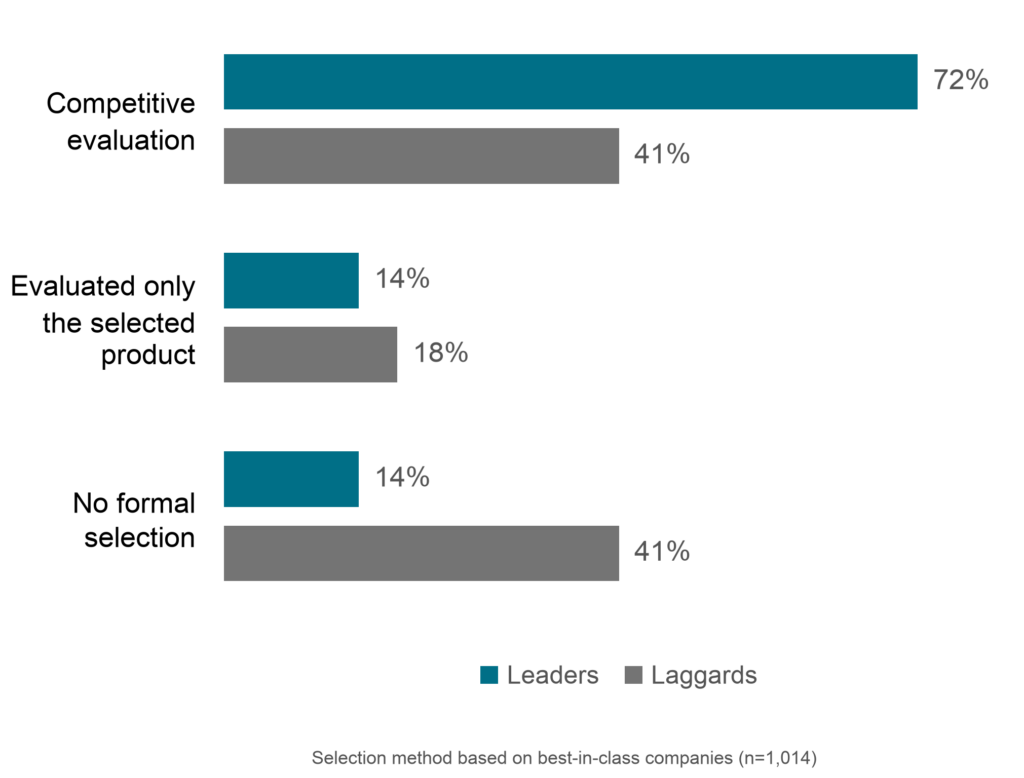
A comprehensive analysis from the BARC BI & Analytics Survey offers an empirical look at the relationship between methodology and business value. In a study of 1,014 organizations, the data revealed a striking divide between "leader" companies—defined as the top 10% in terms of business benefits—and "laggards."
- 72% of Leaders conducted a formal, competitive evaluation before finalizing their software choice.
- Only 41% of Laggards followed a similar rigorous path.
The implication is clear: high-performing organizations view software selection as an investment in risk mitigation. They understand that a hasty, informal decision leads to a cascade of negative outcomes: low user adoption, functional gaps, high maintenance costs, and, ultimately, the premature (and expensive) need to replace the system.
A Structured Blueprint for Success
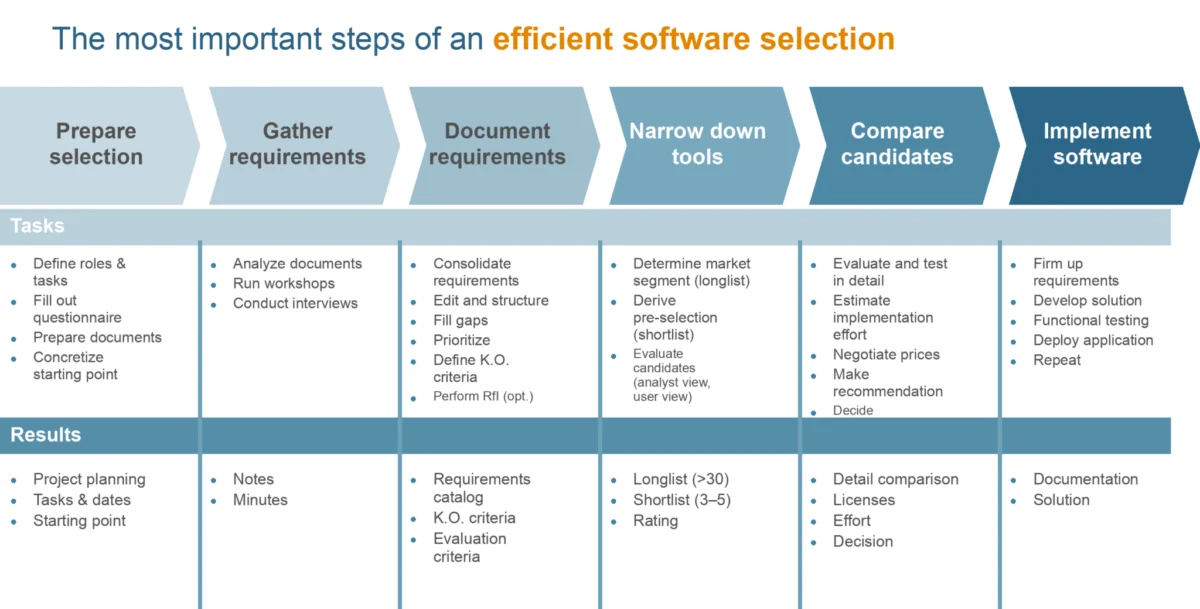
To avoid the pitfalls of subjective selection, experts recommend a structured, six-phase methodology that removes the guesswork from the equation.
Phase 1: The Strategic Definition
Before viewing a single demo, the organization must define its target state. This includes documenting current pain points, mapping the required data flows, and clearly defining which processes fall inside or outside the project scope.
Phase 2: Defining Meaningful Criteria
Move away from generic questions like "Does this software support planning?" Instead, focus on granular requirements:
- How does the tool handle complex calculation logic?
- What is the effort required to modify models as the business grows?
- How seamless is the integration between operational planning and financial reporting?
Phase 3: The Weighted Scoring Model
Weights must be assigned to criteria before the vendor presentations begin. Without pre-set weightings, a persuasive sales pitch can subtly shift the decision-making team’s priorities, causing them to favor aesthetic features over functional necessity.
Phase 4: The Competitive Proof of Concept (PoC)
For high-stakes investments, a PoC is the ultimate equalizer. It allows the project team to look "under the hood" and observe how the software performs with their actual data. A successful PoC should answer:
- Performance: How does the system handle real-world data volumes?
- Implementation Quality: Does the partner understand the specific business requirements?
- Usability: How quickly can the team build and iterate on the models?
Comparing at least two, preferably three, vendors in a head-to-head PoC provides the necessary context to make a truly informed choice.
The Role of Independent Analysis
As organizations grapple with the complexity of these decisions, the value of an independent, objective advisor becomes paramount. Firms like BARC Research act as a third party that does not sell licenses or receive commissions, ensuring that the primary goal remains the client’s long-term success.
By leveraging historical data, comparative benchmarks, and deep market knowledge, an independent advisor can help design a "test brief" that forces vendors to demonstrate their capabilities in areas that actually matter to the business. This reduces the internal workload and, more importantly, reduces the risk of choosing a platform that will fail to scale.
Looking Ahead: The Future of Decision-Making
The process of choosing enterprise software is undergoing a transformation. As the technology becomes more sophisticated, the selection process must become more scientific.
Organizations looking to optimize their next cycle should start by identifying the right team: a cross-functional group comprising process experts, future power users, IT architects, and, crucially, an executive sponsor who can maintain the project’s momentum. Delays are the enemy of success; as the weeks pass, requirements change, and the market landscape shifts, potentially rendering the initial selection work obsolete.
As we look toward the future, professional development in this area remains vital. For those interested in deeper insights, the upcoming BI & Analytics Conference in Vienna on November 24, 2026, will feature Dr. Christian Fuchs, who will specifically address the critical evaluation criteria that persist long after the vendor’s sales pitch ends.
Ultimately, the goal is simple: to make a defensible, data-backed decision that serves as a foundation for growth rather than a source of technical debt. By moving away from informal, vendor-led selection and toward a structured, evidence-based approach, companies can ensure that their software investments finally yield the dividends they were promised.