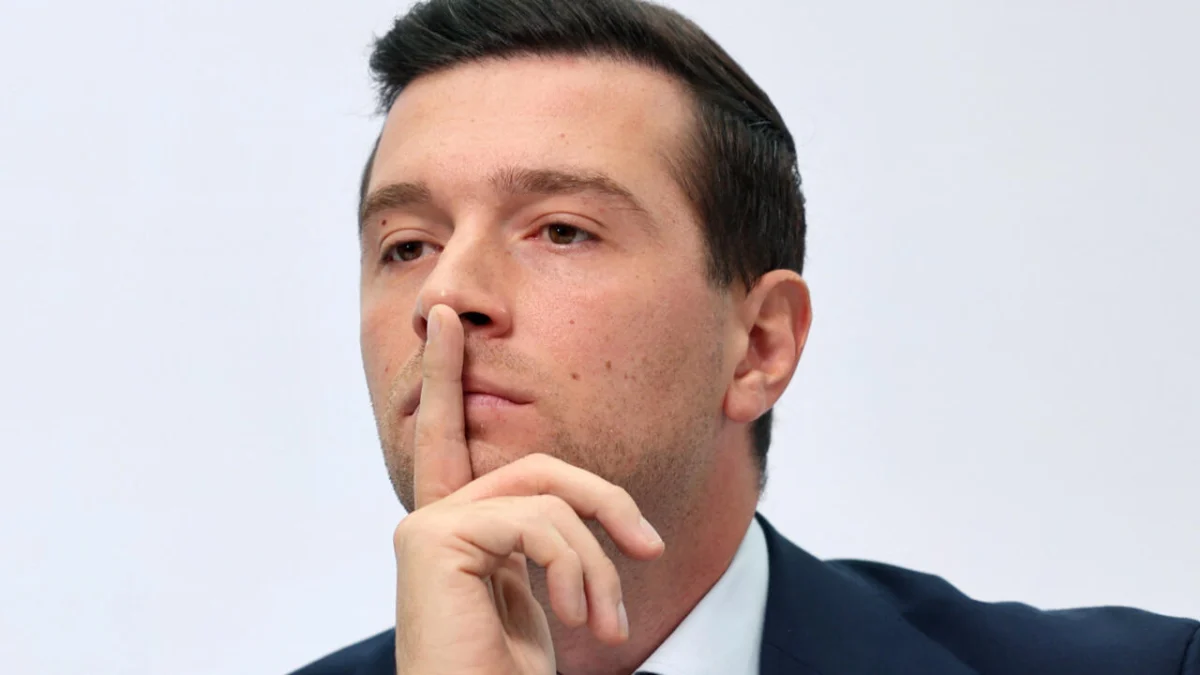
The political future of Jordan Bardella, the president of France’s National Rally (RN) and a central figure in Marine Le Pen’s long-term strategy to reshape the far-right, is currently teetering on the edge of a significant scandal. A series of investigative reports has accused the young political star of harboring and expressing virulent anti-Semitic views during his early years as a youth activist. As the party attempts to distance itself from its historical roots of extremism, these latest revelations threaten to unravel years of carefully curated public relations efforts.
The Core Allegations: Digital Footprints of a Darker Past
The controversy erupted following a bombshell report by the French investigative outlet Mediapart, which brought to light digital communications allegedly authored by Bardella during his formative years in the party, then known as the National Front (Front National). According to Mediapart, the messages, which date back to 2013, contain explicit, inflammatory rhetoric regarding Jewish people.
One of the most damning excerpts allegedly attributed to the young Bardella reads: "The Jew has to dominate other peoples, crush them, and rob them; a Zionist is necessarily a Jew, and fundamentally so." The publication of these screenshots has sent shockwaves through the French political establishment, forcing the RN—a party that has spent over a decade attempting to "de-demonize" its image—into a defensive posture.
A Chronology of the Scandal
The unfolding of this crisis has been rapid and characterized by a clash between investigative journalism and the party’s high-stakes legal maneuvering.
- September 28–29, 2026: Mediapart publishes its initial investigation, detailing the alleged anti-Semitic chat logs. The report immediately dominates the French news cycle, questioning the authenticity of the "new" RN image under Bardella’s leadership.
- Late September 2026: Bardella attempts to defuse the situation by publicly stating that he has "no Facebook account" and that he has not utilized the platform for an extended period.
- September 28 – October 2, 2026: According to the investigative weekly Le Canard enchaîné, a massive digital "cleanup" operation occurs. The publication claims to have obtained evidence that all data from an old account once associated with the young activist was systematically purged during this four-day window, directly following the Mediapart revelations.
- October 2026: Mediapart releases follow-up findings, claiming to have identified structural and linguistic similarities between the alleged old Facebook account and the verified, official X (formerly Twitter) account currently used by the party leader.
- The Present: Bardella’s team announces a formal complaint for defamation, while the party remains in a state of high alert, framing the incident as a coordinated "total war" against their electoral ambitions.
The "Digital Scrubbing" Allegations
The report from Le Canard enchaîné adds a new layer of complexity to the scandal: the accusation of obstruction. By alleging that data was deleted from an old activist account precisely when the Mediapart story broke, the satirical weekly has shifted the narrative from "what did he say in 2013?" to "what is he hiding in 2026?"
For a politician whose brand is built on transparency and the modernization of the far-right, the timing of this digital deletion is highly damaging. It directly contradicts his recent public assertions that he was no longer an active user of the platform. If forensic investigators can prove that an account linked to his identity was scrubbed while the public was asking questions, it will be difficult for the RN to characterize the affair as merely "fake news" or an elaborate smear campaign.
The Official Response: Deny, Deflect, and Litigate
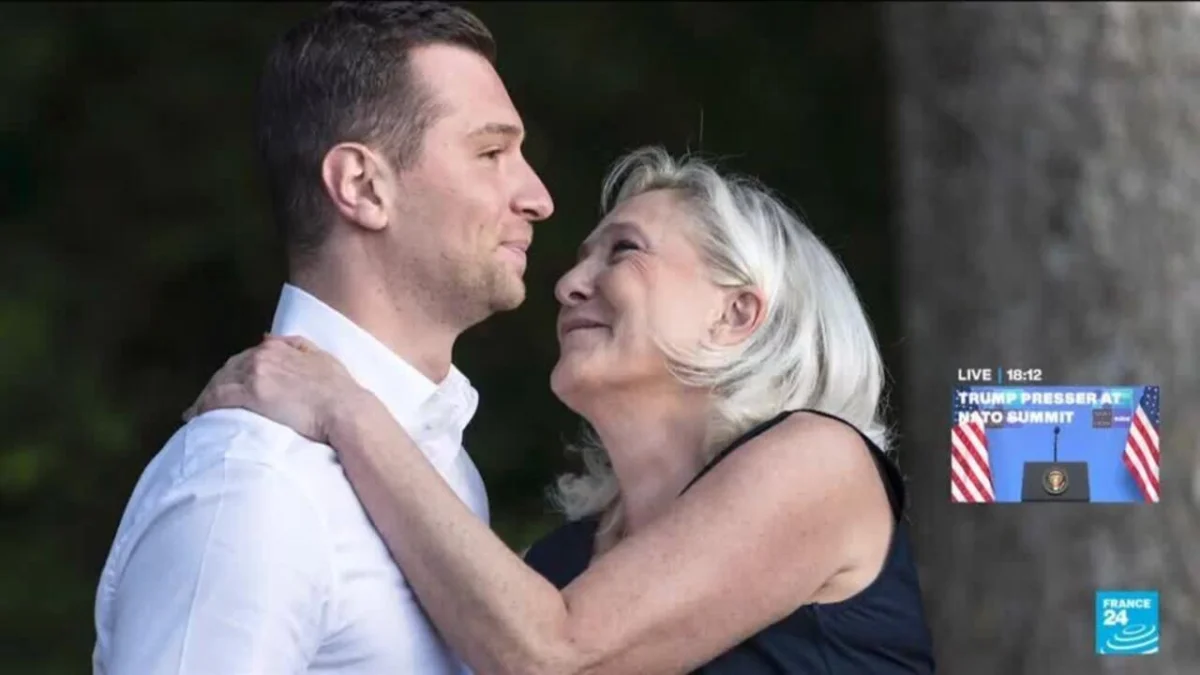
The National Rally has responded with the tactical rigor of a campaign machine under fire. Marine Le Pen, who has invested heavily in Bardella as the face of the party’s potential future in the Élysée Palace, has doubled down on her support. She has publicly declared "complete confidence" in her protégé, portraying the allegations as an attempt by the mainstream media and political elites to sabotage the party’s steady march toward the presidency.
Bardella’s entourage has been equally categorical. In a statement released to the press, his representatives denied that he had ever logged into the account in question, much less deleted any content. "Jordan Bardella has never deleted any messages, nor has he had access to such an account," the statement read, confirming that a defamation lawsuit would be filed against the publishers of the claims.

The party’s primary defense strategy has been to classify the documents as fabricated. By branding the screenshots "fakes," they aim to place the burden of proof back onto the journalists, hoping to delegitimize the investigative process rather than engaging with the substance of the alleged comments.
Implications for the National Rally
The implications of this scandal extend far beyond the personal reputation of Jordan Bardella. The RN’s strategy of "de-demonization"—a process initiated by Marine Le Pen to shed the party’s historical associations with anti-Semitism, Holocaust denial, and xenophobia—relies heavily on the perception that the party has moved past its radical, fringe origins.
1. The Erosion of Credibility
If the electorate becomes convinced that the party’s current leader held—and potentially still holds—extreme anti-Semitic views, the thin veneer of respectability the RN has cultivated will likely dissolve. This could alienate moderate voters who have recently warmed to the party due to its focus on economic populism and immigration.
2. Internal Party Dynamics
Le Pen has pinned her hopes for the next presidential election on Bardella. If he becomes a political liability, the party could face a leadership crisis. The cohesion of the RN is currently tested by the pressure of this scandal; while the inner circle remains loyal, the rank-and-file may begin to worry about the electoral consequences if the controversy continues to dominate the headlines.
3. The Legal and Political Battlefield
The move toward litigation is a double-edged sword. While it allows the RN to claim they are fighting for the truth, it also invites a judicial discovery process. If the courts demand access to digital records or testimony, the party risks having the "digital scrubbing" claims validated by a judge. Conversely, if the courts rule in their favor, it could serve as a powerful exoneration that allows them to move past the scandal.
Conclusion: A Turning Point for the French Far-Right
The allegations against Jordan Bardella serve as a stark reminder that in the age of digital archives, the past is never truly buried. For a party that has worked relentlessly to convince the French public that it is a viable, moderate alternative for governance, these revelations are a major setback.
Whether or not the specific screenshots provided by Mediapart are proven to be authentic in a court of law, the political damage is already manifesting. The incident has reopened the debate regarding the core ideology of the National Rally. As France approaches a pivotal electoral cycle, the question of whether the party has truly changed, or if it is merely masking its historical face, will be at the forefront of the national consciousness. For now, Bardella remains in the eye of the storm, fighting to protect his reputation and the political future of the movement that defined his youth.