In an era defined by poly-crises—ranging from the existential risks posed by rapid artificial intelligence development and the escalating climate emergency to the precarious instability of a multipolar global order—the international community is searching for the root causes of systemic failure. While analysts traditionally point to resource scarcity, ideological polarization, or the breakdown of diplomatic norms, a provocative and increasingly prominent intellectual movement has surfaced. A growing cohort of scholars, cultural critics, and public intellectuals is positing a startling thesis: that "empathy," long heralded as the bedrock of civil society and moral governance, may be a primary driver of contemporary instability.
The Philosophical Shift: From Virtue to Liability
For centuries, empathy has been categorized as a fundamental human virtue—the capacity to step into another’s perspective, share their burden, and act with benevolence. However, a recent wave of literature has begun to dismantle this consensus, framing empathy not as a social glue, but as a "toxic" psychological mechanism that obscures objective reality and undermines the survival instincts of nations.
The discourse has gained significant traction through high-profile publications that challenge the progressive orthodoxy of global compassion. Among the most vocal critics is Allie Beth Stuckey, an influential voice within Christian Evangelical circles. In her recent work, Toxic Empathy, Stuckey argues that the modern fetishization of empathy has blinded society to fundamental moral equations. According to Stuckey, when empathy is weaponized to prioritize the subjective feelings of one group over the objective safety and sovereignty of the whole, it leads to a collapse of civil order.
"Toxic empathy blinds a person to both reality and morality," Stuckey writes, noting that it often forces individuals to ignore the victims on the other side of a policy decision. She cites the ongoing debate over immigration and asylum-seeking as a case study: by focusing exclusively on the humanitarian plight of the migrant, she argues, policymakers obscure the systemic chaos, security risks, and long-term societal degradation enabled by unmanaged border crises.
Chronology of the Debate: The Erosion of Traditional Empathy
The intellectual pivot away from universal empathy did not happen in a vacuum. To understand the current skepticism, one must look at the timeline of the post-Cold War era.
- The 1990s and Early 2000s (The Era of Humanitarian Intervention): The international order was defined by the "Responsibility to Protect" doctrine. Empathy for marginalized populations was the primary driver for foreign policy, leading to interventions in the Balkans and, later, the Middle East.
- 2010–2015 (The Rise of Identity-Based Politics): As global migration patterns shifted, the Western emphasis on empathy began to collide with domestic economic anxiety. The debate over how much "compassion" a state owes to non-citizens vs. its own populace became a flashpoint in national elections.
- 2020–Present (The "Suicidal Empathy" Thesis): The post-pandemic environment, characterized by high inflation and a return to great power competition, has accelerated the critique. Analysts like Gad Saad have moved the debate from moral philosophy into the realm of evolutionary biology.
Evolutionary Psychology and "Suicidal Empathy"
Perhaps the most rigorous challenge to the empathy consensus comes from Gad Saad, a professor and author known for applying evolutionary psychology to cultural phenomena. In his latest book, Suicidal Empathy, Saad argues that while empathy is an evolutionary trait designed to foster cooperation within small, tight-knit tribal units, it is fundamentally ill-equipped to serve as a framework for state-level policymaking.
Saad’s argument is rooted in the concept of biological fitness. When a society adopts a policy of "unbounded empathy"—extending the same level of care to those who do not share its values or contribute to its survival as it does to its own citizens—it effectively commits a form of societal suicide. "While the ability to understand and share the feelings of others is a noble virtue," Saad asserts, "it can lead entire societies astray when it is the primary basis for policymaking."
From this perspective, the critique is not against kindness, but against the misapplication of an emotional reflex. In the context of great power conflict, for instance, Saad suggests that if a nation prioritizes empathy for an adversary’s grievances over the objective requirements of national defense, it risks being exploited by regimes that do not share the same psychological constraints.
Supporting Data: The Cost of Compassionate Policy
To support these arguments, critics often point to a specific set of data points where humanitarian impulses have clashed with empirical outcomes:
- Economic Strain on Municipalities: In several major Western cities, the rapid influx of asylum seekers—driven by empathetic policy mandates—has led to the depletion of public school budgets and municipal resources, causing friction with local populations.
- The "Safety Gap": Sociological studies indicate that when public discourse prioritizes the "empathic narrative" over "statistical reality," public trust in institutions declines. This erosion of trust is often cited as a precursor to the rise of populist movements that reject empathy entirely.
- Diplomatic Vulnerability: In international relations, the "empathy gap" between democratic nations and authoritarian regimes is stark. Critics argue that authoritarian states exploit democratic leaders’ desire to be seen as "empathic" to extract concessions or ignore violations of international law.
Official Responses and Institutional Resistance
The mainstream academic and political establishment has largely resisted this shift in rhetoric. Many human rights organizations argue that the "toxic empathy" argument is a dangerous precursor to the abandonment of human rights.
"The suggestion that empathy is a threat is a misreading of history," says a spokesperson for a leading global policy think tank. "The international order was built on the premise that states have a moral obligation that transcends their borders. To discard this is to invite a return to the brutal nationalism of the early 20th century."
Furthermore, government officials emphasize that diplomacy requires a level of empathy—the ability to understand an adversary’s motivations is not the same as agreeing with them. They argue that "strategic empathy" is a critical tool for conflict resolution and that the critics are conflating empathy with "naivety."
Implications for the Future of the International Order
The debate over the role of empathy carries profound implications for the future of governance. If the "toxic empathy" school of thought continues to gain influence, we may see several shifts in the coming decade:
1. The Realist Turn in Policy
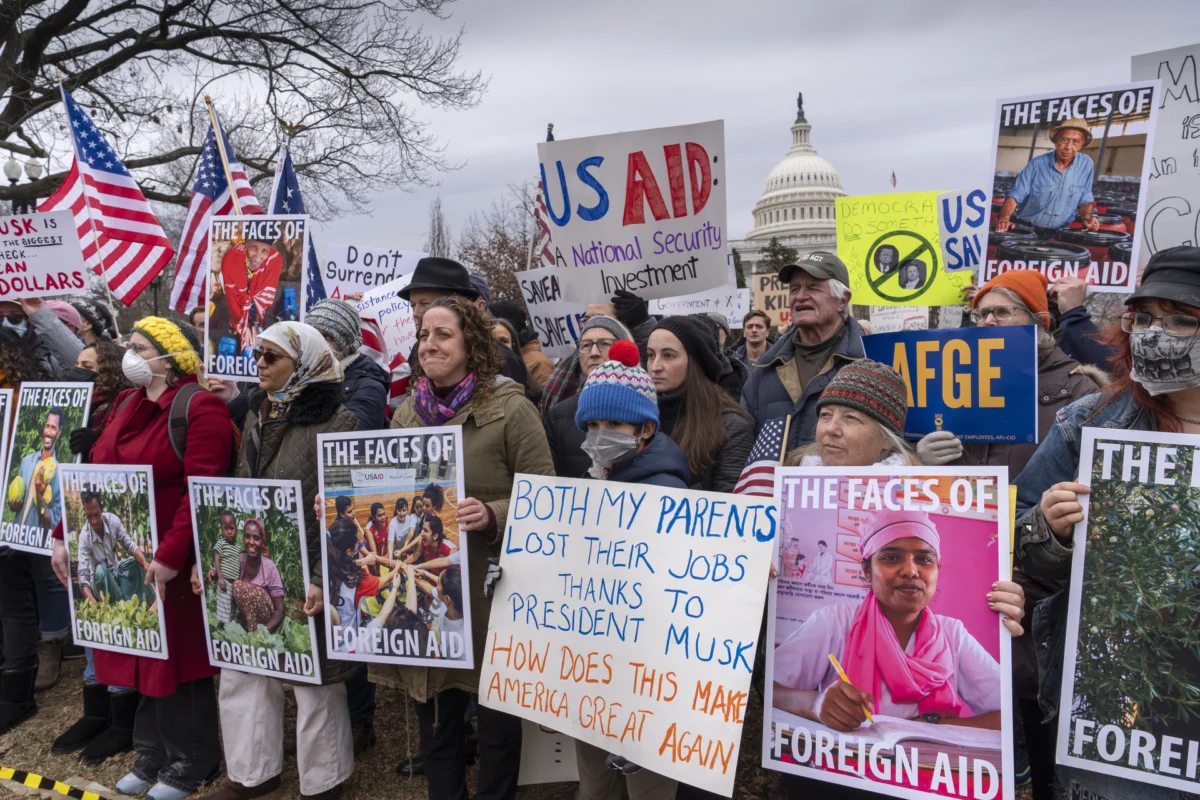
Policymakers may move toward a more "realist" framework where empathy is explicitly subordinated to national interest. This would likely result in stricter border controls, more guarded diplomatic stances, and a reduction in foreign aid focused on humanitarian rather than strategic goals.
2. The Polarization of Civic Values
As the definition of "morality" splits, society may find itself unable to agree on basic principles of conduct. If one side views empathy as a "virtue" and the other views it as a "suicidal liability," the prospects for domestic compromise diminish significantly.
3. The Impact on Global Institutions
International organizations, such as the United Nations, which rely heavily on the principle of universal human dignity (an empathetic construct), may find their funding and influence curtailed. If states prioritize their own survival over the collective "empathic" goals of the international community, the existing post-WWII architecture could face an existential crisis.
Conclusion: A Delicate Balance
The discourse surrounding "toxic empathy" is essentially a struggle to define the boundaries of the modern state. Are we a global community held together by a shared responsibility for all, or are we a collection of sovereign entities whose primary duty is the survival of our own?
The critics, from Stuckey to Saad, provide a necessary, if uncomfortable, reminder: feelings are not a substitute for strategy. Yet, the defenders of empathy remind us that a society stripped of its ability to care for the vulnerable risks losing the very humanity it seeks to defend. As the world navigates the perils of AI, climate change, and geopolitical rivalry, the challenge will be to find a middle path—one where empathy is a tool for understanding reality, not a blindfold that prevents us from seeing it.
Ultimately, the debate is not about whether to be kind, but about where the limits of that kindness lie in an increasingly dangerous and competitive world. Whether this shift in rhetoric marks the death of an era or a necessary correction toward a more pragmatic future remains to be seen. However, one thing is certain: the conversation has fundamentally changed. Empathy, once the unquestioned moral north star of the West, is now under the microscope, and the findings are forcing a painful re-evaluation of what it means to be a "good" state in a "bad" world.