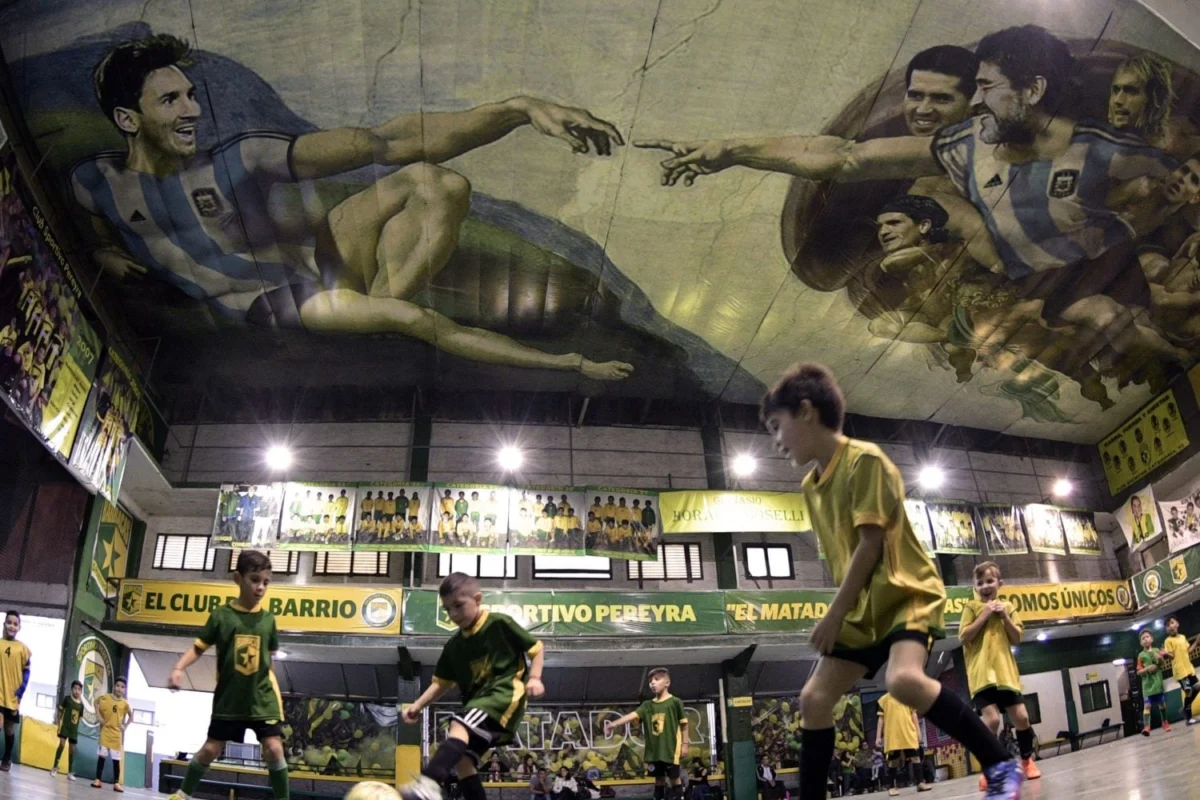
On the evening of October 6, 2026, the Estadio Monumental in Buenos Aires witnessed an event that felt more like a state occasion than a mere sporting fixture. Lionel Messi, the man who spent over two decades redefining the parameters of footballing excellence, played his final match for the Argentine national team. In a 3-0 friendly victory against Benin, Messi did what he had done for twenty-one years: he orchestrated the play, assisted two goals, and etched his own name onto the scoresheet.
As the final whistle blew, the cacophony of 85,000 voices—hoarse from hours of rhythmic chanting—fell into a expectant hush. Messi, center stage, picked up a microphone. His address was not merely a farewell to a jersey; it was the closing of a long, often tumultuous, and ultimately redemptive chapter in Argentine history. Speaking of his late father and the enduring honor of representing his country, he declared, "I am proud to be Argentine." For those who had tracked his journey since he was a teenager in Barcelona, those words carried the weight of a hard-won peace.
A Chronology of the "Love Under Construction"
The trajectory of Messi’s relationship with Argentina was not linear. For years, it was defined by a painful dissonance. In January 2012, during an interview in Barcelona for a Time magazine cover story, a young Messi gripped his chair, avoiding eye contact, and spoke defensively about his patriotism. At the time, the Argentine public was vocally skeptical; critics labeled him a "Catalonian" or a "mercenary," questioning why the boy who left for Spain at 13 could not replicate his club miracles for his home nation.
The resentment reached its nadir between 2014 and 2016, a period during which Argentina lost three consecutive major tournament finals. Messi became the lightning rod for national frustration. Even the legendary Diego Maradona famously questioned in 2015 whether Leo was truly "Argentine or Swedish." The psychological toll was profound; as late as 2019, Messi revealed that his son had asked him, "Why do they kill you in Argentina?"
The turning point was the "love under construction"—a phrase coined by biographer Sergio Levinsky. The construction began in earnest with the 2021 Copa América, followed by the seismic shift of the 2022 World Cup in Qatar and another Copa title in 2024. By the summer of 2026, the skepticism had evaporated. Even in a World Cup final loss to Spain, the Argentine public recognized that Messi had been the engine of their journey, shielding him from the blame that would have once been cast upon his shoulders.
Supporting Data: The Shifting Public Sentiment
The statistical transformation of Messi’s standing among his countrymen is stark. Recent polls conducted by Giacobbe and Asociados reveal that 73 percent of Argentines now consider Messi the greatest player in the nation’s history, a significant lead over the 23 percent who still favor Maradona.
However, sociopolitical data suggests a complex, nuanced hierarchy of idolization. While Messi is favored for his professional virtues—leadership, humility, and consistency—Maradona remains the preferred cultural mirror. In a study comparing the two, 57 percent of respondents felt they resembled Maradona in "values and way of being," compared to 39 percent for Messi. This indicates that while Messi represents the pinnacle of individual aspiration, Maradona continues to represent the raw, often chaotic, national character of Argentina.
Further class-based analysis highlights this divide. Polling by Opina Argentina shows that while Messi’s support is broad, he draws significantly higher approval from middle- and upper-income demographics. Politically, the divide is equally visible, with Messi favored by center-right voters, while Maradona remains the enduring icon of the Peronist left.
The Cultural Archetype: El Pibe vs. The Global Elite
To understand why Messi will always be viewed differently than Maradona, one must look at the anthropological roots of Argentine football. As identified by anthropologist Eduardo P. Archetti, the ideal Argentine footballer is the pibe—the scruffy, street-smart urchin from a vacant lot who outwits the establishment.
Maradona, hailing from the impoverished Villa Fiorito, was the living embodiment of the pibe. His 1986 performance against England, occurring in the shadow of the Falklands War, cemented him as a political figure of defiance. He was a man who embraced Fidel Castro and engaged in global iconoclasm. In contrast, Messi’s ascent through the methodical, elite academy of FC Barcelona, while arguably more technically refined, lacks the visceral, revolutionary grit of the Maradona mythos.
Sociologist Pablo Alabarces, writing for New Lines Magazine, noted that while Messi maintains a neutral, almost apolitical stance—highlighted by his appearance alongside U.S. President Donald Trump—he demonstrates what some perceive as "indifference." For a country that defines itself through struggle, passion, and political fervor, Messi’s clean, disciplined life is a model to be admired, but not necessarily a legend to be lived.
Official Perspectives and Legacy
The passing of the mantle is perhaps best illustrated by the differing ends of their careers. Maradona’s national team tenure ended in the disgrace of a failed drug test at the 1994 World Cup, a moment he described as having his "legs cut off." Yet, his subsequent admission of mistakes only served to humanize him further to a public that has seen its own economy default nine times in a century. Argentina identifies with the genius who stumbles, reforms, and falls again.
Messi, conversely, retires having never faced a scandal of that magnitude. His legacy is one of sustained, almost superhuman excellence. While the world may view him as the greatest to ever grace the pitch, for Argentina, he represents a "new" type of national hero—one defined by success rather than suffering.
The implications of this retirement are significant for the Argentine Football Association (AFA). The national team must now transition into a post-Messi era that will be defined by his standard of professionalism. However, the void left by his departure is not just tactical; it is a void of identity. The debate between the "Individual Aspiration" of Messi and the "National Character" of Maradona will likely continue for generations.
Conclusion: The Finality of the Icon
In 2012, Lionel Messi was a man in exile, pleading for his country to accept him as one of their own. By the night of October 6, 2026, he stood as the undisputed patriarch of Argentine sport. He no longer needed to persuade his nation of his loyalty; his trophies and his years of service had done the talking for him.
As he walked off the pitch at the Estadio Monumental, the crowd’s roar was not for a pibe or a rebel, but for a man who had finally brought the nation to the summit of the world, and in doing so, allowed himself to be fully, finally, and proudly Argentine. He departs not with the martyrdom of his predecessor, but with the quiet, satisfied finality of a mission accomplished. The "love under construction" is now complete, leaving behind a legacy that, while distinct from the myths of the past, stands as a testament to the power of perseverance in the face of impossible expectations.