By Editorial Staff
August 18, 2026
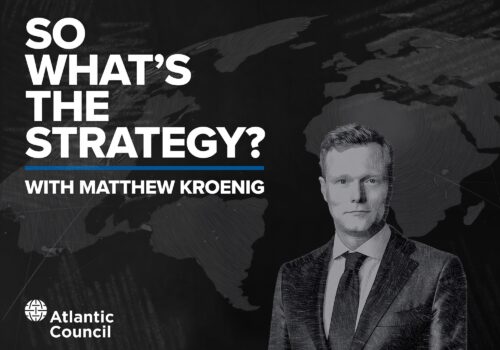
In an era defined by rapid geopolitical shifts and the resurgence of authoritarian influence, the survival and vitality of democratic governance have moved to the center of the international security agenda. As the world navigates the complexities of 2026, the Atlantic Council’s So What’s the Strategy? podcast, hosted by Matthew Kroenig, recently featured a critical discussion with Damon Wilson, President and CEO of the National Endowment for Democracy (NED). Their conversation underscored a sobering reality: the security of the United States is inextricably linked to the strength and resilience of democratic allies worldwide.
Main Facts: The Strategic Imperative of Democracy
The central thesis of the dialogue between Kroenig and Wilson is that democracy is not merely an ideological preference or a soft-power aspiration; it is a foundational pillar of national security. In the current global climate, where revisionist powers seek to dismantle the rules-based international order, democratic unity acts as the ultimate deterrent.
Wilson argues that the "democratic deficit" observed in various regions is not an inevitable decline, but rather a byproduct of insufficient strategic focus from the world’s leading liberal powers. For the United States, cultivating a network of robust, transparent, and resilient democratic partners is essential for collective defense, economic stability, and the mitigation of transnational threats such as cyber warfare, disinformation, and economic coercion. The strategy for 2026, therefore, requires a shift from passive advocacy to active, integrated defense of democratic institutions.
Chronology: The Evolution of the Democratic Struggle
To understand the urgency of the 2026 landscape, one must look back at the trajectory of the preceding years.

- 2020–2022: The Pandemic Reset. The global COVID-19 pandemic served as a stress test for governments worldwide. While some democracies demonstrated agility, others struggled with internal polarization, leading to a temporary period of institutional fragility.
- 2023: The Great Alignment. Following the escalation of conflicts in Europe and tensions in the Indo-Pacific, 2023 marked a year of renewed focus on alliances. NATO’s expansion and the formalization of security partnerships in the Pacific signaled a transition toward "hardened" democracy.
- 2024–2025: The Rise of Digital Sovereignty. These years saw a dramatic increase in the weaponization of artificial intelligence and digital surveillance by authoritarian regimes. This prompted a reactive pivot in Western policy, focusing on cyber resilience and the protection of electoral integrity.
- 2026: The Year of Strategic Integration. As we stand in August 2026, the focus has shifted from mere reaction to the proactive cultivation of a "Democratic Security Architecture." This involves integrating trade, defense, and information policies into a singular, cohesive strategy to counter autocracy.
Supporting Data: The Global Status of Freedom
While the rhetoric of democracy remains prevalent, the data suggests a volatile environment. According to indices tracked by the NED and partner organizations throughout 2026:
- Institutional Resilience: Countries that maintained strong independent judiciaries and free presses showed a 30% higher resilience rate against foreign disinformation campaigns compared to those with eroding institutional norms.
- Economic Interdependence: Data indicates that democratic nations trading primarily with other democratic partners experienced 15% less vulnerability to the "coercive leverage" often employed by authoritarian states in energy and supply chain sectors.
- Public Support: Despite global challenges, longitudinal surveys from 2026 show that over 65% of citizens in established democracies still view democratic governance as the most effective system for delivering prosperity, suggesting that the "crisis of confidence" is more a crisis of leadership and delivery than of ideological preference.
Official Responses: The Wilson Perspective
Damon Wilson’s intervention in the So What’s the Strategy? podcast serves as a blueprint for contemporary policy. Wilson posits that the United States cannot simply rely on its own internal strength; it must act as the primary architect of a global democratic coalition.
"We have to stop thinking of democracy as an optional extra in our foreign policy," Wilson noted during the broadcast. "It is the source of our strength. When our allies are strong, when they are transparent, when they are accountable to their people, they are more predictable, more stable, and ultimately, more reliable partners in the face of aggression."
Wilson emphasizes that the NED’s strategy for 2026 focuses on three prongs:
- Supporting Grassroots Movements: Empowering civil society actors in closed or semi-closed societies who act as the "canaries in the coal mine" for democratic backsliding.
- Tech-Democracy Alignment: Ensuring that the digital revolution serves to connect, rather than control, the global population.
- Strengthening Electoral Integrity: Providing technical and financial support to nations facing sophisticated external interference in their political processes.
Implications: The Road Ahead for 2026 and Beyond
The implications of this strategy are profound. For the United States, it necessitates a recalibration of military and economic aid to prioritize nations that demonstrate a commitment to democratic reform. It also implies a tougher stance on "democratic backsliders"—nations that nominally belong to the Western sphere but are increasingly adopting authoritarian practices.
The Security-Democracy Nexus
The most significant implication is the formal integration of the "Democratic Security" concept into official military and intelligence planning. This means that a threat to a democratic partner is now increasingly viewed as a direct threat to the regional security architecture. In 2026, this manifests in joint military exercises that emphasize the shared values of the participants, as well as economic agreements that include "democracy clauses" to ensure mutual stability.
The Challenge of Internal Polarization
However, the speakers acknowledge that the strategy faces a formidable hurdle: the domestic health of the United States itself. Matthew Kroenig highlighted that the credibility of US-led democratic initiatives depends on Washington’s ability to model the values it seeks to export. The implication is that the strategy for 2026 is a two-front war—one against external adversaries and one against the erosion of civic trust at home.
Conclusion: The Strategic "So What?"
The question General Brent Scowcroft famously posed—"So what’s the strategy?"—is answered in 2026 with a clear directive: Defense of democracy is not a charity; it is a vital national interest. As the geopolitical environment continues to grow more hostile, the ability of the United States to secure its future rests on the health of its alliances.
The conversation between Kroenig and Wilson serves as a wake-up call for policymakers and citizens alike. The future of the international order will not be determined by military might alone, but by the resilience of the ideas that underpin it. As the world moves toward the end of 2026, the message is clear: democratic strength is the only sustainable path to global stability.
For those interested in exploring the intricacies of this strategic shift, the full episode of So What’s the Strategy? provides a deep dive into the specific policy levers currently being pulled by the Scowcroft Center and the National Endowment for Democracy. The challenge is immense, but the consensus among these experts is that the strategic pivot to a democracy-first approach is the only viable path forward in an increasingly fragmented world.